Overwintering onions go in as sets in autumn, 6 to 8 weeks before the ground freezes (September to October in most cool climates), 2.5 cm (1 in) deep with the tip just showing, 10 cm (4 in) apart in rows 30 cm apart. They sit through winter, grow fast in spring, and are ready in June, four to six weeks ahead of spring-planted onions. The trade-off is that they do not store as long: use them by autumn.
Overwintering onions at a glance
| Detail | Figure |
|---|---|
| Plant | Autumn sets (Japanese and other overwintering types), not spring sets |
| When | 6 to 8 weeks before the ground freezes; soil still above 10°C |
| Depth | 2.5 cm (1 in), tip just showing |
| Spacing | 10 cm (4 in) apart; 30 cm (12 in) between rows |
| Soil | Free-draining; pH 6.0 to 7.0; waterlogged winter soil rots sets |
| Feed | Nothing in autumn; a nitrogen feed (e.g. sulphate of ammonia) in late February or March |
| Harvest | June to early July, when tops fall over |
| Storage | 3 to 4 months; use before spring-sown onions |
| Hardiness | Established sets survive about -10°C (14°F); colder needs fleece |
Birds pull freshly planted sets out of the ground, so net or fleece for the first three weeks until roots take hold. Garlic goes in at the same time with the same spacing, and both belong in the allium slot of your crop rotation. For what to plant alongside them in a late bed, see the autumn second-season guide.

Why overwinter onions at all
The harvest arrives six to eight weeks earlier than spring-planted onions, filling the gap in June and early July. The plants establish roots over winter and start growing the moment light returns, so they make use of spring moisture. The trade-off is that overwintered onions store less well – eat them first and rely on spring-planted onions for winter storage.
Choose the right varieties
Only varieties bred for autumn planting will work. Look for types described as Japanese or overwintering – Senshyu Yellow, Radar, Electric and Troy are common examples. Spring varieties planted in autumn will either rot or bolt. Garlic and shallots follow similar timing and can be planted in the same session.

Timing
Plant sets four to six weeks before the ground becomes cold and wet – in most temperate regions that is mid-autumn. Too early and plants grow too large before winter, which makes them bolt in spring. Too late and roots will not establish before growth stops. Aim for plants with a few centimetres of green top going into the coldest weeks.
Soil and drainage
Drainage matters more than fertility. Onions sitting in waterlogged soil through winter will rot. On heavy clay, plant into raised beds or ridges 10 to 15 cm high. Add compost in advance rather than fresh manure, which encourages soft growth. Aim for a pH around 6.5. Choose a bed that has not grown onions, garlic or leeks for three years to avoid white rot.
Planting sets
Push sets in so the tip sits just at or slightly below the surface, 10 cm apart in rows 25 to 30 cm apart. Firm the soil around them. Birds pull up newly planted sets by the dried tops – trim the papery tip, cover with netting or fleece for the first fortnight, and replant anything that gets lifted.
Winter care
Keep the bed weed free. Onions have sparse upright leaves and compete badly with weeds, and hand weeding is easier in autumn than in a tangled March bed. A light mulch between rows helps, but keep it away from the necks. After hard frost, check for sets that have been heaved out of the ground and push them back in. Fleece is worth using in very cold areas, though most overwintering varieties tolerate serious frost.
Spring management
As soon as growth restarts, feed with a nitrogen-rich fertiliser or a top dressing of chicken manure pellets to drive leaf growth – each leaf becomes a ring in the bulb. Keep weeding. Water in dry spells through bulb formation, then stop watering as the bulbs swell and the tops begin to soften.
Bolting
Some bolting is normal in overwintered onions, especially after a mild autumn followed by a cold snap. If a flower stalk appears, snap it off as low as possible. The bulb will still be usable but will not store – use those first. Planting at the right time and avoiding oversized sets reduces the problem.
Harvest and storage
Harvest when about half the tops have flopped over, usually early to midsummer. Lift on a dry day, leave the bulbs on the surface or on a rack in an airy place for a week or two until the skins are papery and the necks are fully dry. Expect two to three months of storage rather than the six months a maincrop onion gives. Any bulb with a thick soft neck should be used immediately.
The Spring Finish: Where Winter Onions Are Won
Overwintered onions mostly fail in March, not December. As growth restarts, three jobs decide the harvest. Feed early: a nitrogen-rich top dressing when new leaves appear fuels the regrowth that sets bulb size. Weed obsessively: onions have sparse, shallow roots and lose badly to spring weeds, so a fortnightly pass with the hoe matters more here than anywhere, a core case from our weed control guide. And stop watering as bulbs fatten in early summer; moist soil then invites rot in the very necks you overwintered so carefully. When half the tops flop over, harvest on a dry day and cure in sun for a fortnight.
Why did my overwintered onions bolt?
A warm autumn that let plants grow too large before cold hit, oversized sets at planting, or a prolonged cold snap after spring growth began. Pick bolters immediately and eat them fresh; once a flower stalk forms, the bulb stops improving. Choosing proper overwintering varieties and pencil-thin sets is most of the cure.
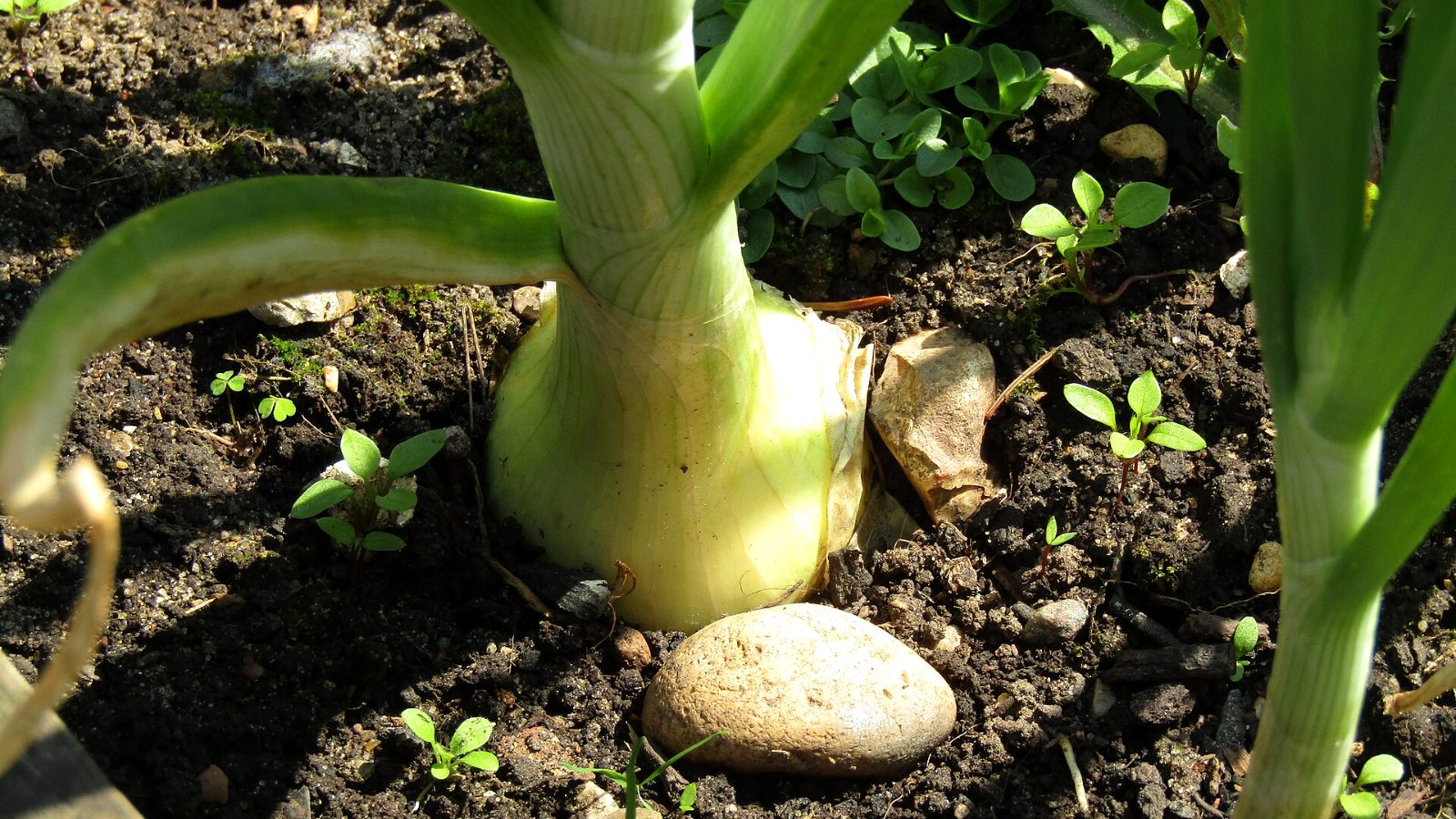
Featured image: –06-08 Onion plants Trimingham. Photo: Kolforn (Kolforn)
I’d appreciate if you could mail me (Kolfo (CC BY-SA 4.0), via Wikimedia Commons.
When this advice does not apply
In mild-winter climates (rarely below -5°C), you can plant overwintering onions as late as November and also sow onion seed in autumn. In climates below -20°C overwintering onions rarely survive without deep mulch; plant in spring instead.