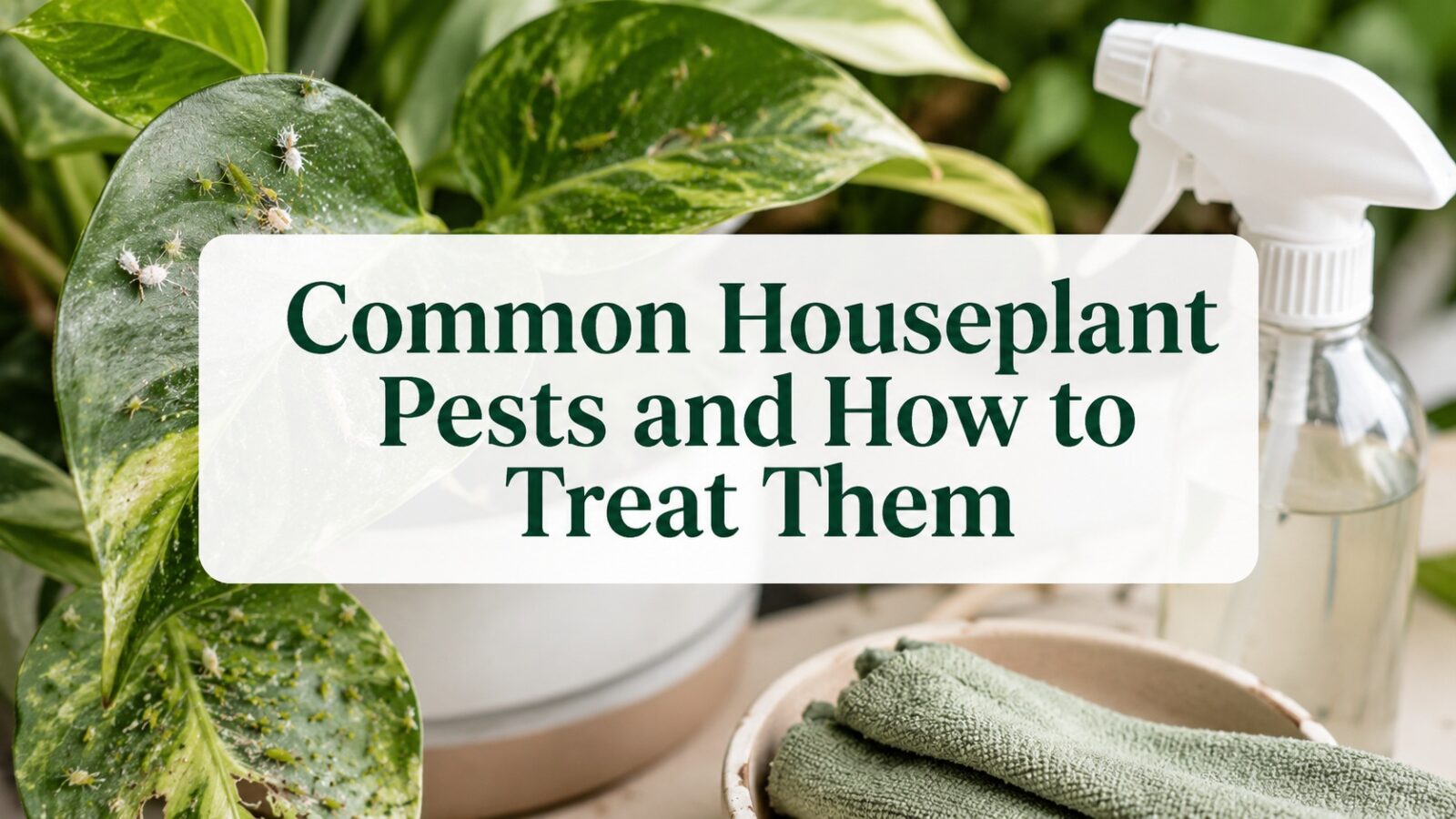
Houseplant pests are frustrating because they often arrive quietly. A plant looks fine at the shop, then weeks later sticky leaves, webbing, crawling dots, or tiny flies appear. The solution is a calm routine: isolate, identify, clean, treat, and monitor.
Start with a close inspection
Quarantine new plants, inspect leaf undersides, identify the pest before treatment, and repeat controls on the right schedule. Most indoor pest problems improve with early detection, physical removal, and consistent follow-up.
Approaches for mites, scale, mealybugs, and gnats
Fungus gnats usually indicate moist organic potting mix; drying the surface and using sticky cards can help.
Spider mites thrive in hot, dry conditions and require careful leaf underside treatment.
Scale insects are protected by their covering, so physical removal matters.
Mealybugs hide in leaf joints and roots, making follow-up essential.
Aphids often gather on tender new growth and can be removed with water or insecticidal soap.
Tiny pests hide where casual checks miss them
Indoor pests spread easily because plants are close together and natural predators are limited. Stress also matters. Plants in weak light, soggy soil, or dry air are often more vulnerable to outbreaks.
Isolate, identify, and treat
- Inspect new plants before bringing them near your collection.
- Isolate any plant with suspicious spots, webbing, sticky residue, or flying insects.
- Identify the pest: fungus gnats live around soil, spider mites cause stippling and webbing, scale looks like bumps, and mealybugs look cottony.
- Clean leaves and remove heavily infested growth when practical.
- Use targeted treatments and repeat because eggs and hidden pests often survive the first round.
Quarantine is easier than treating a collection
Keep a new plant separate for a few weeks, especially if it came from a crowded shop or greenhouse. Check leaf joints, the undersides of leaves, new buds, and the soil surface. Many pests are easier to remove before they spread to nearby pots.
During treatment, clean the shelf and saucer as well as the plant. Fallen leaves and hidden insects can restart the problem. Wash tools between plants and avoid moving cuttings from an infested specimen into the rest of the collection.
Why repeat treatments are often needed
Many treatments affect exposed pests but not eggs hidden in leaf joints or protected scale coverings. Inspect on a schedule that matches the pest life cycle and remove newly visible insects before the population rebuilds.
Do not increase concentration beyond the label. Better coverage, correct timing, and repeated inspection are safer than making one treatment stronger.
How infestations spread between plants
- Treating every pest with the same spray.
- Forgetting to isolate the plant.
- Stopping treatment after one application.
- Ignoring the growing conditions that made the plant vulnerable.
When the first treatment is not enough
If pests keep returning, check nearby plants, pot rims, stakes, saucers, and the soil surface. Repeated outbreaks often mean the original source was never isolated or eggs survived in protected areas.
A simple isolation routine for new plants
Many indoor infestations begin with a new purchase placed immediately beside established plants. Keep newcomers in a separate room or at least several feet away for a few weeks. Inspect leaf joints, undersides, stems, the soil surface, and the outside of the pot. Repeat the inspection because eggs and small larvae may not be obvious on the first day.
Sticky cards can reveal flying pests, but they do not diagnose every problem. Tiny flies around damp potting mix may point to the life cycle described in the fungus gnat guide. Yellowing may also come from moisture or roots rather than insects, so use the yellow-leaf checklist before treating. Cleaning tools and washing hands between groups of plants reduces accidental spread.
Houseplant pest questions
Are fungus gnats harmful to houseplants?
Adults are mostly annoying, but larvae can damage delicate roots in heavy infestations or very young plants.
Can I use dish soap on plants?
It can damage leaves. A labeled insecticidal soap is safer because it is formulated for plant use.
How long should I quarantine a new plant?
Two to four weeks is a practical window for many pests to reveal themselves.
Do pests mean I am bad at plant care?
No. Pests are common. Early inspection and steady follow-up matter more than blame.
A small indoor pest kit
Useful supplies include a magnifying glass, yellow sticky cards, cotton swabs, insecticidal soap labeled for houseplants, and fresh potting mix if roots or soil are involved.