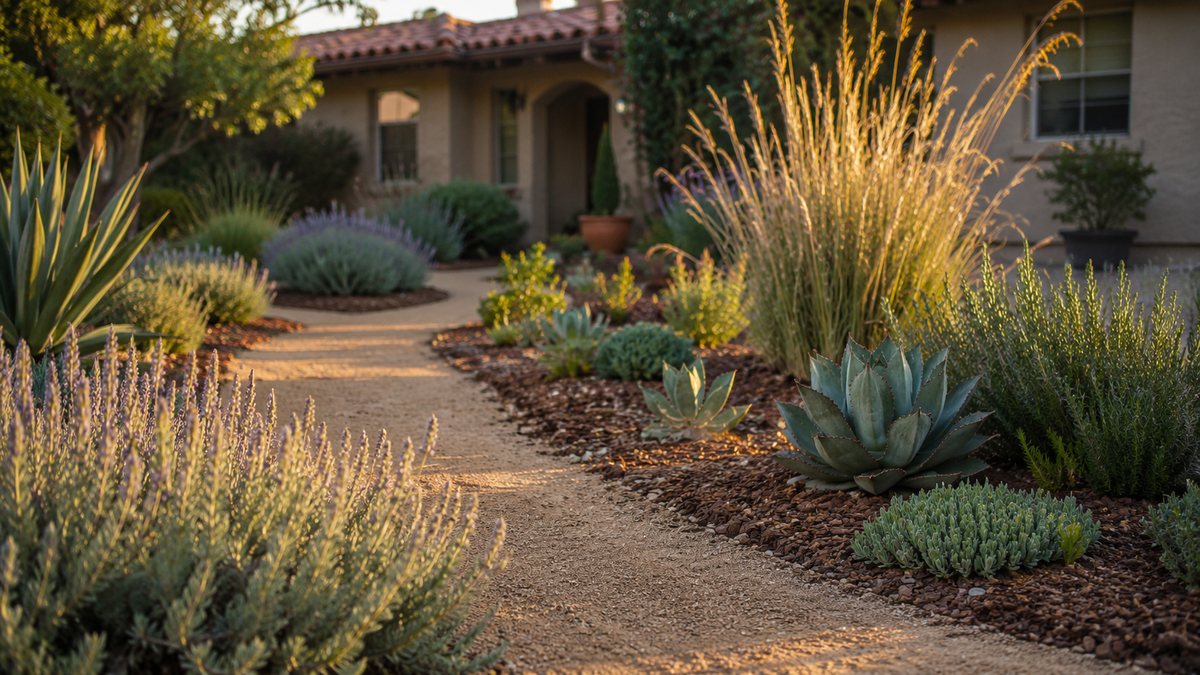
Xeriscaping is a way of designing a garden so it needs far less added water, mainly through soil preparation, grouping plants by water need, generous mulch, and efficient irrigation. It is not a gravel-only “zero plant” look, and it is most valuable in dry-summer and arid climates (Köppen B, Csa, and Csb zones) such as the American Southwest, the Mediterranean Basin, inland Australia, and parts of southern Africa and the Middle East.
Group plants by water need
Place plants with similar water requirements together so irrigation matches the whole zone, rather than overwatering tough plants to keep one thirsty plant alive. A practical layout uses three zones: a small high-water area near the house for plants you use often, a moderate zone beyond it, and a low-water outer zone of drought-tolerant species watered only to establish.
Improve the soil first
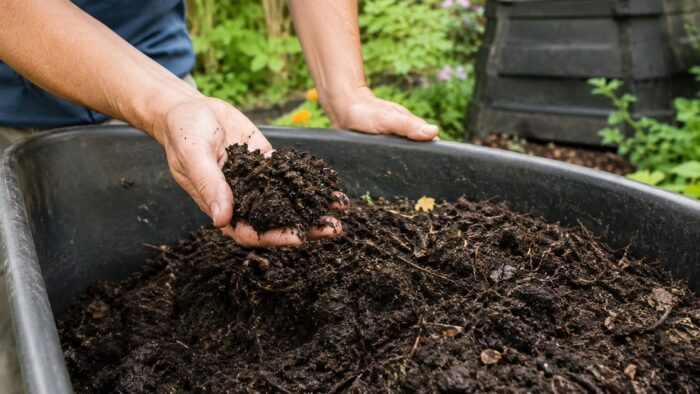
Healthy soil holds moisture longer and lets roots grow deep, which is the foundation of a low-water garden. Add organic matter to improve both drainage and water-holding capacity, and review healthier garden soil for a season-by-season approach. Heavy clay benefits from organic matter to improve structure; very sandy soil benefits from it to hold water at the root zone.
Choose plants suited to your climate
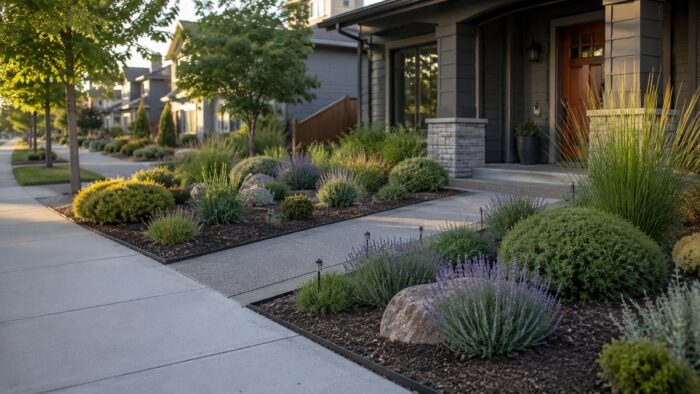
Drought-tolerant does not mean the same plant everywhere. Choose species that are genuinely adapted to your local heat, rainfall pattern, and winter low, ideally native or regionally proven. A native or locally adapted plant usually needs less water and less intervention than an exotic chosen only for looks.
Water deeply and rarely
Infrequent deep watering encourages deep roots that survive dry spells, while frequent shallow watering trains roots to stay near the surface. Drip irrigation delivers water straight to the root zone with little evaporation loss; see a simple drip irrigation setup. During extreme heat, the timing advice in watering during heat waves still applies.
Mulch is not optional
A generous mulch layer slows evaporation, moderates soil temperature, and suppresses weeds that compete for moisture. Organic mulches break down and feed the soil; mineral mulches like gravel last longer in hot, exposed sites. The material comparison in the mulch guide helps you choose.
Reduce thirsty lawn area
Conventional lawn is usually the highest-water element in a garden. Shrinking it, or replacing it with drought-tolerant groundcover, low-water turf, or planted beds, often produces the single largest water saving. Keep lawn only where it earns its place, such as a play area.
Plan the hardscape and paths
Permeable paths and patios let rain soak into the ground instead of running off, which keeps more water in the garden and reduces the area you need to irrigate. Gravel, decomposed granite, and spaced pavers all allow infiltration, while large sealed surfaces send rain straight to the drain. Routing roof runoff toward planted beds, or into storage as covered in rain barrels, turns a rain event into stored irrigation rather than waste.
Establish, then step back
The first season is the most water-intensive, because even drought-tolerant plants need regular moisture to grow the deep roots that later let them cope. Plan to water new plantings consistently through that first season, then taper off in the second as the garden takes over. A xeriscape is not low-water on day one; it becomes low-water once it is established.
Common xeriscaping mistakes
- Skipping soil improvement and expecting mulch alone to fix moisture loss.
- Planting drought-tolerant species but then overwatering them out of habit.
- Using a sheet of plastic under gravel, which stops water reaching roots and bakes the soil.
- Forgetting that even drought-tolerant plants need regular water during their first season to establish.
- Treating xeriscaping as a one-time install rather than a garden that still needs seasonal care.
Xeriscaping questions
Does xeriscaping mean a garden of only rocks and cactus?
No. Xeriscaping is a water-saving design approach that can include lawns, flowers, and shrubs; it simply prioritizes plants and methods that need less water.
Do drought-tolerant plants need any watering at all?
Yes, especially in their first growing season while roots establish. After that, many need water only during prolonged dry spells.
Will xeriscaping work in a rainy climate?
The principles help anywhere, but the water savings are largest in dry-summer and arid climates. In wet climates the focus shifts more to drainage and plant choice than to conserving water.