Summer planting is about heat-loving crops that go out only once nights stay above 10°C (50°F) and soil is 18°C (65°F) or more: tomatoes, peppers, aubergine, courgettes, squash, cucumbers, sweetcorn, French and runner beans, basil and sweet potato. Plant them in the first two weeks after that point, water deeply twice a week rather than lightly every day, and sow a second batch of beans and courgettes six weeks later for a late crop. Lettuce, spinach and coriander bolt in summer heat; move them to shade or wait for autumn.
Summer crops at a glance
| Crop | Plant out when | Spacing | Days to first harvest | Water per week |
|---|---|---|---|---|
| Tomatoes (cordon) | Nights above 10°C | 45 to 60 cm | 60 to 80 from transplant | 5 to 10 L per plant |
| Peppers, chillies | Nights above 12°C | 40 to 45 cm | 70 to 90 | 3 to 5 L per plant |
| Courgettes, summer squash | Soil 18°C | 90 cm | 45 to 55 | 10 L per plant |
| Cucumbers | Soil 18°C | 30 to 45 cm on a trellis | 50 to 70 | 5 to 8 L per plant |
| Sweetcorn | Soil 16°C | 30 cm in a block of at least 4 by 4 | 70 to 90 | 25 mm over the block |
| French beans (bush) | Soil 16°C | 10 cm in rows 45 cm apart | 50 to 60 | 25 mm |
| Runner and climbing beans | Soil 16°C | 15 cm up a frame | 60 to 70 | 25 to 40 mm when flowering |
| Basil | Nights above 10°C | 25 cm | 60 from seed | Keep moist |
| Sweet potato slips | Soil 20°C | 30 cm | 100 to 120 | Rain plus 25 mm in drought |
Mulch everything 5 cm deep once the soil is warm, not before, or you trap the cold in. Support tomatoes and cucumbers from the start, see tomato staking and vertical cucumbers, and in heatwaves above 32°C use shade cloth on peppers and tomatoes to stop blossom drop.
Early summer: planting out and filling gaps
Once night temperatures stay above roughly 10C, tender crops can go out. Tomatoes, peppers, aubergines, courgettes, cucumbers and squash all move from pots to their final positions now. Harden plants off over a week – a few hours outdoors on day one, building up to a full night – or they will sulk for a fortnight.
At the same time, direct sow the fast crops that will mature before midsummer heat: bush beans, beetroot, carrots, spring onion, dill and a final sowing of peas in cooler regions. Early summer is also the last reliable window for sweetcorn, which needs a long warm run to fill its cobs.
Midsummer: succession is the whole game
By midsummer, the garden looks full but ground is quietly becoming available as garlic, early potatoes, peas and the first salads come out. Replanting that ground within a week or two is what separates a garden that peaks in July from one that keeps producing to October.
Good midsummer sowings include:
- Bush beans – a second sowing cropping six to eight weeks later
- Carrots – sown now, they often escape the worst of carrot fly
- Beetroot and chard – reliable and heat tolerant
- Kale, kohlrabi and autumn cabbage – started in modules and planted out
- Florence fennel and Chinese cabbage – less likely to bolt than in spring

Heat management is a planting decision
Lettuce, spinach, coriander and rocket bolt when days get long and hot. Rather than fighting it, move them into the shade of taller crops – the north side of a bean tripod or a row of sweetcorn – or sow heat-tolerant varieties and keep them watered evenly. Mulching beds with 5 cm of straw or compost after a thorough watering holds moisture and keeps root zones several degrees cooler.
Late summer: sowing for autumn and winter
Late summer sowings feel counterintuitive but produce some of the best eating of the year. Sow spinach, pak choi, winter lettuce, rocket, turnips and radish, and plant out spring cabbage and overwintering onions. In milder areas, broad beans sown in autumn will crop weeks earlier than a spring sowing.
Work backwards from your first frost date. If a crop needs 60 days to mature and your first frost is 20 October, the last useful sowing date is roughly 20 August – and a little earlier in practice, because growth slows sharply as light levels fall.
Keeping existing crops productive
Pick constantly. Beans, courgettes and cucumbers shut down production once seeds mature, so harvesting every two or three days keeps flowers coming. Pinch out the growing tip of indeterminate tomatoes about five weeks before your first frost so the plant ripens what it already has rather than setting fruit that will never finish.
Feed heavy croppers weekly with a high-potassium liquid feed. Water deeply two or three times a week rather than lightly every day – a long soak drives roots down where soil stays cool and moist.
A simple summer timetable
- Early summer: plant out tender crops, sow beans, beetroot, carrots, spring onion
- Midsummer: second sowings of beans and carrots, start autumn brassicas in modules, mulch everything
- Late summer: sow spinach, pak choi, winter salad, turnips, overwintering onions
- Throughout: harvest often, feed weekly, water deeply, refill every gap within two weeks
What to stop doing
Stop sowing anything that needs more than 60 days once you are inside that window before first frost. Stop feeding nitrogen to fruiting crops late in the season – it pushes leaf growth at the expense of ripening. And stop leaving bare ground; if nothing edible fits, sow a green manure such as phacelia or field beans to hold nutrients and protect soil structure over winter.
The Midsummer Sowing List People Skip
The biggest summer mistake is treating planting as finished by July. Midsummer direct sowings of bush beans, beetroot, carrots and kohlrabi all mature before frost in most regions, and fast salads resown every fortnight keep production rolling; the rhythm is laid out in our succession planting guide. From late July the autumn brassicas and second-season crops want their start too, which means summer is as much about the next season as the current one.
What about water through the hottest weeks?
Deep, less frequent watering beats daily sprinkles, and mulched beds need roughly half the water of bare soil; the full heat-wave routine is in watering during heat waves. If you are away in August, group containers in shade and ask a neighbour to water twice a week rather than hoping for rain.
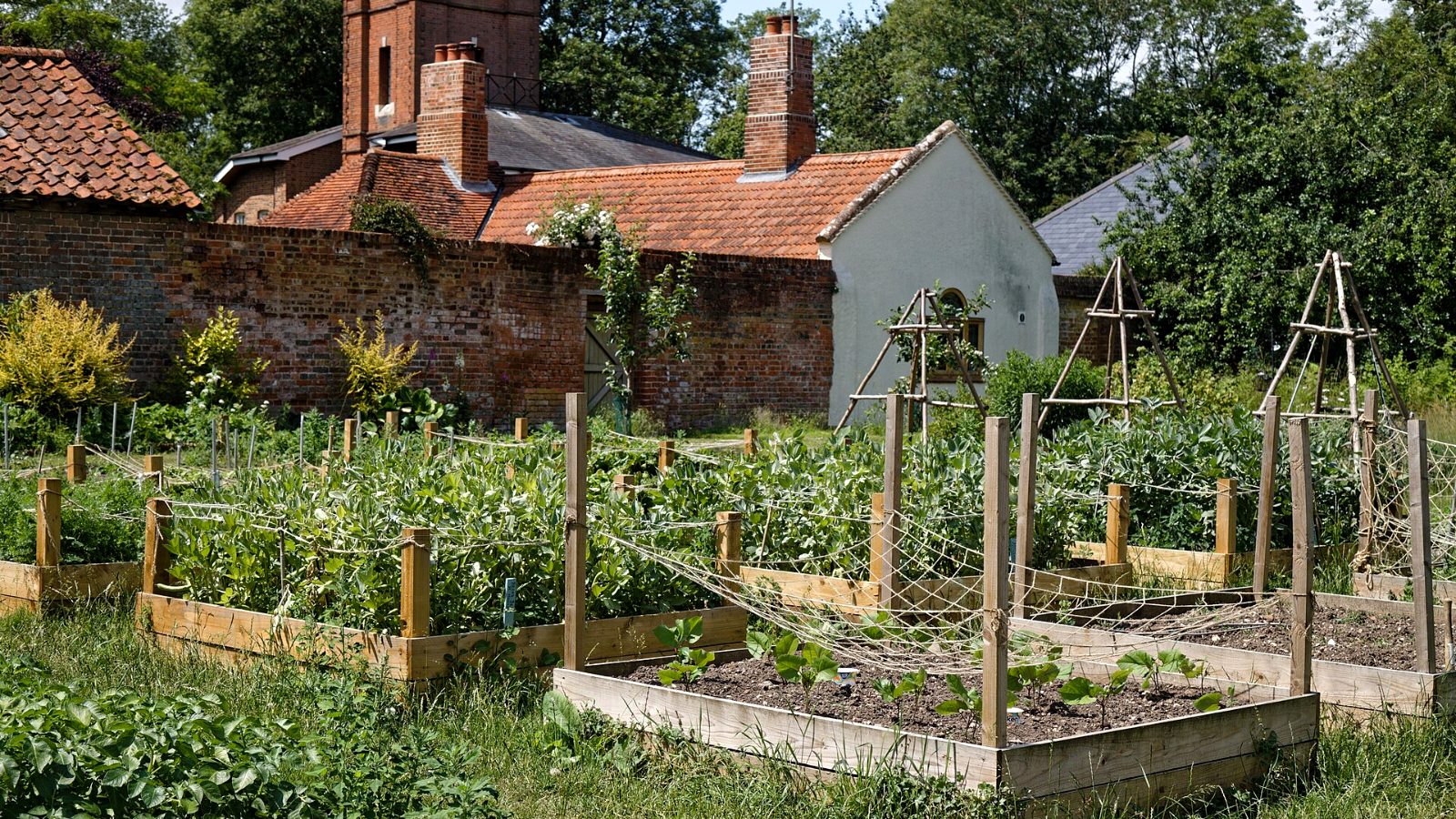
Featured image: Vegetable garden Easton Lodge Gardens walled garden Little Easton Essex England 02. Photo: Acabashi (CC BY-SA 4.0), via Wikimedia Commons.
When this advice does not apply
In short-summer climates (under 100 frost-free days) choose early varieties, use black plastic mulch to warm the soil, and skip sweet potato and most melons. In hot climates above 35°C, tomatoes and beans stop setting fruit in midsummer; plant them for spring and autumn crops and grow okra, cowpeas and sweet potato through the peak heat.