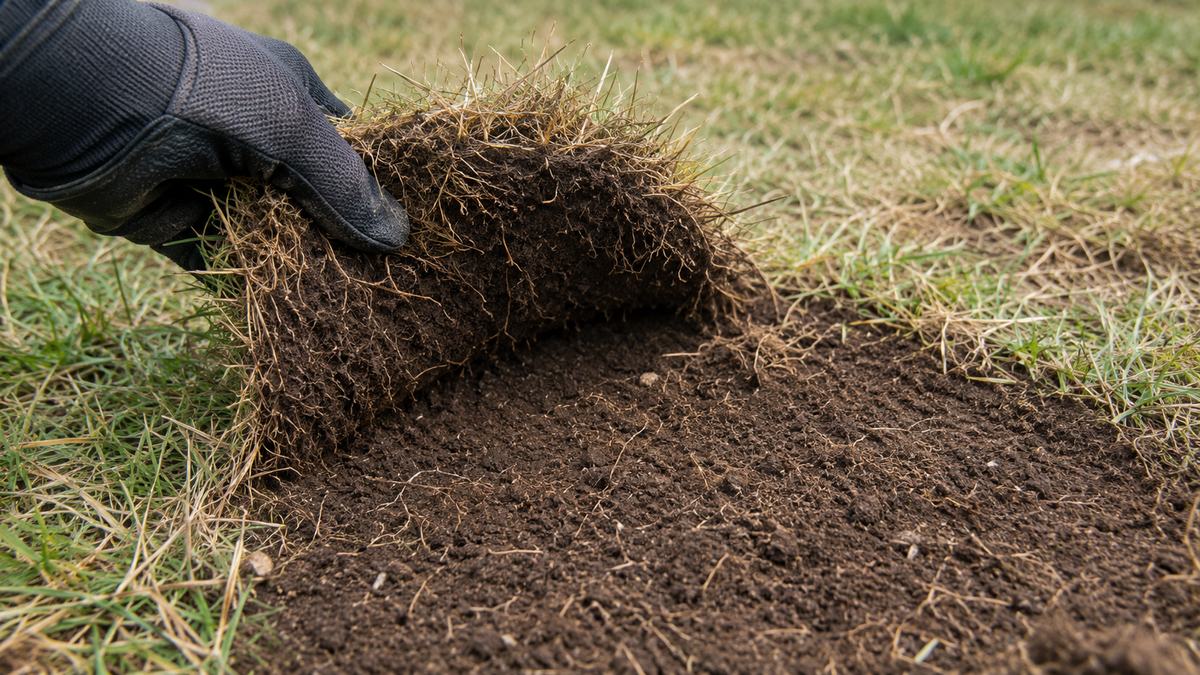
Lawn grubs are the larvae of various beetles that feed on grass roots, causing patches of lawn that yellow, wilt, and can be peeled back like a loose carpet because the roots have been eaten. Effective management depends on confirming grubs are present, understanding their seasonal lifecycle, and choosing a control matched to that timing.
Spot the signs
Grub damage shows as irregular patches of weakening, yellowing grass that does not recover with watering, often alongside increased digging by birds or animals feeding on the larvae. Because the roots are eaten, affected turf can be lifted away easily, which is a strong clue that grubs, not drought, are responsible.
Confirm grubs are the cause
Confirm the pest by lifting a section of turf at the edge of a damaged patch and looking for pale, C-shaped larvae in the root zone. A few grubs in a healthy lawn are normal and rarely need action; control is usually only justified when numbers are high and damage is clear. As with any diagnosis, identify before treating.
The beetle lifecycle drives timing
Grubs are the larval stage of beetles, and most damage and the best control window occur when larvae are young and feeding near the surface, typically later in the warm season. Adult beetles lay eggs in the lawn, the eggs hatch into grubs that feed on roots, and the grubs later mature into the next generation of beetles. Treating at the wrong stage is a common reason control fails.
Biological and cultural control
Beneficial nematodes are microscopic organisms applied to moist soil that can parasitise grubs, and they are a widely used biological control when applied at the right time and kept moist. Cultural steps also matter: a deep-rooted, well-maintained lawn tolerates some grub feeding, and appropriate watering and reduced thatch support both the grass and natural predators.
When other controls are considered
If biological and cultural measures are not enough and a high grub count is confirmed, any insecticide must be chosen and applied strictly according to its current label and local regulations, which vary widely by country. The label specifies approved use, timing relative to the grub stage, rate, and safety precautions. A local extension service can confirm what is appropriate and permitted where you live.
Keep the lawn resilient
A vigorous lawn with healthy, deep roots withstands and recovers from moderate grub feeding far better than a stressed one. Monitoring during the egg-laying and early larval period lets you act in the narrow window when control is most effective.
How to time nematode applications
Beneficial nematodes only work when conditions suit the living organisms, so timing and moisture decide success or failure. Apply them when young grubs are actively feeding near the surface, usually in warm soil rather than cold, and water the area before and after so the nematodes can move through moist soil to reach their hosts. They are sensitive to drying out and to strong sunlight, so an overcast day or evening application protects them. Stored correctly and used before their expiry, they are a practical biological option; used dry or at the wrong stage, they simply will not establish.
Repair grub-damaged turf
Areas where roots were destroyed will not recover on their own and need reseeding or patching. Lift and discard the dead turf, loosen the surface, sow or lay new grass, and keep it watered while it roots. Improving the soil and encouraging deep rooting in the repaired area makes it more able to tolerate the low level of grubs that is normal in any lawn.
Lawn grub questions
How do I know if I have a grub problem or just dry grass?
Grub-damaged turf can be peeled back easily because the roots are eaten, and it does not recover with watering. Lifting the turf to look for pale, C-shaped larvae confirms it.
Do beneficial nematodes really work on grubs?
They can be effective as a biological control when applied to moist soil at the right stage of the grub’s lifecycle and kept watered in.
Are a few grubs in the lawn a problem?
Usually not. Small numbers are normal in a healthy lawn. Control is generally justified only when counts are high and damage is clearly visible.