Overwintering tender plants without a greenhouse means protecting them through the cold months using the shelter you already have: a bright indoor windowsill, an unheated but frost-free space, heavy mulch, or dormant storage. The right method depends on whether the plant keeps growing in winter or goes dormant, and on how cold your climate gets.
Know your plant’s winter strategy
Decide first whether a plant stays in active growth over winter or goes dormant, because the two need opposite treatment. Plants that keep their leaves and keep growing need light and modest watering; plants that die back to roots, tubers, or bare stems can be stored cool and nearly dry until spring.
Move active plants to light
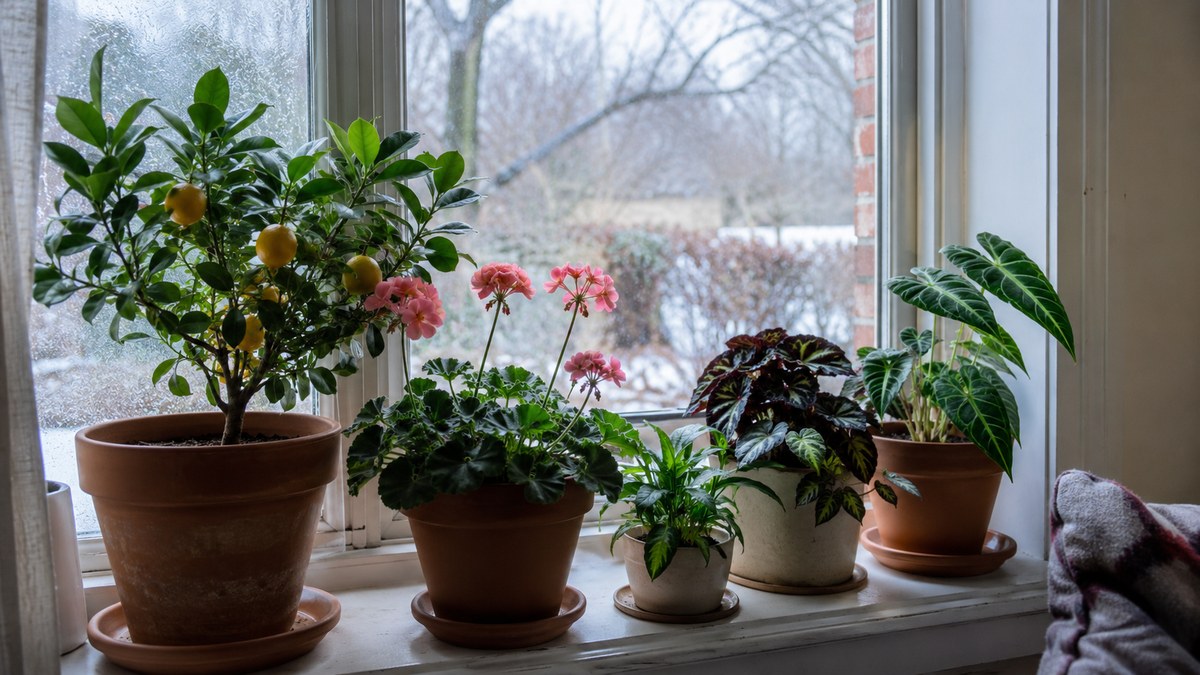
Bring tender evergreen plants indoors to the brightest available spot before the first hard frost, and reduce watering to match their slower winter growth. Keep them away from hot, dry air from heaters and cold drafts from windows. Expect some leaf drop as they adjust; improve light and airflow before assuming they need feeding.
Store dormant plants cool and dark
Plants that go fully dormant can often be stored in a cool, frost-free, dark space such as a basement or insulated shed, with the root ball kept barely moist. Tubers and bulbs of many tender summer plants can be lifted, dried, and stored in a similar way, then replanted once frost risk passes.
Protect plants left outdoors
- Mulch deeply over the root zone to insulate roots from freezing and thawing.
- Group containers together against a sheltered wall and raise them off cold ground.
- Wrap pots or use horticultural fleece on borderline-hardy plants during cold snaps.
- Move containers under eaves or into a porch to keep roots from sitting in freezing wet.
Timing by hemisphere
Start the move before nights turn cold, not after the first frost has already damaged the plant. In the Northern Hemisphere that is usually autumn through October; in the Southern Hemisphere the equivalent window falls around April and May. Watch your own local frost dates rather than a fixed month.
Check plants before bringing them in
Inspect every plant for pests and disease before it comes indoors, because a warm room with no natural predators lets a small problem spread to your whole collection. Check leaf undersides and stems, remove dead material, and isolate anything questionable for a couple of weeks before grouping it with other plants. Hosing off foliage and letting the pot drain also reduces the hitchhikers that move in with an outdoor plant.
Ease plants back out in spring
Plants that spent winter sheltered are soft and need re-acclimatising before full outdoor exposure, just like spring seedlings. Once frost risk has passed, move them out gradually over a week or more, starting in shade and shelter and increasing sun and wind each day. Rushing this step causes scorched leaves and setback, undoing the protection winter storage provided.
Match the method to the plant
- Tender evergreens you want to keep growing: bright indoor spot, reduced watering, no cold drafts.
- Plants that die back to roots or tubers: cool, frost-free, dark storage with the rootball barely moist.
- Borderline-hardy plants in the ground: deep mulch over the roots and fleece during cold snaps.
- Container plants: group against a sheltered wall, raise off cold ground, and protect roots from freezing wet.
- Summer bulbs and tubers in cold climates: lift, dry, label, and store, then replant after frost.
Overwintering questions
When should I bring tender plants indoors for winter?
Before the first hard frost and before nights turn consistently cold, rather than after damage appears. Local frost dates are a better guide than the calendar.
Why are my overwintered plants dropping leaves indoors?
Some leaf drop is a normal response to lower indoor light and dry air. Improve light and airflow and reduce watering before assuming a feeding or pest problem.
Can I store dormant plants in a dark space?
Yes, for plants that fully die back. A cool, frost-free, dark space with the roots kept barely moist works well until growth resumes in spring.