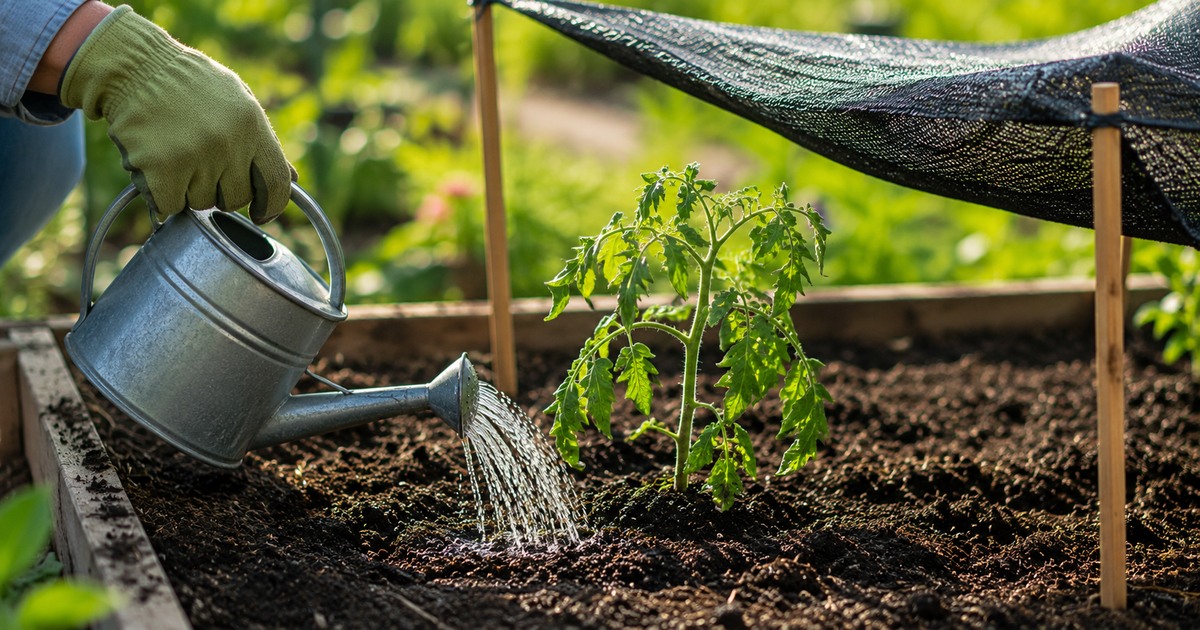
A plant can wilt after transplanting even when the soil is moist. Moving disturbs roots, changes light and wind exposure, and temporarily reduces the plant’s ability to replace water lost through leaves. Mild drooping can be part of adjustment. Severe collapse, stem damage, or worsening symptoms require a closer look.
Common reasons a transplant struggles
- Roots were torn, dried, or tightly circled.
- The plant moved from shade directly into strong sun.
- Wind increased water loss before roots established.
- The root ball stayed dry while surrounding soil was wet.
- The planting hole remained waterlogged.
- Cold or heat arrived soon after planting.
Water the root ball, not just the surrounding bed
Water thoroughly at planting and check that water reaches the original root mass. Peat-based nursery mix can dry differently from garden soil. During the first weeks, inspect both areas rather than watering only by surface appearance.
Provide temporary shelter, not permanent darkness
A shade cloth, upturned crate, or sheltered position can reduce stress for a short period. Remove protection gradually as the plant recovers. Seedlings that were hardened properly need less intervention; the schedule in the hardening-off guide reduces the sudden change in sun and wind.
Avoid fertiliser as first aid
Strong fertiliser does not repair damaged roots and can add salt stress. Wait for active growth unless a soil test or known deficiency supports feeding. Do not prune healthy leaves heavily unless the plant has lost a large proportion of roots or is a species routinely cut back at transplanting.
Check planting depth and drainage
A buried crown, exposed root ball, folded roots, or air pockets can keep a plant unstable. Firm soil gently and correct obvious depth problems early. If water stands around the plant long after irrigation, improve drainage rather than adding more water.
Signs that the problem is more serious
Blackened stems, foul soil, roots that pull apart, rapidly expanding leaf spots, or no improvement during mild weather can indicate rot, disease, or physical damage. Use the stepwise approach in the plant diagnosis guide before treating.
Recovery is measured in new growth
Some old leaves may remain damaged. Look for a firm stem, stable colour, and new leaves or roots. Keep care consistent and avoid digging up the plant repeatedly to check it. Most ordinary transplant stress improves when roots regain contact with moist, aerated soil.
Annuals, perennials, shrubs, and trees recover differently
A small annual seedling may resume growth within days, while a shrub or tree can spend a season rebuilding roots. Woody plants should be watered across the developing root zone rather than only beside the trunk. Large specimens may need staking, but ties must allow movement and should not remain indefinitely.
Rootbound plants need careful handling
Circling roots can continue around the planting hole instead of entering new soil. Loosen or cut severely circling roots according to the species and size, then spread them outward. Peat pots and fabric can also restrict roots if edges remain above the soil or materials do not break down as expected.
A recovery timeline
| Time after planting | What to watch |
|---|---|
| First 24 hours | Root ball moisture, severe sun or wind stress, broken stems |
| First week | Morning recovery, soil settling, drainage, new scorch |
| Weeks two to four | New growth, stable colour, roots beginning to use surrounding soil |
| Longer term | Reduced support needs, wider watering zone, seasonal growth |
When to intervene immediately
Correct a buried crown, exposed roots, a completely dry root ball, broken support, or standing water promptly. If a new tree rocks in the wind, roots cannot establish securely. If wilt is accompanied by black stems or foul soil, investigate rot or disease rather than waiting for ordinary adjustment.
What not to do
- Do not water lightly every hour without checking depth.
- Do not apply a strong fertiliser or stimulant as a universal rescue.
- Do not prune a tree into a small top simply because roots were transplanted, unless species-specific guidance calls for it.
- Do not dig the plant up repeatedly to see whether roots are growing.
A note on fall planting
Cooler weather can reduce leaf stress, but roots still need time and suitable soil temperatures to establish. Water until the ground freezes where appropriate, protect against heaving in cold climates, and avoid planting species that are poorly suited to the local winter.
Transplant shock: quick answers
How long does transplant shock usually last?
Most plants show visible recovery within one to two weeks, though larger shrubs and trees can take a full season to fully re-establish.
Should I fertilize a wilting transplant to help it recover?
No. Fertilizer doesn’t fix transplant shock and can add stress to a root system that’s already struggling to take up water.
Is wilting after transplanting always a bad sign?
Mild, short-term drooping is a normal adjustment. Only persistent or worsening wilting past the first week or two signals a deeper problem.