Drought-tolerant plants survive long dry periods once their roots are established, but almost all of them still need regular watering for the first season to get there. The best choices depend on your climate: a plant that thrives in a dry Mediterranean summer may rot in a humid tropical one, and one that survives an arid summer may not survive a cold continental winter.
What “drought-tolerant” really means
Drought tolerance is the ability to survive dry spells once established, not the ability to thrive with no water ever. The key phrase is once established: most drought-tolerant plants need consistent moisture for the first few months while they grow the deep or wide root systems that later let them cope.
Match the plant to your climate
Drought tolerance interacts with humidity and cold, so the same label means different things in different climates. In hot arid zones (Köppen B), heat and water scarcity are the limits. In humid subtropical zones (Cfa), many “drought-tolerant” Mediterranean plants struggle with constant moisture in the air rather than with drought. In cold continental zones (D), winter hardiness matters as much as summer survival.
Categories that handle dry conditions
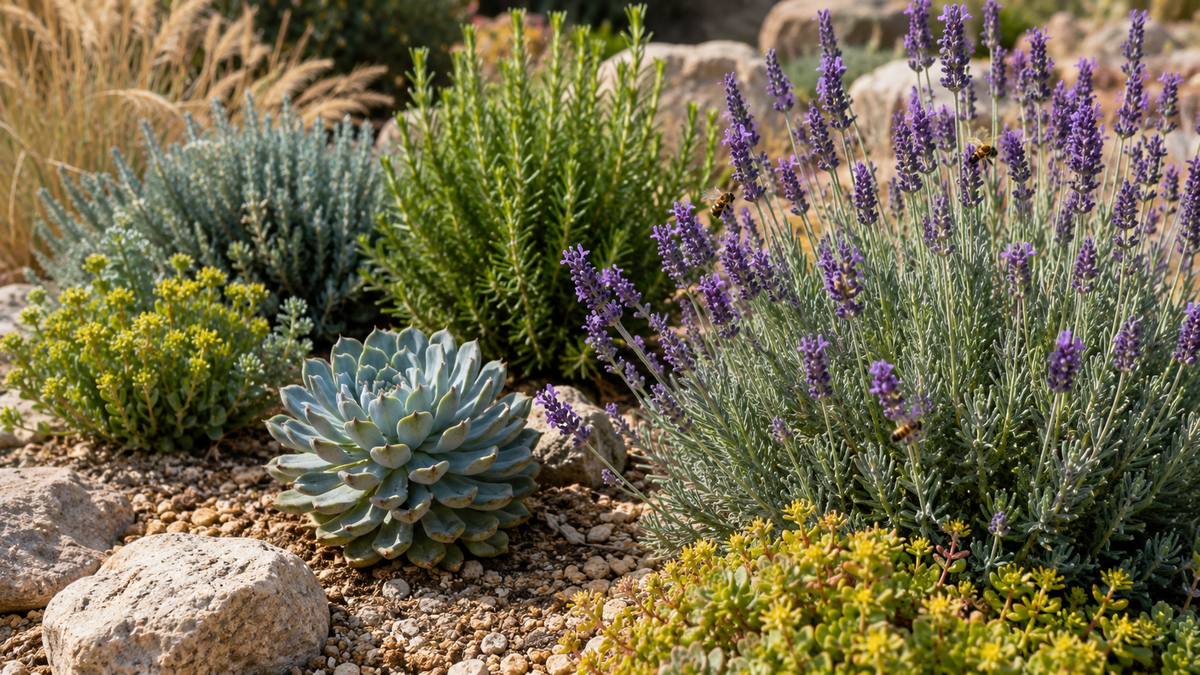
- Succulents and cacti, which store water in leaves or stems and need very sharp drainage.
- Mediterranean herbs such as rosemary, thyme, sage, and lavender, adapted to dry summers and rocky soil.
- Silver- or grey-leaved plants, whose reflective, often hairy leaves reduce water loss.
- Deep-rooted perennials and ornamental grasses that reach moisture far below the surface.
- Many regional natives, which are often the most reliable choice because they evolved in your conditions.
Plant and establish them correctly
- Plant at the start of your cooler or wetter season where possible, not in peak heat.
- Water deeply and regularly through the first season so roots grow down, not sideways.
- Mulch to reduce evaporation, keeping mulch slightly clear of stems.
- Reduce watering gradually in the second season as the plant takes over.
Design for less water
Group drought-tolerant plants together so you are not forced to overwater them to keep a thirsty neighbour alive. This is the core idea behind xeriscaping, and pairing it with a simple drip irrigation setup and good mulch gives the largest, most reliable water savings.
Read the plant, not the calendar
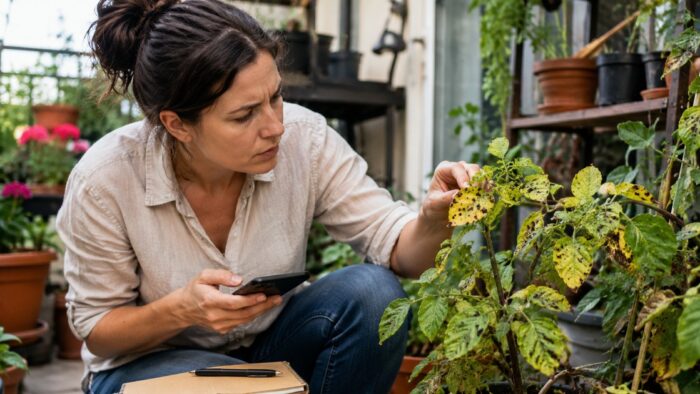
Drought-tolerant plants often signal stress before they are truly in trouble, and learning those signs prevents both over- and under-watering. Many wilt or fold their leaves in afternoon heat and recover overnight, which is normal and not a reason to water. Persistent wilting that does not recover by morning, dull or greyish foliage, and dropped leaves are the real signals that a deep watering is needed. Checking soil moisture a few centimetres down is more reliable than watering on a fixed schedule, because the same plant needs very different amounts of water in a cool spell versus a heat wave.
Avoid the most common failures
- Planting in peak heat instead of the cooler or wetter part of the year.
- Stopping watering too soon, before roots have established in the first season.
- Setting drought-tolerant plants in heavy, poorly drained soil where they rot.
- Mixing them into a bed irrigated for thirsty plants, which drowns them with kindness.
Build soil that holds water longer
Even the toughest drought-tolerant plant performs better in soil that absorbs and holds moisture between deep waterings, so soil work pays off more than frequent irrigation. Adding organic matter improves structure in both directions: it opens up heavy clay so roots can penetrate and water can drain, and it helps loose, sandy soil hold moisture at the root zone instead of letting it drain straight through. A deep mulch layer on top then slows evaporation from the surface. Together, better soil and mulch mean the same plant survives longer between waterings, which is the practical definition of a low-water garden that works.
Drought-tolerant plant questions
How long until a drought-tolerant plant can survive without watering?
Most need at least one full growing season of regular watering to establish; some woody plants take two. After that, many cope with only occasional deep watering in dry spells.
Can succulents be grown outdoors in a humid climate?
Some can, but humidity and rainfall are usually a bigger risk than heat. Very sharp drainage and good airflow matter more than sun in those conditions.
Are native plants always the most drought-tolerant choice?
Not always, but regional natives are frequently the most reliable because they are adapted to local rainfall, heat, and soil, and usually need less intervention.