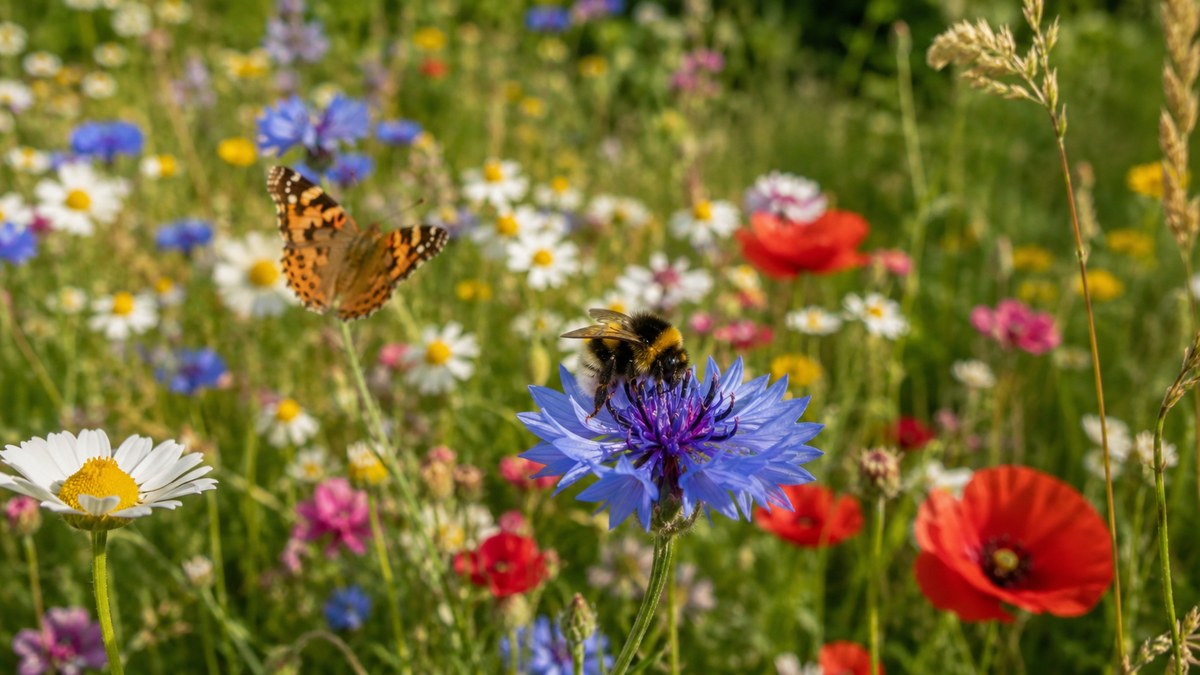
Sowing wildflower seeds is one of the simplest ways to support bees, butterflies, and other pollinators, but the single most important choice is using a mix suited to your region and made up of locally appropriate, ideally native, species. A generic imported mix can disappoint, fail to support local insects, or in some cases introduce invasive plants.
Why regional and native matters
Local pollinators are adapted to local plants, so native and regionally appropriate wildflowers usually support far more insect species than a generic mix. Native plants are also better matched to your rainfall, soil, and season, which means they establish more easily and need less care once growing.
Choose the right mix
Pick a wildflower mix labelled for your region or country, and check that it lists named species rather than just “wildflower blend.” A good mix combines annuals for quick first-year colour with perennials that return and deepen the habitat over time. Avoid mixes that do not disclose their contents, since these sometimes contain non-local or weedy filler.
Prepare the ground
Most wildflowers establish best on cleared, low-fertility soil with good seed-to-soil contact, which is the opposite of a rich vegetable bed. Remove existing weeds and grass first, because competition is the main reason sowings fail; the methods in natural weed control help. Do not add heavy fertiliser, as it favours grasses and aggressive weeds over delicate wildflowers.
When and how to sow
- Sow at the season recommended for your mix and climate, often autumn or early spring.
- Mix fine seed with dry sand to spread it evenly across the area.
- Scatter, then press or lightly rake so seed contacts the soil without being buried deep.
- Keep the area moist until seedlings establish, then reduce watering for most mixes.
Support pollinators across the season
Aim for something in flower from early spring to late autumn, since pollinators need food across the whole season, not just at one peak. Combining wildflowers with flowering herbs and pairing the planting with companion planting in nearby vegetable beds extends both the bloom window and the benefit.
Avoid introducing invasive plants
Check that nothing in your mix is listed as invasive or restricted in your area before sowing, because a plant that is harmless in one country can be a serious weed in another. When in doubt, choose mixes sold and labelled specifically for your region by a reputable supplier, and consult a local conservation or extension resource.
First-year care and realistic expectations
A wildflower planting rarely looks finished in its first season, and knowing that prevents disappointment. Annual species often flower quickly and carry the first year, while perennials spend that year establishing roots and bloom more strongly from the second year on. Keep the area watered until seedlings are established, accept some bare patches, and avoid the urge to feed heavily or over-tidy, since both favour grasses and weeds over the wildflowers.
Maintain the planting over time
Light, well-timed maintenance keeps a wildflower area healthy without turning it into a chore. Many mixes benefit from cutting back once most flowering is over and seed has set, leaving the cuttings briefly so seed can drop before removing them. Pulling aggressive weeds before they dominate, and overseeding thin areas, keeps the balance tipped toward the flowers you want and the pollinators they support.
Annuals, perennials, and the right mix
Understanding the difference between annual and perennial wildflowers helps you set up a planting that looks good quickly and lasts. Annual species germinate, flower, set seed, and die in one season, giving fast first-year colour but depending on reseeding to return. Perennials spend their first year building roots and may flower little, then come back stronger for several years. A good pollinator planting usually combines both: annuals carry the first season while the perennials establish, and over time the perennials and any self-sown annuals settle into a stable, low-input habitat. Knowing which type dominates your mix sets realistic expectations for year one.
Wildflower seed questions
Are native wildflowers better than a generic seed mix?
Usually, yes. Native and regionally appropriate species support more local pollinators and establish more easily because they suit your climate and soil.
Do wildflowers need rich, fertilised soil?
No. Most establish best on cleared, lower-fertility soil. Rich, heavily fertilised ground tends to favour grasses and aggressive weeds instead.
Can wildflower mixes contain invasive plants?
Some undisclosed mixes can. Choose mixes that list named species and are labelled for your region, and check local invasive-species guidance if unsure.