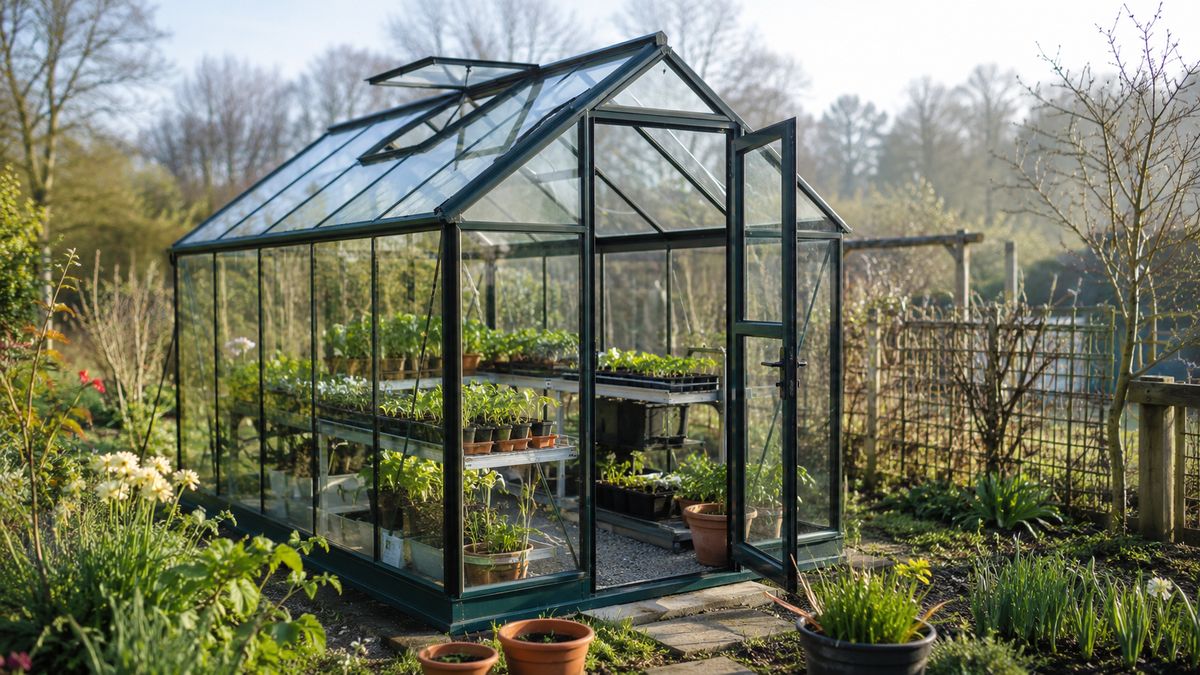
A small greenhouse extends the growing season by trapping warmth and shelter, which matters most in cold continental and short-season climates (Köppen D and cooler C zones) such as northern Europe, Canada, and inland temperate regions. Success depends less on the structure itself and more on three things done well: siting, ventilation, and a realistic plan for heat.
Decide what the greenhouse is for
Choose the job before the structure, because overwintering tender plants, starting seeds early, and growing summer crops in a cool climate all need different setups. A space used mainly to protect plants over winter needs frost exclusion and good airflow; a space used to start seeds in late winter needs warmth and light at bench height.
Site it for light and shelter
Place a greenhouse where it gets strong light for most of the day and some shelter from the harshest wind. In cool climates, maximizing winter light is usually the priority, so avoid shading from buildings and large trees. Level, well-drained ground makes the structure safer and easier to use.
Ventilation prevents most problems
Good ventilation is the single most important factor in a healthy greenhouse, because still, humid air encourages fungal disease and lets temperatures spike on sunny days. Roof vents, side vents, or a door that can be opened, ideally with automatic vent openers, keep air moving even when you are not there to manage it.
Heat only as much as you need
Decide on a target minimum temperature and heat only to that level, since heating a greenhouse through a cold winter can be expensive. Many gardeners aim only to keep the space frost-free rather than warm. Insulating with bubble film, grouping plants, and using thermal mass like water containers all reduce the heat you must supply. Follow manufacturer and electrical-safety guidance for any heater used in a damp space.
Shading and summer overheating
In summer a small greenhouse can overheat quickly, so shading and extra ventilation become the priority instead of heat. Shade paint, shade cloth, and wide-open vents help keep temperatures in a usable range. The same shade-density logic used for outdoor crops applies here.
What to grow and when
Use the greenhouse to start seeds earlier, harden plants in stages, overwinter tender perennials, and stretch the season for warm-season crops in cool climates. It pairs naturally with cold frames for early brassicas and with succession planting to keep a small space productive.
Manage water and humidity
Watering needs in a greenhouse change with the season and the weather, so check plants rather than watering on a fixed routine. In bright, warm spells plants dry quickly and may need daily attention; in cool, dull weather the same plants need very little, and overwatering then is a common cause of rot and disease. Watering in the morning lets foliage dry before the cooler night, which reduces fungal problems, and damping down floors in hot weather raises humidity without wetting leaves.
Keep it clean and pest-free
A greenhouse concentrates plants in a warm, sheltered space, which also suits pests and diseases, so routine hygiene matters more than it does outdoors. Remove dead leaves and fallen debris, space plants for airflow, and inspect new arrivals before bringing them in. An annual clean of the glazing and surfaces between seasons reduces carried-over problems and lets in more of the light that cool-climate growing depends on.
Small greenhouse questions
Does a small greenhouse need heating?
Not always. Many are used unheated for season extension and frost protection. Heating is only needed if you want to keep tender plants growing through a cold winter.
Why is my greenhouse getting moldy or diseased?
Poor ventilation is the usual cause. Still, humid air encourages fungal problems, so improving airflow with vents and open doors is the first fix.
How hot can a small greenhouse get in summer?
Without ventilation and shading it can overheat to plant-damaging levels on a sunny day. Open vents and shade cloth or shade paint keep it usable.