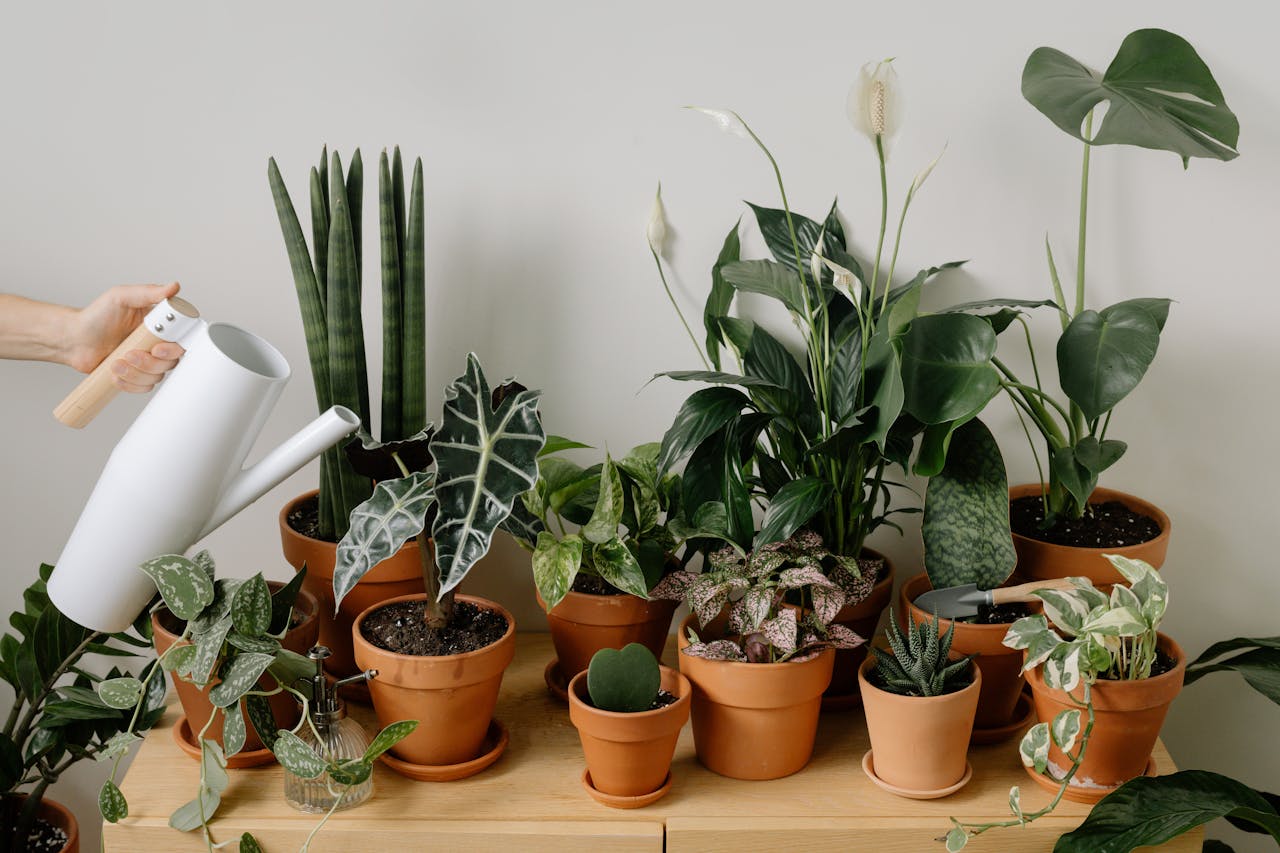
Most houseplants are not killed by one missed watering. They are more often weakened by repeated small mistakes: a pot without drainage, water left in a saucer, heavy soil, or a fixed schedule that ignores light and season.
Indoor soil dries at different speeds
A plant in bright light uses water faster than the same plant in a dim hallway. A small terracotta pot dries faster than a large plastic pot. A newly repotted plant with extra soil around the roots can stay wet longer than expected. These details explain why one-size-fits-all watering schedules fail indoors.
A better way to decide when to water
- Feel the potting mix before watering. For many foliage plants, the top inch or two should dry before the next deep watering.
- Lift the pot when dry and again after watering. Weight is one of the quickest ways to learn moisture level.
- Water slowly until excess runs from the drainage holes. This moistens the full root zone and flushes some salts.
- Empty saucers after drainage finishes. Roots need oxygen as much as they need water.
- Reduce watering in darker winter months and increase checks during heat, brighter spring growth, or active flowering.
Water the pot, not the calendar
Water the potting mix, not the calendar. Check the soil, water thoroughly when the plant needs it, let excess drain, and adjust frequency as light, temperature, pot size, and season change.
Useful tools without overcomplicating care
A moisture meter can help beginners, but your finger, pot weight, and leaf response are more reliable over time. The best purchases are pots with drainage holes, a well-aerated potting mix, and a tray you actually empty.
A simple moisture check that improves with practice
Lift the pot after a thorough watering and again when the mix is close to dry. The difference in weight is often more reliable than touching only the surface. A wooden skewer inserted into the root zone can also show whether the centre remains damp.
Plants in plastic nursery pots, glazed ceramic, terracotta, and self-watering containers dry at different rates. The same plant may need a different routine after repotting, moving closer to a window, or entering a cooler season. Recheck the pot rather than carrying the old schedule forward.
Pot size, light, roots, and room conditions
Succulents, snake plants, and ZZ plants prefer drying more deeply between waterings than ferns or peace lilies.
Brown leaf tips do not always mean underwatering. Dry air, fertilizer salts, or inconsistent care can look similar.
Yellowing lower leaves with damp soil often point to overwatering. Yellowing with bone-dry soil may point to neglect.
Self-watering pots can work well for thirsty plants, but they are risky for species that dislike constantly moist roots.
Humidity helps some tropical plants but does not replace watering the root zone.
Habits that keep roots wet for too long
- Adding a little water every day, which wets the surface while deeper roots stay poorly managed.
- Using decorative pots without checking whether the inner pot sits in water.
- Assuming drooping always means thirst; overwatered roots can also cause wilt.
- Repotting into a much larger pot, which leaves unused soil wet for too long.
Watering changes with the room and the season
The same plant may need very different care in July and January. Short days, cooler rooms, and slower growth can keep potting mix wet for much longer. Heating vents may create the opposite problem by drying leaves and small pots quickly. Recheck the soil rather than carrying a summer routine into winter.
Light is the strongest clue. A plant moved deeper into a room generally uses water more slowly, even when the air feels warm. If yellow leaves appear, use the sequence in the yellow-leaf troubleshooting guide before changing several things at once. Plants in dim rooms also benefit from the placement advice in the low-light houseplant guide. The goal is not to keep every pot equally moist; it is to match water to root activity.
Common watering questions
Is tap water safe for houseplants?
Usually yes, though sensitive plants may show tip burn if water is very hard or heavily treated. Letting water sit overnight can help with chlorine odor but not dissolved minerals.
Should I mist houseplants?
Misting offers brief surface moisture but does not raise humidity for long. Grouping plants or using a humidifier is more effective.
How do I know if I overwatered?
Look for damp soil that stays wet, yellowing leaves, soft stems, fungus gnats, or a sour smell from the potting mix.
Can bottom watering help?
Yes for some plants. Let the pot absorb water from below, then remove it before it sits too long. Do not use bottom watering as a reason to ignore drainage.
What yellow, soft, or curled leaves may mean
If the soil smells sour, the pot is heavy, and leaves are yellowing, remove the plant from standing water and let the mix dry. If roots are black and mushy, trim damaged roots and repot into fresh mix. If leaves crisp while soil is dry, water deeply and review light exposure.