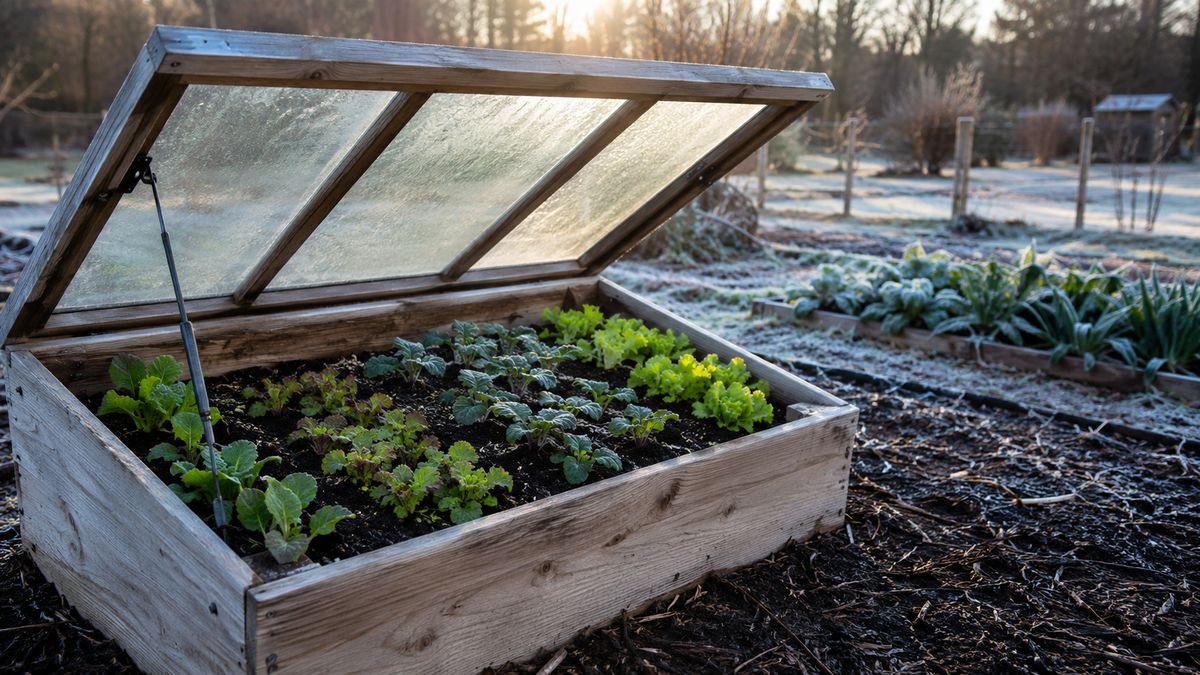
A cold frame is a low, transparent-topped box that traps warmth and shelters plants, letting gardeners in cold climates start crops earlier in spring and harvest hardy greens later into autumn and winter. It is cheaper and simpler than a greenhouse and is especially useful for early brassicas, salad crops, and hardening off seedlings.
What a cold frame does
A cold frame raises the temperature and humidity around plants and blocks wind, creating a sheltered microclimate a few degrees warmer than the open garden. That small difference is often enough to start cool-season crops weeks earlier and to keep hardy greens producing after outdoor growth would have stopped.
Site and orient it well
Place a cold frame in a sunny, sheltered spot with good drainage, where it captures low-angle sun in the cooler months. In the Northern Hemisphere, sloping the lid toward the south catches more winter light; in the Southern Hemisphere, slope it toward the north. Against a wall, the stored warmth adds a little extra protection.
Venting is the key skill
Opening the lid on sunny days is the most important habit, because a closed cold frame can overheat dangerously even when the air outside feels cold. Prop the lid open during the day and close it before evening to hold warmth overnight. On mild days, more air; on frosty nights, keep it shut and consider extra cover.
What to grow in a cold frame
- Early brassicas and other cool-season transplants started ahead of the open season.
- Salad leaves, spinach, and other hardy greens for late and early harvests.
- Herbs that need shelter rather than heat over winter.
- Overwintering young plants that are hardy but not tough enough for full exposure.
Hardening off and transitions
A cold frame is an ideal halfway house for hardening off seedlings raised indoors, since you can increase exposure gradually by opening the lid more each day. It connects well with succession planting by giving you an early and a late slot a regular bed cannot.
Build or improvise a cold frame
A cold frame can be bought or improvised cheaply, because the essentials are simple: low walls to trap warmth and block wind, and a transparent, sloping lid that can be opened. Old windows, clear rigid sheets, or repurposed transparent containers all work as lids over a frame of wood, brick, or straw bales. The key features are a tight enough fit to hold warmth, a lid that can be propped at different heights for venting, and a slope that sheds rain and faces the low winter sun.
Winter and frost management
On the coldest nights even a closed cold frame can dip near freezing, so hardy plant choices and extra insulation matter. Old blankets, bubble film, or a layer of straw over the lid on hard frost nights add useful protection, removed again in the morning for light. Raising plants off cold ground and keeping the soil only lightly moist, not wet, both reduce cold and rot damage through the depths of winter.
Common cold frame mistakes
- Leaving the lid shut on a sunny day, which can cook plants even in cold weather.
- Forgetting to close it before evening, losing the warmth needed to protect plants overnight.
- Overwatering in cool, low-light conditions, which encourages rot and fungal disease.
- Trying to grow tender summer crops in winter, when a cold frame only shifts the season at the margins.
- Siting it in shade, where it captures too little of the low winter sun to make a difference.
Cold frame questions
How much warmer is a cold frame than the open garden?
Usually only a few degrees, but that small, wind-free margin is often enough to start crops earlier and extend harvests later in cold climates.
Do I need to open a cold frame in winter?
On sunny days, yes. A closed frame can overheat even in cold weather, so venting during the day and closing it at night is the core routine.
Can a cold frame replace a greenhouse?
For season extension and hardy crops, often yes. It cannot heat a space or grow tender summer crops through a cold winter the way a heated greenhouse can.