A low-maintenance front yard reduces the time, water, and money a garden needs by leaning on a few principles that work in any climate: less thirsty lawn, plants suited to local conditions, generous mulch, efficient watering, and simple, clear structure. The specific plants change by region, but the strategy does not.
Rethink the lawn
Lawn is usually the most demanding part of a front yard, needing regular mowing, feeding, and water, so reducing it is the fastest route to lower maintenance. Replacing some or all of it with planted beds, groundcover, or a low-water alternative cuts ongoing work and, in dry climates, saves the most water.
Choose climate-suited plants
The most reliable low-maintenance plants are those adapted to your local climate and soil, which need less watering, feeding, and intervention than plants chosen only for appearance. In hot, dry regions that means drought-tolerant and native species; in cold regions it means fully hardy perennials and shrubs. Choose a few types and repeat them for a calm, cohesive look that is easier to care for than a mix of many.
Use mulch to cut maintenance
A good mulch layer suppresses weeds, holds moisture, and reduces watering, which directly lowers maintenance. Organic mulches also improve the soil as they break down; the material comparison in the mulch guide helps you choose, and keeping mulch slightly clear of stems avoids rot.
Water efficiently
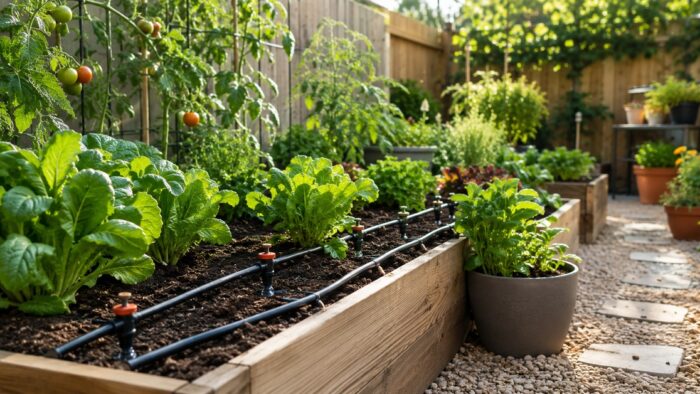
Efficient watering means less work and less waste: drip irrigation on a timer delivers water to the roots with little evaporation, as covered in a simple drip irrigation setup. Grouping plants by water need, and capturing rainfall with rain barrels where rules allow, reduces the watering a front yard demands.
Design for simplicity
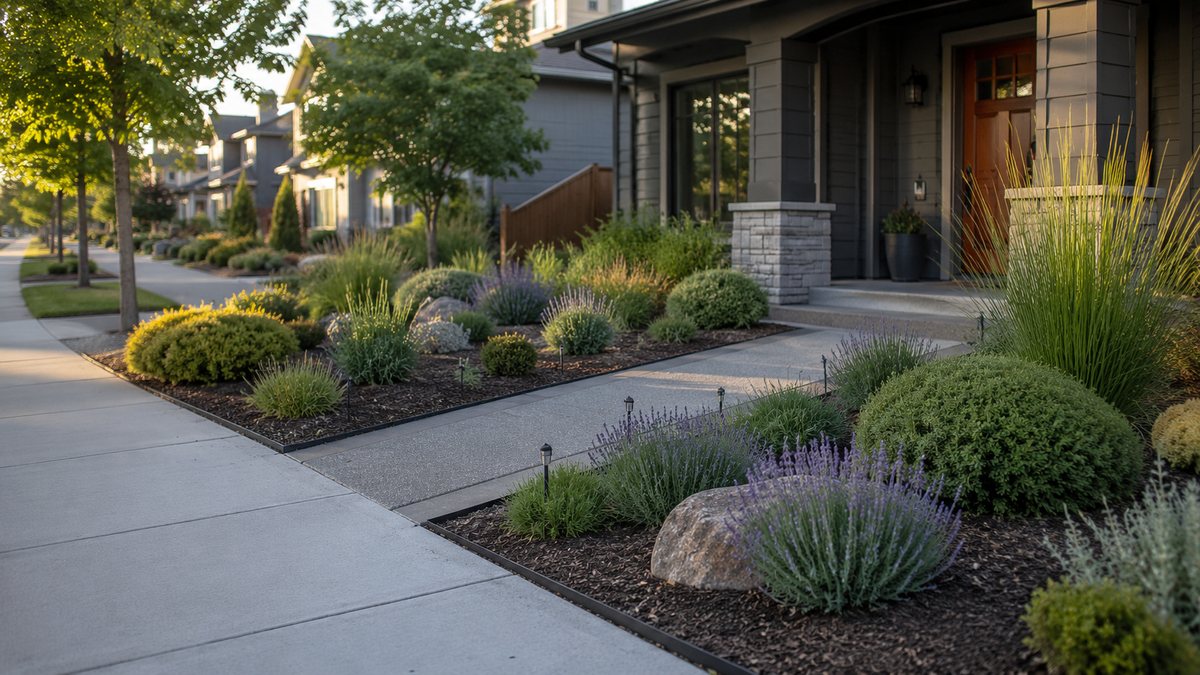
- Use defined beds and clean edges so maintenance is quick and the garden looks tidy with little effort.
- Favour perennials and shrubs over high-input annuals and fussy features.
- Limit the number of plant types and repeat them for cohesion and easier care.
- Choose durable, low-care hard surfaces for paths instead of areas that need constant upkeep.
A front yard by climate
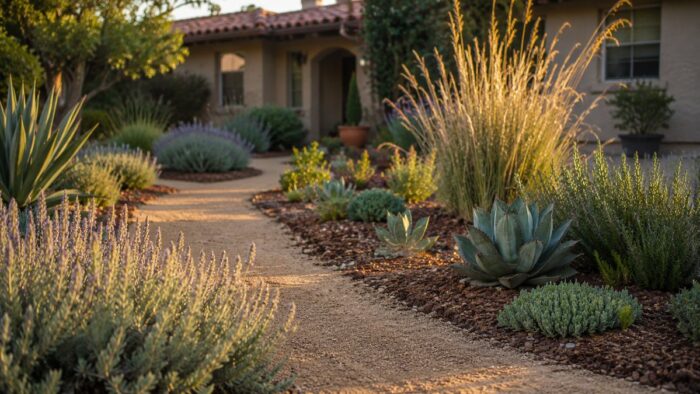
The same low-maintenance framework looks different in different climates, which is what makes it work for a worldwide audience. In hot, dry regions it leans on gravel mulch, drought-tolerant and native planting, and minimal lawn. In cold climates it favours fully hardy shrubs and perennials that survive winter unaided and need no lifting or wrapping. In mild, wet climates the emphasis shifts to good drainage and plants that cope with damp, with mulch used more for weed control than moisture. In each case the work drops because the plants suit the place.
A realistic low-care routine
Low-maintenance does not mean no maintenance, and a light seasonal routine keeps the garden from sliding backwards. A yearly mulch top-up, an annual tidy of perennials and shrubs, occasional weeding before anything sets seed, and a check of the irrigation timer cover most of what a well-designed front yard needs. Building the garden around plants suited to your climate is what keeps that routine short rather than constant.
Phased changes on a budget
A low-maintenance front yard does not have to be installed all at once, and phasing the work spreads both cost and effort. A practical order is to shrink the highest-maintenance lawn area first, mulch the cleared ground to suppress weeds immediately, then plant climate-suited beds in stages as budget allows. Starting with a few well-chosen, repeated plants and adding more over seasons is cheaper and lower-risk than a single large planting, and it lets you see how each area performs in your conditions before committing the whole front garden to one approach.
Low-maintenance front yard questions
What is the lowest-maintenance front yard option?
Reducing or replacing lawn with climate-suited planting and mulch is usually the biggest single reduction in ongoing work, especially when paired with efficient watering.
Does low-maintenance mean no plants?
No. It means choosing plants suited to your climate and grouping and mulching them so they need less water, feeding, and intervention, not removing greenery.
Will these ideas work in both hot and cold climates?
Yes. The principles, less lawn, climate-suited plants, mulch, and efficient watering, apply everywhere; only the specific plant choices change by region.