A damaged leaf does not identify the cause. Yellowing, holes, spots, and wilt can come from weather, roots, insects, disease, nutrition, or physical injury. Spraying before diagnosis can waste money, harm useful organisms, and hide the pattern that would have led to the right answer.
Confirm the plant
Know the species and, where possible, the variety. Normal markings, seasonal leaf drop, and mature colour differ between plants. A treatment labelled for one crop may not be legal or safe on another.
Describe the symptom without naming a cause
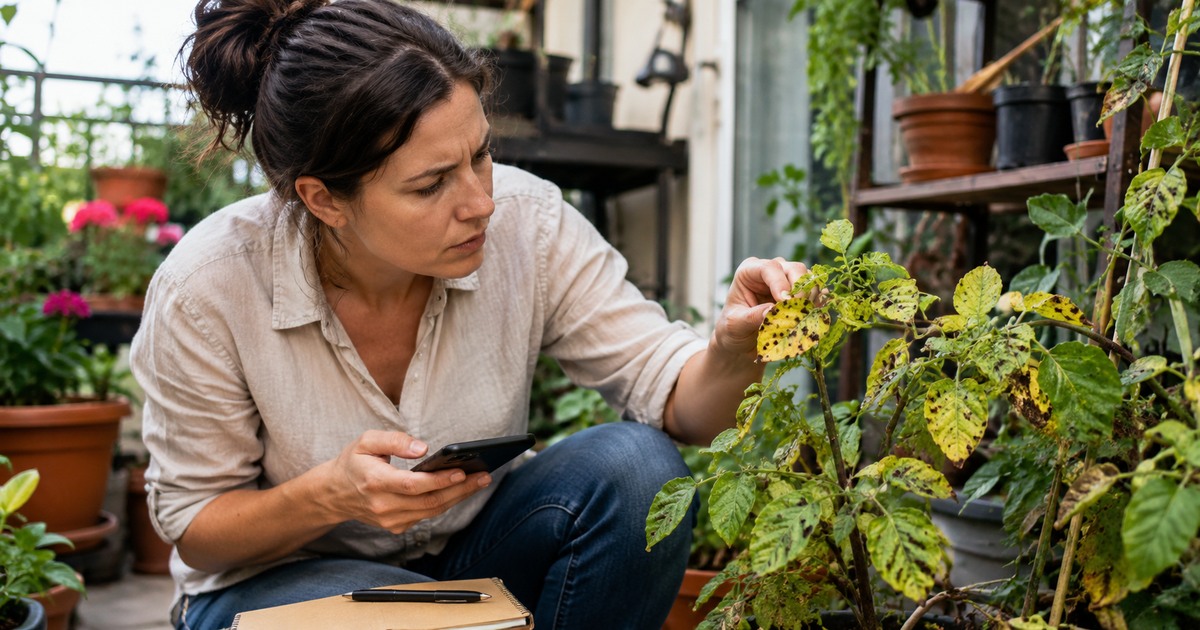
Write “brown spots with yellow edges on older lower leaves” rather than “fungus.” Note which leaves are affected, whether spots cross veins, whether tissue is dry or soft, and whether the problem is spreading.
Look at the pattern in the garden
- One plant may suggest root damage or a local injury.
- A whole row may point to irrigation, soil, or a shared treatment.
- Plants near a wall may experience reflected heat.
- Damage on the windward side can be environmental.
- Random chewing with droppings may indicate an animal or insect.
Review what changed recently
Consider transplanting, fertilising, herbicide use nearby, a cold night, heavy rain, pruning, or a missed irrigation. The timing of symptoms often narrows the possibilities more effectively than a photograph alone.
Inspect roots and stems when justified
Check the crown for damage, the soil for waterlogging, and accessible roots for firmness. Do not uproot every plant. Compare a sick plant with a healthy one in the same area. Indoor growers can use the yellow-leaf sequence for common moisture and light clues.
Search for the organism, not just the injury
Look under leaves at different times of day. Use a hand lens. Check for eggs, cast skins, webbing, droppings, or insects that match the damage. Remember that predators and pollinators may be present beside the pest.
Choose the least disruptive effective response
Correct watering, remove a small infected area, improve spacing, use a barrier, or hand-pick when practical. The progression in the garden pest control guide starts with prevention and monitoring. If a pesticide is needed, the label determines the plant, pest, rate, protective equipment, and harvest interval.
Know when to seek local help
Rapidly spreading disease, regulated pests, unexplained tree decline, and problems affecting a food crop may need a local extension service, diagnostic laboratory, certified arborist, or other qualified professional. Bring clear photos, a timeline, and a representative sample rather than only the most damaged leaf.
Take photographs that preserve the pattern
Start with a wide photo of the whole plant and nearby area, then photograph the affected branch, both leaf surfaces, stems, soil line, and any insect or sign. Include a ruler or coin for scale when size matters. A close-up alone can remove the context needed for diagnosis.
Collect a useful sample
A diagnostic sample should include living tissue at the boundary between healthy and affected areas, not only a dead leaf. Keep roots and soil separate when requested. Do not mail wet material in a sealed plastic bag unless the laboratory instructs it, because decay during shipping can obscure the original problem.
Separate living causes from environmental causes
Living causes may spread from plant to plant or produce characteristic signs such as spores, insects, webbing, or bacterial ooze. Environmental injury often follows a weather event, irrigation pattern, chemical exposure, or physical boundary. Both can occur together: a stressed plant can become more vulnerable to disease.
Online identification has limits
Image tools and forums can suggest possibilities, but colour, scale, and location are easily misread. A confident label generated from one photograph should not justify pesticide use on an edible crop. Use local extension resources or a diagnostic laboratory when the consequence matters.
Read the label before buying
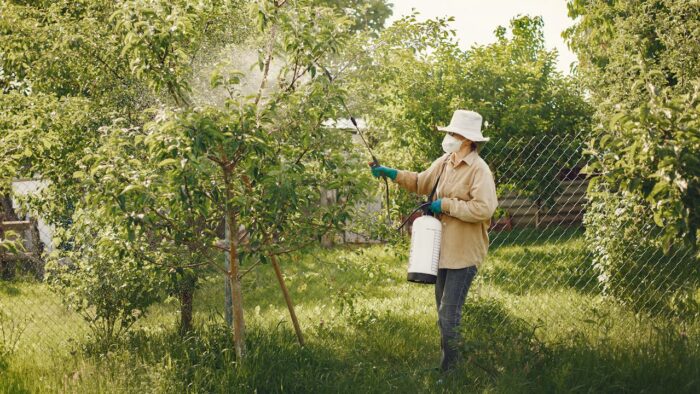
A product can be legal for one pest on an ornamental and illegal for the same pest on a food crop. Confirm the crop, pest, application site, rate, protective equipment, re-entry guidance, and harvest interval before purchase. Avoid combining products unless the label allows it.
Document the result
Write down the intervention and date. If the plant improves, that does not prove the original diagnosis, but it helps narrow future decisions. If the problem continues, the record prevents repeated use of an ineffective treatment.
Diagnosing plant problems: quick answers
Should I spray a pesticide as soon as I see leaf damage?
No. Spraying before diagnosis can waste money, harm beneficial insects, and obscure the pattern needed to identify the actual cause.
What’s the first thing to check when a plant looks unwell?
Confirm what changed recently – watering, light, or temperature – before assuming pests or disease, since environmental shifts cause many of the same symptoms.
When should I get local expert help instead of diagnosing alone?
When a problem spreads quickly across multiple plants or species, which often points to a localized pest or disease issue best confirmed by a local nursery or extension service.