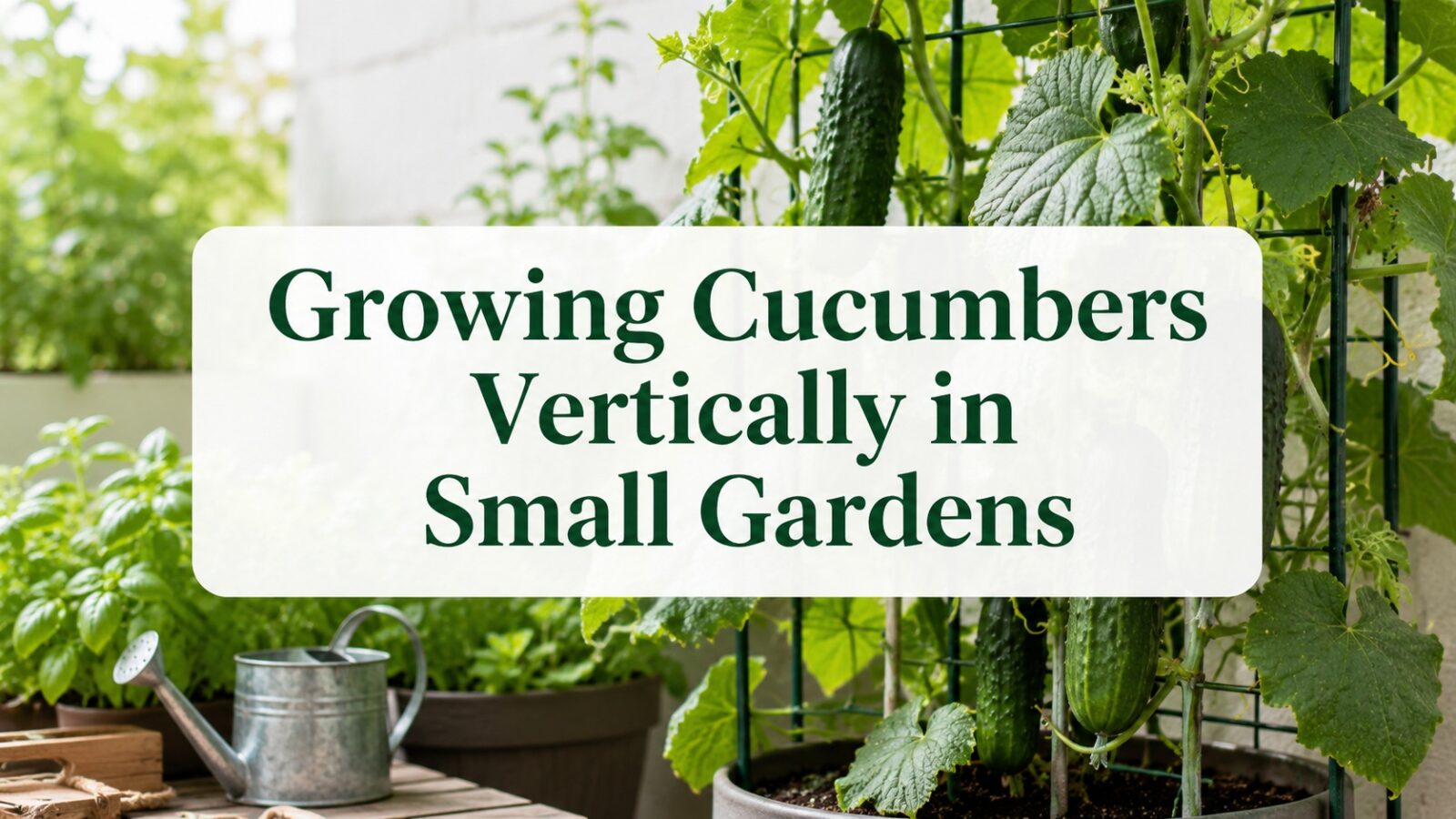
Cucumbers are space-hungry plants, but vertical growing makes them realistic for small gardens. A trellis lifts vines off the soil, improves airflow, makes harvesting easier, and can reduce fruit damage when watering and pollination are handled well.
Choose a trellis before the vines run
Choose vining or compact varieties suited to trellises, give them full sun, install support before vines run, water consistently, and check flowers and fruit often. Vertical cucumbers still need rich soil and steady moisture.
Training cucumbers upward
- Select a sturdy trellis at planting time. Cattle panel, netting, A-frame supports, and string systems can work.
- Plant after soil warms and frost risk has passed.
- Train young vines gently toward the support instead of forcing brittle stems.
- Mulch the base to keep soil moisture more even.
- Harvest frequently while fruit is young and tender.
Vertical growth improves access and airflow
Cucumbers grow quickly in warm weather and have shallow roots. Stress shows up fast as bitter fruit, misshapen cucumbers, wilting, or poor flowering. A trellis saves space but increases exposure to wind and drying, so watering becomes important.
Why trellised vines still struggle
- Using a weak trellis that collapses once vines are heavy.
- Letting plants dry repeatedly during flowering and fruiting.
- Planting too early in cold soil.
- Ignoring cucumber beetles until plants are already stressed.
Leave enough room to harvest
A trellis saves ground space, but the leaves can still form a dense wall. Place it where you can reach both sides, inspect lower leaves, and pick fruit without bending vines sharply. A narrow path behind the trellis is often more valuable than squeezing in another row.
Guide young vines while stems are flexible. Tendrils usually attach on their own, but loose ties can direct growth. Avoid tight loops around expanding stems, and support unusually heavy fruit with a sling if the variety needs it.
Pollination in a vertical planting
Cucumber vines may grow strongly while producing little usable fruit if pollination is weak. Female flowers have a small swelling behind the petals, while male flowers do not. Insect activity, weather, and variety type all affect fruit set.
Parthenocarpic varieties can form fruit without pollination and may suit protected balconies, but always check the seed description. Do not assume that every compact or greenhouse cucumber has the same requirement.
Tendrils, ties, watering, and pollination
Slicing cucumbers and pickling cucumbers both grow vertically if the variety vines well.
Parthenocarpic varieties can set fruit without pollination, useful under netting or in protected spaces.
Consistent watering helps reduce bitterness and misshapen fruit.
Powdery mildew often appears late in the season, especially with poor airflow.
Do not let oversized fruit remain on the vine; it signals the plant to slow production.
Misshapen fruit, yellow leaves, and wilt
Bitter cucumbers often come from heat and water stress. Misshapen fruit can come from poor pollination or uneven growth. Sudden wilting may indicate root stress, disease, or pest damage and should be checked quickly.
Trellis shapes for small spaces
Buy a strong reusable trellis before buying multiple cucumber varieties. If your garden has heavy pest pressure, consider row cover early in the season and remove it when pollination is needed unless using varieties that do not require pollination.
Train cucumber vines while they are still flexible
Check the trellis every few days during warm weather. Young vines can be guided gently around supports, but older stems snap easily. Use soft ties only where the plant cannot hold itself, leaving room for the stem to thicken. Keep fruit from becoming trapped behind mesh or resting on sharp edges.
Vertical plants expose more leaves to wind and can dry faster than sprawling vines. Water the root zone deeply and mulch after the soil warms. A simple line from the drip irrigation guide can keep moisture steadier, and the spacing ideas in the companion planting guide help avoid crowding the base with crops that compete heavily. Good training improves access and airflow; it does not replace suitable soil or regular harvest.
Vertical cucumber questions
Can bush cucumbers grow vertically?
Some compact types can be supported, but vining varieties usually make better use of a trellis.
How tall should a cucumber trellis be?
Five to six feet is practical for many home gardens, though vigorous varieties may climb higher.
Do cucumbers need pollinators?
Many traditional varieties do. Some parthenocarpic varieties set fruit without pollination.
How often should I harvest cucumbers?
Check every day or two in peak season because fruit can become oversized quickly.