Peppers often test a gardener’s patience before they test gardening skill. Seeds can be slow in cool mix, seedlings resent weak light, and outdoor plants may pause when nights remain cold. The most productive approach is to protect steady growth rather than push plants with repeated fertiliser.
Warm the seed zone, not the whole room
Use fresh seed-starting mix and sow at the packet depth. A controlled heat mat can warm the mix during germination, but monitor moisture because warm trays dry faster. Remove or reduce bottom heat after seedlings emerge if the room is already warm.
Give seedlings bright overhead light
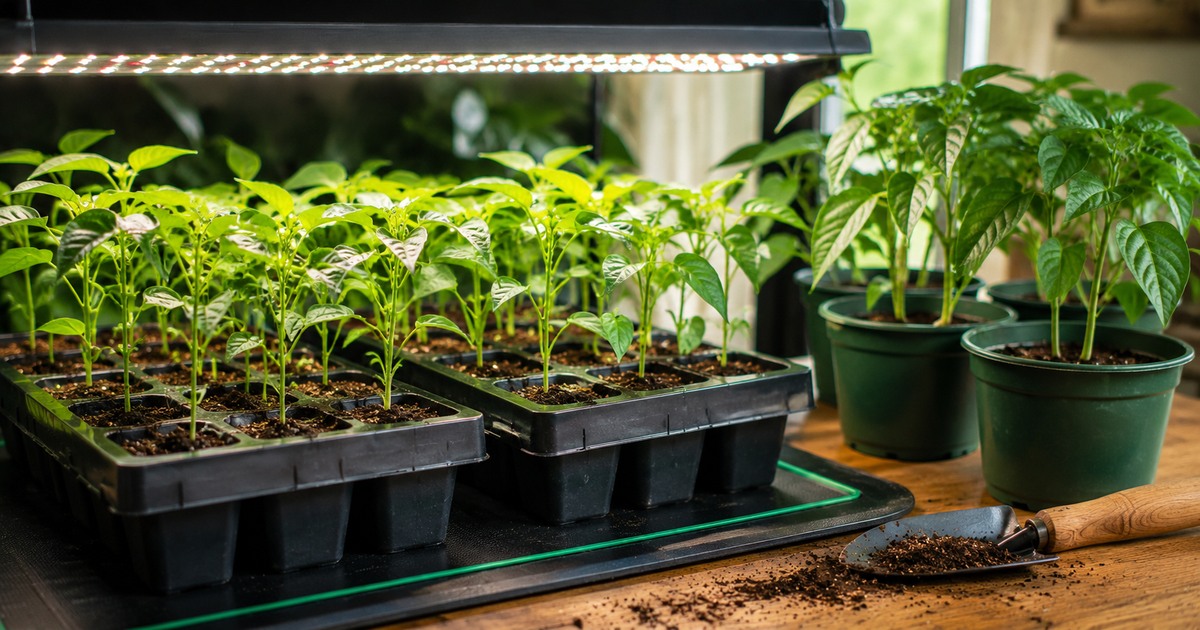
A sunny window alone often produces leaning, stretched stems. Keep a suitable grow light above the tray and adjust it as plants grow. The principles in the grow-light guide apply to seedlings too, although young plants usually need stronger, more even coverage than shade-tolerant houseplants.
Pot up only when roots need room
Move seedlings from crowded cells after true leaves develop, handling them by leaves rather than crushing stems. Use containers that drain and avoid oversized pots that remain wet. If roots circle the cell, loosen them gently at transplanting.
Do not let early flowers distract from establishment
Seedlings sometimes flower indoors when they are held too long. Removing early buds can help a small plant direct energy toward roots and branches before outdoor planting. The priority is a compact plant with a sturdy stem, not a pepper fruit on a windowsill-sized transplant.
Wait for warm nights
Harden plants gradually using the process in the seedling hardening guide. Plant after local frost risk has passed and nights are reliably mild. Cold soil can stall peppers even when daytime air feels warm.
Keep moisture steady after fruit forms
Water the root zone deeply, mulch after the soil has warmed, and avoid cycles of severe wilting. Too much nitrogen can produce a large leafy plant with delayed fruit. Use a soil test and moderate feeding rather than assuming every slow plant is hungry.
Harvest according to flavour and season
Most peppers can be picked green or allowed to ripen to their mature colour. Ripe fruit is usually sweeter or hotter, depending on the variety, but leaving every fruit to full colour can slow new production. Harvest with scissors or pruners to avoid tearing branches, and wear gloves when handling very hot varieties.
Choose varieties by days and climate
A long-season hot pepper may not ripen in a cool short summer without an early start or protected growing. Compact sweet peppers and smaller-fruited hot types often mature sooner. The “days to maturity” figure usually begins from transplanting for many pepper listings, not from sowing, so read the seed description carefully.
Temperature affects flowers as well as seedlings
Cold nights can stall growth, while extreme heat can cause flowers to drop or pollen to perform poorly. Shade cloth may help during exceptional heat, but over-shading reduces energy. Keep roots moist and avoid moving a container between radically different conditions every day.
Growing peppers in containers
Use a stable pot with enough volume for the variety and support tall branches before fruit becomes heavy. Containers warm early but also dry quickly. Mulch lightly after the weather is warm, and check moisture at depth. One healthy plant in a suitable pot often outperforms several crowded plants.
Common fruit problems
- Blossom-end rot is linked to disrupted calcium movement, often during uneven moisture, rather than simply a lack of calcium in the soil.
- Sunscald appears on fruit suddenly exposed after heavy pruning or leaf loss.
- Small fruit can reflect variety, crop load, root restriction, or cool conditions.
- Leafy plants with few flowers may have received excessive nitrogen or insufficient light.
Harvest without damaging branches
Use scissors or pruners, especially on brittle plants. Green peppers are immature but usable; mature colour often brings sweeter flavour in bell types and fuller heat or aroma in hot types. Harvesting some fruit early can help the plant continue flowering.
Seed saving requires the right variety
Open-pollinated peppers can be saved, but nearby pepper varieties may cross through insect activity. Hybrid seed will not reliably reproduce the parent. Allow selected fruit to mature fully, handle hot peppers carefully, dry seed thoroughly, and label it with the year and variety.
Blossom drop varies by climate
Pepper flowers can drop without setting fruit for different reasons depending on climate. In hot, arid regions (Köppen B), daytime temperatures above roughly 32-35°C (90-95°F) are the usual cause, and afternoon shade cloth often helps more than extra water. In humid tropical climates (Köppen A), high humidity can affect pollen viability even at moderate temperatures, so improving airflow around plants matters more than shade. In temperate climates (Köppen C), the more common culprit is the opposite problem: night temperatures below about 12-13°C (55°F), which is why peppers planted too early in cool temperate spring often flower without setting fruit.
Growing peppers in different climates: quick answers
Why are my pepper flowers falling off without fruit?
Check which extreme applies in your climate: very hot days, high humidity, or cool nights. The fix is different for each.
Can peppers be grown year-round in tropical climates?
Yes, peppers are often grown as short-lived perennials in consistently warm, frost-free climates, producing for more than one season.