A simple drip irrigation setup saves time and helps plants by putting water where roots can use it. It also reduces leaf wetness, which can lower disease pressure in many vegetable and fruit plantings. The best system is not complicated; it is easy to inspect and adjust.
Slow water delivery reduces runoff and leaf wetting
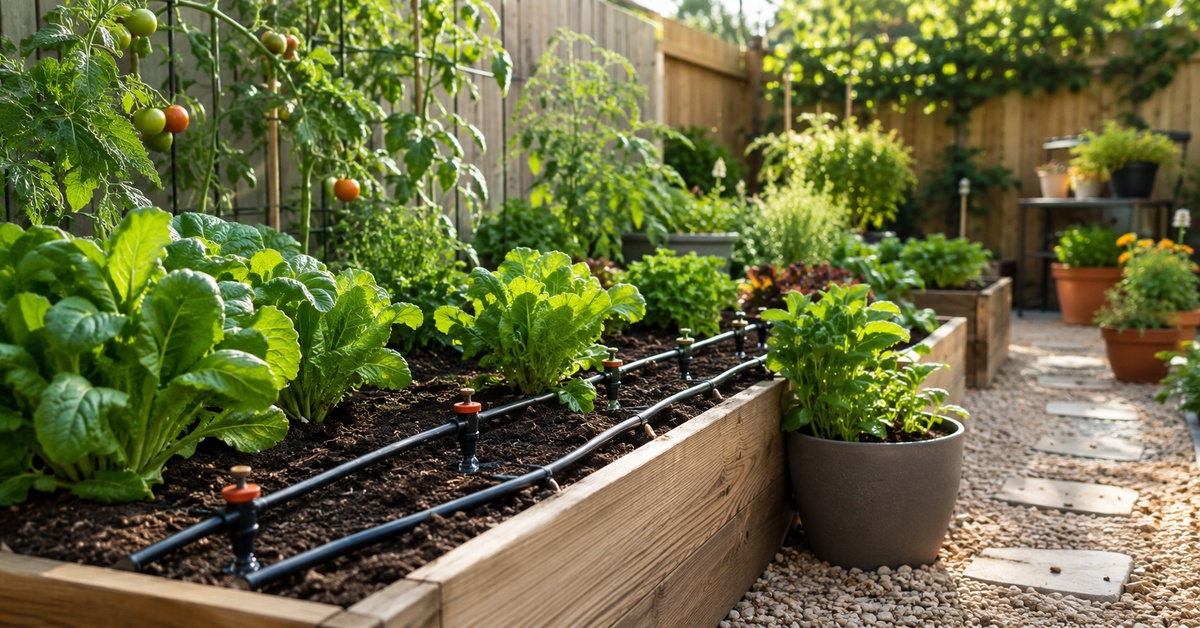
Drip irrigation works slowly. Instead of blasting the surface, it delivers water near the root zone. That makes it useful for raised beds, containers, rows, and fruit plantings, especially when summer schedules get busy.
Drip irrigation should match the bed, not the product box
Start with a hose bib, filter, pressure regulator, main line, drip tubing or emitters, and a timer if needed. Lay out zones by plant water needs and check soil moisture regularly because automation still needs supervision.
Pressure, emitter spacing, filters, and timing
A timer helps consistency but should not replace checking the garden after weather changes.
Drip lines under mulch lose less water to evaporation.
Containers may need separate lines because they dry faster than in-ground soil.
End caps should be easy to open for flushing debris.
Different emitters deliver different flow rates, so mixing randomly can create uneven watering.
Planning and assembling a simple system
- Sketch the garden and group plants with similar water needs.
- Install a filter and pressure regulator if using drip components that require low pressure.
- Run main tubing along the bed or row and secure it with stakes.
- Place emitters or drip lines near root zones, not against plant stems.
- Test the system before mulching and adjust run time based on soil moisture depth.
Test the system before trusting the timer
Run the system while watching every connection. Then dig a small hole near several emitters to see how far moisture spreads below the surface. The wet pattern matters more than the number printed on the emitter because soil texture changes how water moves.
Repeat the check after plants grow larger and weather changes. Roots expand, filters collect debris, and tubing can shift. A timer is useful, but it cannot detect a clogged line or a container that dries faster than the rest.
Adapting emitter placement as roots spread
Young transplants need water close to the original root ball. Mature plants use a wider area, so emitters may need to move or be added later. Trees, shrubs, beds, and containers should not all run for the same duration simply because they share one line.
Divide the garden into zones where possible. Similar plants and soil types are easier to water efficiently together.
Clogs, leaks, and dry spots
If some plants wilt while others thrive, check clogged emitters, line pressure, and plant spacing. If soil stays soggy, reduce run time or frequency. If fittings leak, check cuts, pressure, and connector compatibility.
Parts worth buying once
Begin with a small kit if the garden is simple, but check that replacement parts are standard sizes. For larger gardens, buy quality tubing, a filter, a pressure regulator, stakes, and a timer with manual override.
Why systems water unevenly
- Skipping the pressure regulator and popping fittings apart.
- Assuming wet surface mulch means the root zone is moist.
- Running one zone for crops with very different water needs.
- Forgetting to winterize or flush lines.
Test the system before plants depend on it
Run a new drip system with the beds empty or freshly planted. Watch every emitter, check the far end of each line, and place small containers under several outlets to compare flow. Soil can look wet at the surface while remaining dry below, so dig a narrow test hole after watering.
Recheck the system after filters are cleaned, lines are moved, or plants become larger. Mulch can hide leaks and clogged emitters, which is why the balance in the vegetable mulch guide matters. During extreme weather, use the adjustments in the heat-wave watering guide rather than simply doubling the timer. Irrigation should respond to soil and weather, not run unchanged all season.
Drip irrigation questions
Is drip irrigation better than sprinklers?
For many vegetable beds, drip is more efficient and keeps leaves drier, though sprinklers may be useful for germinating seedbeds.
How long should drip irrigation run?
It depends on emitter flow, soil, weather, and crop. Run it long enough to moisten the root zone, then adjust after checking soil.
Can I use drip irrigation in containers?
Yes, but containers often need separate emitters and more frequent monitoring.
Do I still need mulch?
Mulch pairs well with drip because it reduces evaporation and moderates soil temperature.