Companion planting is useful when it is treated as garden planning, not magic. Some pairings help because they improve space use, attract pollinators, confuse pests, or support beneficial insects. Others are repeated so often online that they sound proven even when evidence is thin.
Build a mixed bed around crop needs
- Start by listing the main crop and its needs for sun, water, space, and harvest access.
- Add companions that solve a specific problem, such as flowers for pollinators or quick greens between slow crops.
- Keep heavy feeders from competing too closely unless the soil is well prepared.
- Use flowers such as calendula, alyssum, dill, cilantro, and borage to support beneficial insects.
- Take notes each season. Companion planting works best when you observe what happens in your own garden.
Use companion planting as a layout tool
Use companion planting for practical goals: better spacing, longer harvests, pest monitoring, pollinator support, and soil coverage. Be cautious with claims that one plant automatically protects another from every pest.
Plant partnerships are often overstated
Plants interact in several ways. Tall crops can shade heat-sensitive greens. Flowers can feed beneficial insects. Aromatic herbs can attract pollinators, though they do not create an invisible shield around vegetables. Dense planting can suppress weeds but also reduce airflow if mismanaged.
Combinations that make practical sense
Basil near tomatoes is popular because the crops share warm conditions, not because basil guarantees pest-free tomatoes.
Nasturtiums can act as a trap or indicator plant for aphids, but they may also become heavily infested.
Marigolds have documented uses in some nematode situations, but results depend on species, timing, and soil conditions.
Interplanting lettuce under taller crops can extend harvest in warm weather by providing partial shade.
Crop rotation often matters more than companion pairings for disease and pest cycles.
What companion planting can realistically do
Mixed planting can help use vertical space, keep soil covered, spread harvest times, and make pest monitoring easier. Tall crops may provide afternoon shade for greens, flowers can support pollinator activity, and quick crops can occupy gaps before larger plants fill them.
What it cannot do is cancel poor soil, weak light, or overcrowding. Two plants described as companions still compete if their roots and leaves occupy the same space. Treat pairing advice as a design suggestion, then check mature size, water needs, crop family, and harvest access.
Using crop families to plan future beds
Companion planting should not replace crop rotation. Tomatoes, peppers, eggplants, and potatoes share a plant family and some soil-borne problems, even when they are surrounded by herbs or flowers. Keep a simple bed map so the next season does not place the same family in the same soil by accident.
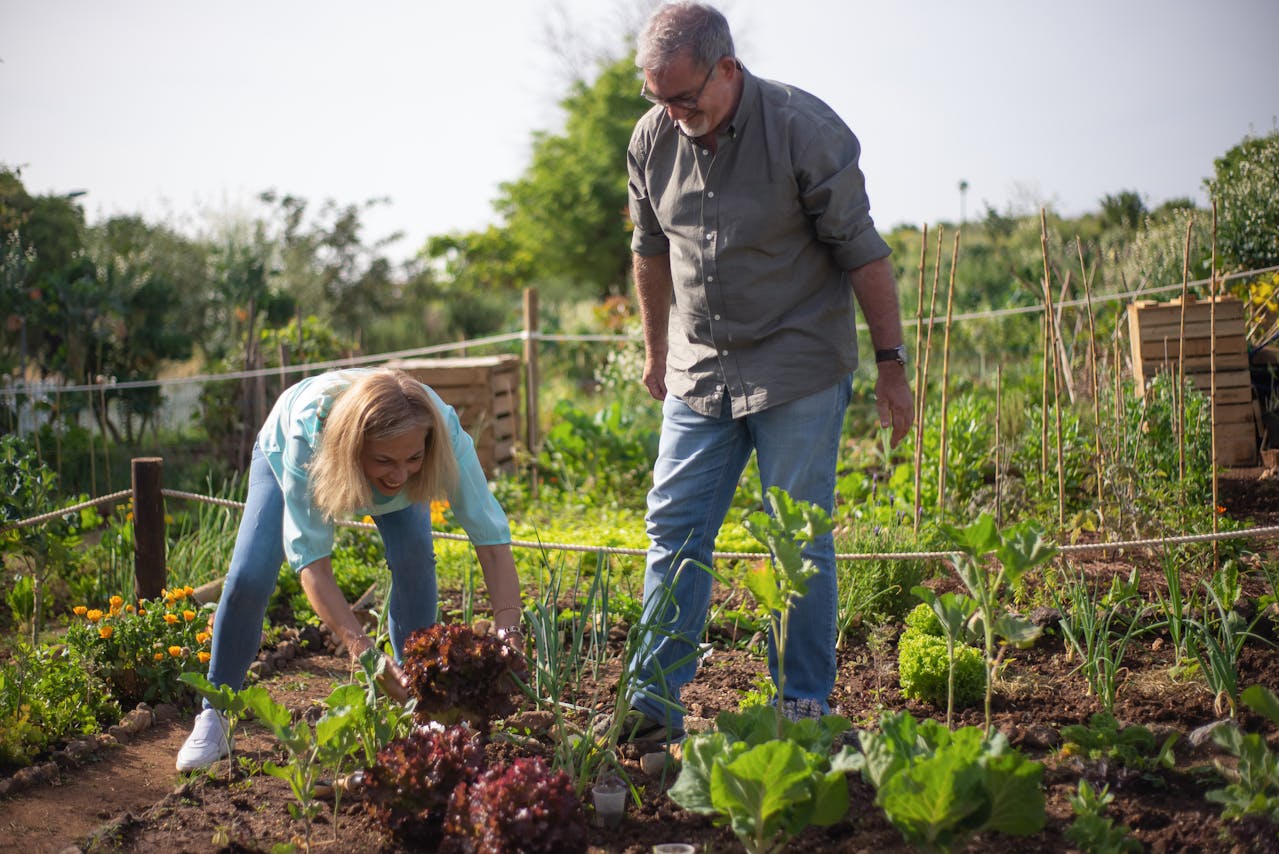
A mixed bed is easier to manage when each crop still has a clear planting area. Labels and spacing marks prevent small transplants from disappearing under faster neighbours.
When mixed planting becomes too crowded
If companion planting seems to fail, check whether the pest was identified correctly. Aphids, flea beetles, hornworms, and fungal diseases require different responses. Also check crowding, watering, and crop rotation before blaming the pairing.
Claims worth treating cautiously
- Planting companions so densely that airflow drops and disease risk rises.
- Assuming every pest problem can be solved with one herb.
- Ignoring water needs when mixing plants in containers.
- Repeating internet charts without checking whether the plants share the same season.
Labels, spacing guides, and simple records
Buy seed packets with staggered bloom times rather than one flat of flowers that bloom briefly. If space is limited, choose edible flowers and herbs that serve multiple roles: pollinators, kitchen harvest, and insect habitat.
Use companion planting for a purpose, not as folklore
A useful pairing should solve a visible problem. One crop may shade the soil, another may finish early and free space, or flowers may attract insects that prey on pests. Write down the purpose before planting. That makes it easier to judge whether the combination helped.
Do not expect a neighbouring herb to make a pest disappear. Scouting, crop rotation, sanitation, and physical barriers usually matter more than scent-based claims. The prevention sequence in the home-garden pest guide is a stronger foundation. In tight beds, combine crops with different heights and harvest dates, an approach that also appears in the small-space vegetable guide. Good companions share space without competing heavily for light, water, or root room.
Questions about plant pairings
Does basil really improve tomato flavor?
There is no reliable home-garden rule that basil changes tomato flavor. They simply grow well in similar warm, sunny conditions and are convenient kitchen companions.
What flowers are useful in vegetable gardens?
Alyssum, calendula, dill, cilantro, borage, zinnia, and marigold can support pollinators or beneficial insects when managed well.
Can companion planting replace pest control?
No. It is one part of prevention, along with healthy soil, crop rotation, inspection, barriers, and targeted action when needed.
Should I follow companion planting charts exactly?
Use charts as ideas, not rules. Your climate, spacing, soil, and pest pressure matter more than a universal pairing list.