Shade cloth is a knitted or woven fabric that blocks a set percentage of sunlight, used to protect vegetables from heat stress, sunscald, and blossom drop during extreme heat. It is most useful in hot summer climates and during heat waves, and it works best as a temporary, well-ventilated cover rather than a permanent roof over the garden.
When shade cloth actually helps
Shade cloth helps when high light and heat are damaging plants faster than water can compensate. Common signs are leaf scorch, bleached or sunken patches on fruit, flowers dropping without setting, and bolting in cool-season crops. As covered in watering during heat waves, not every heat symptom is a watering problem, and shade is often the better fix.
Choosing the right shade percentage
Shade cloth is sold by the percentage of light it blocks, and for vegetables a moderate density is usually right. Around 30 to 40 percent suits most fruiting vegetables that still need strong light to produce, while 50 percent or more suits leafy greens and seedlings or very intense desert sun. Too much shade reduces yield, so match density to the crop and your climate.
Which crops benefit most
- Leafy greens like lettuce and spinach, which bolt and turn bitter in heat.
- Tomatoes and peppers during heat waves, where flowers drop above roughly 32-35°C (90-95°F).
- Newly transplanted seedlings still adjusting to full sun.
- Cool-season crops grown at the edges of their season in warm climates.
How to install it without trapping heat
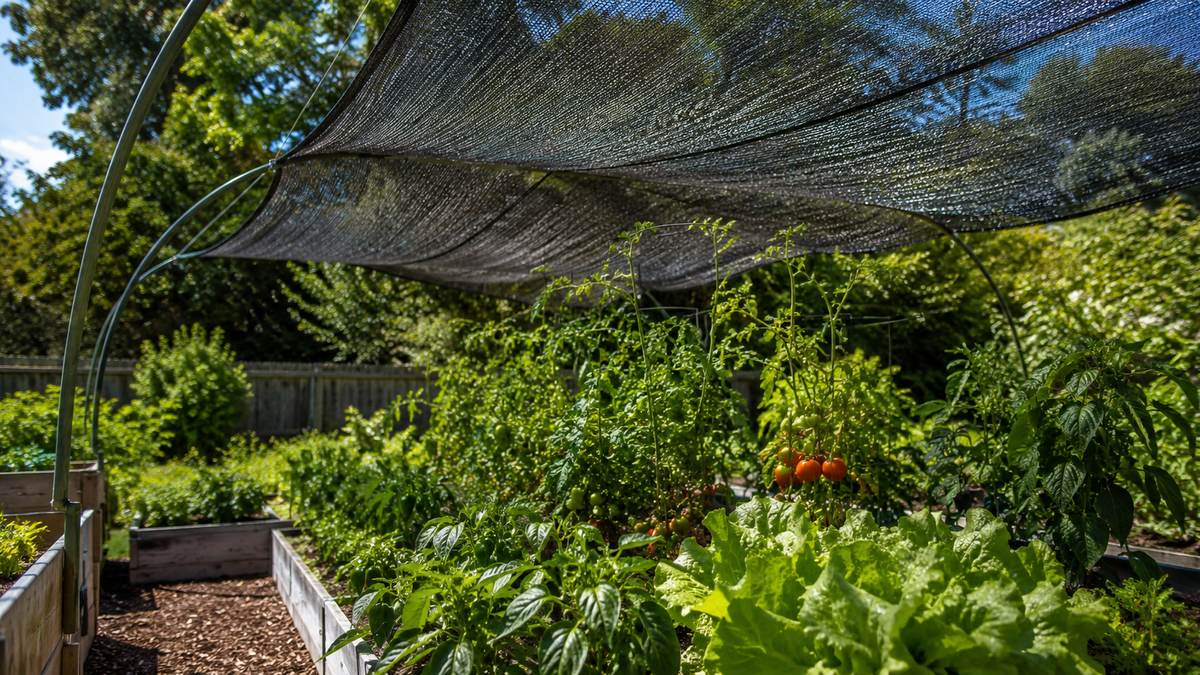
Suspend shade cloth above the plants with an air gap so heat can escape, rather than laying it directly on the foliage. Hoops, stakes, or a simple frame work well, and leaving the sides open preserves airflow. A cover that traps still, hot air can do more harm than the sun it blocks.
When to take it off
Remove or open shade cloth once the extreme heat passes so plants get the full light they need to ripen and produce. Many gardeners in hot climates use it only for the hottest weeks, or only during afternoon sun, rather than leaving it up all season.
Shade cloth versus other heat tools
Shade cloth is one of several ways to manage heat, and the best choice depends on the problem. Mulch cools the soil and conserves moisture at the root zone; the methods in watering during heat waves protect plants through watering and timing; and choosing heat-tolerant varieties prevents the problem before it starts. Shade cloth specifically lowers the light and leaf temperature above ground, so it is most valuable for sun and heat damage to foliage and fruit, and less useful for problems that originate at the roots. Often a combination works better than any single tool.
Reuse and store it
Quality shade cloth lasts several seasons if it is taken down, dried, and stored out of constant sun when not in use. Label the percentage on each piece so you can match density to crop next season, and check fixings and frames before a heat wave rather than during one, when plants are already under stress.
Shade cloth by climate
How much shade cloth you need, and for how long, depends heavily on your climate. In intense arid and desert zones (Köppen B), higher-density cloth over the hottest months can be the difference between a crop and total sunscald, and many gardeners there shade routinely rather than only during peaks. In humid subtropical climates (Köppen Cfa), shade reduces heat but does little for the humidity that also stresses plants, so it works best combined with wider spacing and airflow. In mild temperate climates (Köppen Cfb), shade cloth is usually a short-term tool for occasional heat waves rather than a season-long fixture. Match the density and duration to your conditions instead of leaving one setup up all year.
Shade cloth questions
What shade percentage is best for a vegetable garden?
Around 30-40 percent suits most fruiting vegetables, while 50 percent or more suits leafy greens, seedlings, or very intense sun. Higher percentages reduce yield on sun-loving crops.
Can shade cloth stop tomato blossom drop?
It can help when heat is the cause, by lowering leaf and flower temperature during the hottest part of the day. It will not help if the cause is cool nights or humidity instead.
Should shade cloth touch the plants?
No. Suspend it above the canopy with an air gap and open sides so heat can escape; resting it on the leaves can trap hot, still air.