Succession planting is less about squeezing plants into every gap and more about avoiding one large harvest followed by an empty bed. It can mean sowing the same crop several times, replacing a finished crop with a different one, or choosing varieties that mature at different speeds.
Begin with the harvest window
Write down when a crop is likely to leave the bed, not only when it is planted. Radishes may finish quickly. Garlic may occupy space until midsummer. Tomatoes may remain until frost. This makes the next move visible before the garden becomes crowded.
Repeat sowings in small amounts
Lettuce, cilantro, radishes, bush beans, and some carrots can be sown in modest batches. The interval depends on temperature and how quickly the household uses the crop. A two-week gap in spring may produce a much shorter harvest gap than the same interval in hot summer weather.
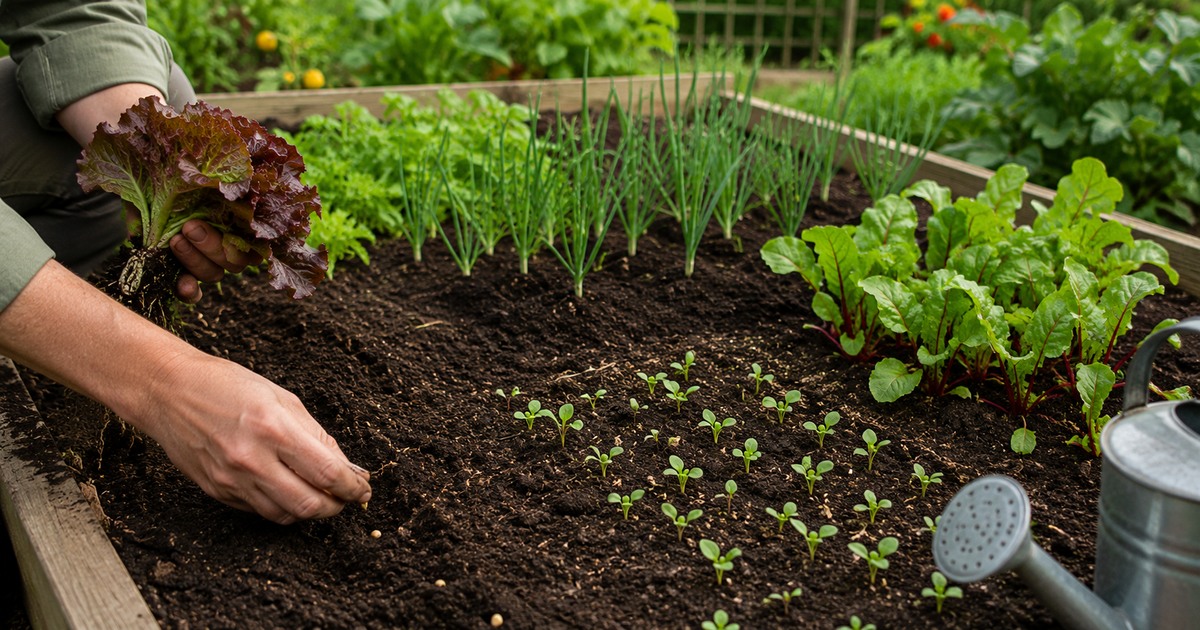
Use transplants to shorten the gap
Start a follow-on crop in modules while the current crop finishes, then transplant when space opens. Keep seedlings healthy rather than holding them too long in tiny cells. The indoor routine in the seed-starting guide helps coordinate this handoff.
Plan around seasonal direction
Spring moves from cool to warm; late summer moves from warm to cool. A crop that succeeds in April may bolt in July but return in autumn. Use local frost dates and day length, not a universal calendar. Shade from mature summer crops can help establish a cool-season planting, provided roots are not competing heavily.
Do not exhaust the soil between crops
Remove diseased debris, leave healthy roots where appropriate, top-dress lightly with mature compost if needed, and water the new crop thoroughly. Avoid adding a strong fertiliser after every harvest. The longer soil-building method in the soil health guide is more reliable.
A simple container example
Start with spring lettuce, replace it with a compact pepper after cold nights pass, then sow a quick autumn green around the pepper as production slows. In another pot, grow radishes before a cucumber transplant. The best sequence depends on container depth, light, and water access.
Leave breathing room
A productive garden is not one that is permanently full. Short gaps allow soil work, irrigation repair, and pest cleanup. Schedule only the successions you can water and harvest; unused seed is cheaper than an overcrowded bed that becomes difficult to manage.
Build a simple planning sheet
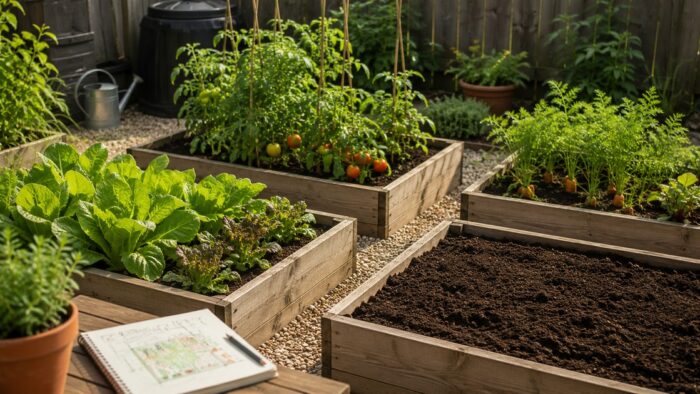
Use four columns: bed or container, current crop, expected finish, and next crop. Add one note about seed or transplant availability. This is enough to prevent the common situation where a bed becomes empty but the next crop has not been started.
Four useful succession patterns
- Repeat sowing: small batches of lettuce, radish, cilantro, or beans.
- Fast before slow: radishes or greens harvested before a tomato fills the space.
- Cool after warm: autumn spinach or turnips after summer beans.
- Different maturity dates: early, mid-season, and late varieties of the same crop.
Examples for containers
A deep pot can hold spring peas followed by a compact cucumber, then a quick autumn green. A shallow box may produce lettuce, basil during warm weather, and another lettuce sowing as temperatures cool. Clean out diseased roots and refresh a small amount of mix between crops instead of adding fertiliser blindly.
Where succession plans fail
The next crop is often started too late, summer heat prevents germination, irrigation is designed for the first crop only, or the gardener schedules more sowings than can be harvested. Build in spare weeks. Weather and pests will move dates.
Keep seed quality in mind
Repeatedly opening seed packets in humid conditions can reduce storage life. Keep seed dry, cool, and labelled. Buy only the quantity likely to be used, and note germination results so old seed is not blamed on the garden bed.
Use the plan to reduce waste
Succession planting is successful when the harvest arrives in usable amounts. If the household needs one salad bowl per week, a short row is more useful than an entire bed every fortnight. Adjust future sowings from the actual harvest record.
Succession planting: quick answers
How often should I re-sow for succession planting?
It depends on the crop’s harvest window. Fast crops like lettuce or radish are often resown every two to three weeks through the growing season.
Does succession planting work in containers?
Yes, it works well for compact, fast-maturing crops where a small container can be reused repeatedly through a season.
What’s the most common succession planting mistake?
Sowing too much at once rather than smaller, staggered batches, which recreates the single-glut problem succession planting is meant to avoid.