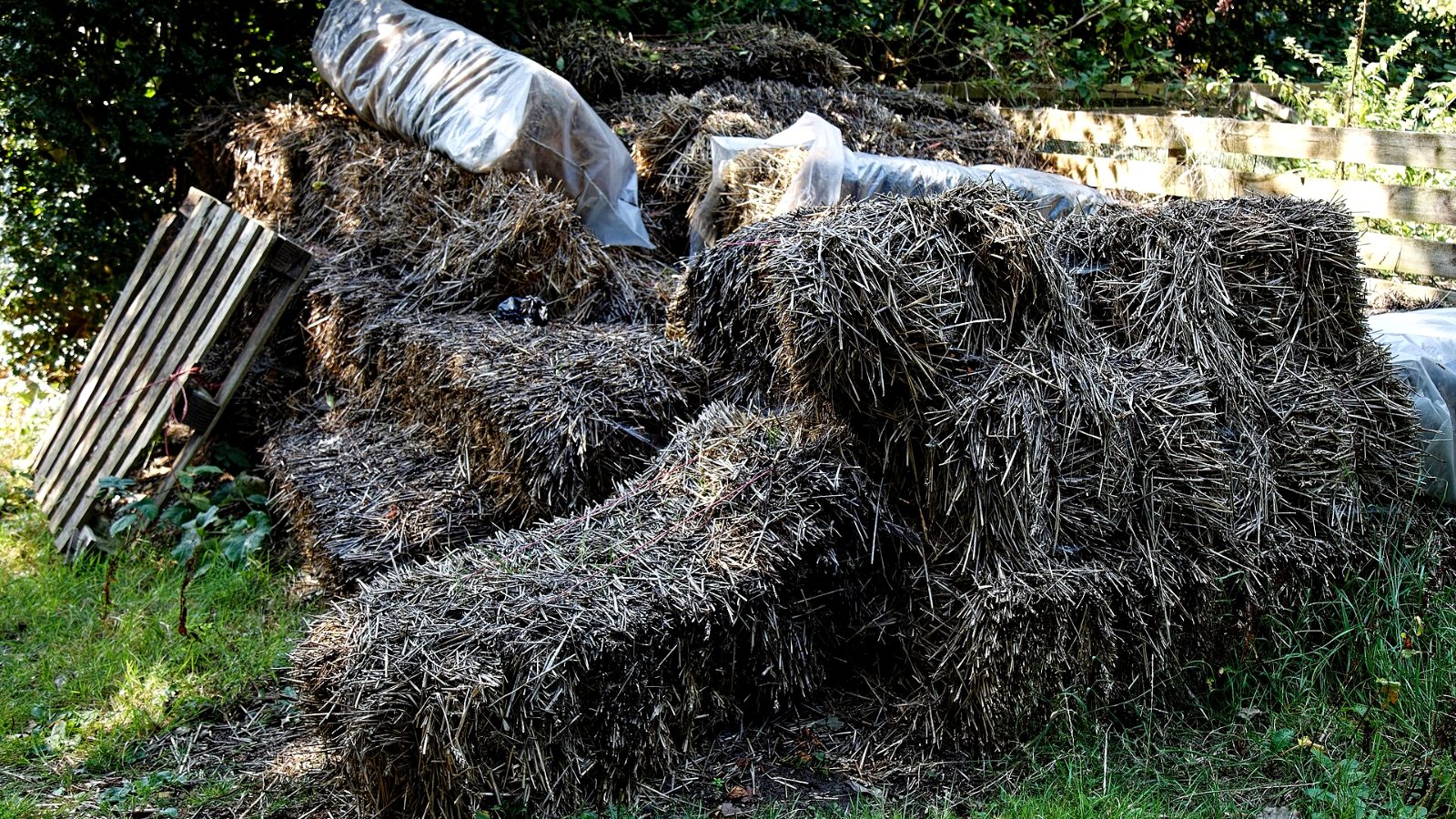
Straw bale gardening grows vegetables in a bale that has been “conditioned” for 10 to 14 days with water and nitrogen so it starts composting from the inside; the bale then acts as a warm, weed-free raised bed for one season. A standard bale takes 2 tomato plants, 3 to 4 peppers, 2 courgettes or a dozen lettuces, needs watering every day in summer because straw drains fast, and a liquid feed weekly once planted. At the end of the year the collapsed bale is excellent compost.
Conditioning schedule and planting density
| Day | Action |
|---|---|
| Days 1 to 3 | Water the bale thoroughly each day until water runs out of the bottom |
| Days 4 to 6 | Sprinkle a high-nitrogen fertiliser (about 100 g of blood meal or 50 g of a lawn feed without weedkiller) over the top each day and water it in |
| Days 7 to 9 | Halve the fertiliser, keep watering daily |
| Day 10 | Push a hand inside: it should be warm (above 40°C at the peak) and starting to cool. If still hot, wait |
| Days 11 to 14 | Water only; when the inside is cooler than body heat, plant |
| Planting | Cut a hole, add two handfuls of compost, plant into it. Per bale: 2 tomatoes, or 3 to 4 peppers, or 2 courgettes, or 12 lettuces, or 6 bush beans |
| Through the season | Water daily in summer (bales hold little), liquid feed weekly, stake tomatoes through the bale into the ground |
| End of season | Spread the rotted straw on beds as mulch or compost |
Position bales cut side up, strings around the sides (not top and bottom), on the spot they will stay, because a wet bale weighs over 50 kg. Use straw, not hay, which is full of seed. It suits paved yards, contaminated or compacted soil, and anyone who cannot bend to ground level; for a longer-term fix to poor ground see making garden soil healthier and for pots as the alternative, the container starter plan.
Why it works
As straw breaks down inside the bale, it creates a warm, moist, nutrient-rich interior that roots colonise readily. The bale is effectively a compost heap with a plant on top. Soil temperature inside a conditioned bale runs several degrees above the surrounding ground, which extends the season at both ends.
Straw, not hay
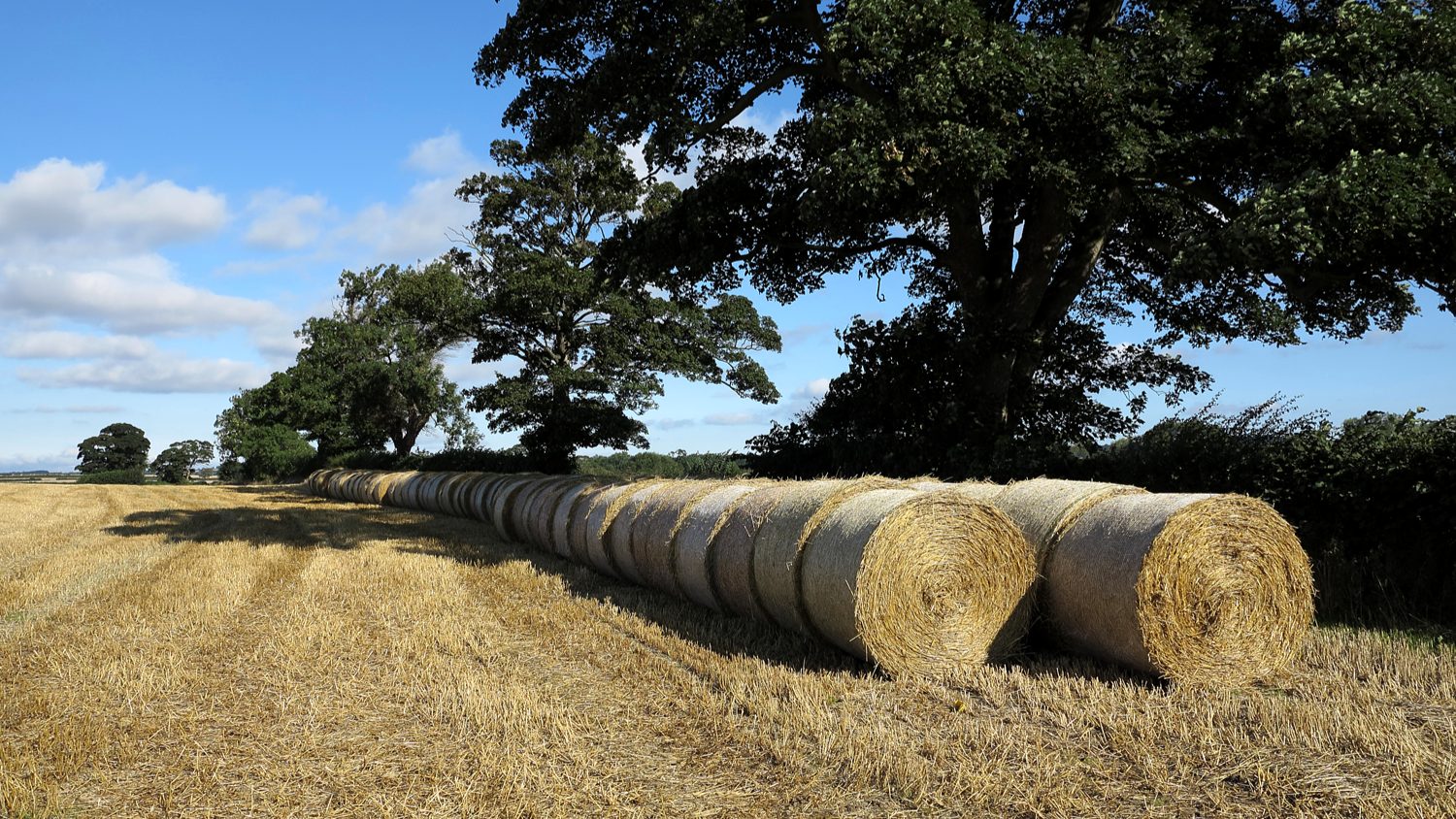
Straw is the hollow stalk left after grain is harvested and contains few seeds. Hay is dried grass cut with seed heads intact and will sprout into a weedy mess. Ask specifically for straw – wheat, barley, oat or rye. Avoid bales from fields treated with persistent herbicides such as aminopyralid, which survive composting and will deform your plants. If you are unsure, ask the supplier directly, and test one bale by sowing a few bean seeds before committing.
Positioning
Place bales with the cut ends facing up, so the straws run vertically – water travels down the hollow stems rather than running off. Set them in their final position before conditioning, because a wet bale is extremely heavy. Lay cardboard or weed membrane underneath on grass. Allow full sun and easy hose access.
The conditioning schedule
Conditioning takes 10 to 14 days and starts the internal decomposition. The usual sequence:
- Days 1-3: water the bale thoroughly every day until it is soaked through
- Days 4-6: add roughly 100 g of a high-nitrogen fertiliser per bale each day, then water it in well
- Days 7-9: halve the fertiliser to about 50 g per day and keep watering
- Day 10: apply a balanced fertiliser with phosphorus and potassium, water in
- Days 11-14: water only, and monitor temperature
The inside of the bale will heat substantially, often above 45C, during the first week. Push your hand or a thermometer into the centre. When it has cooled back to roughly the temperature of a warm compost heap, the bale is ready. Planting into a hot bale will kill seedlings.
Planting
For transplants, pull the straw apart to make a pocket, drop in a handful of potting compost, and set the plant in. For seeds, spread a 5 cm layer of compost across the top of the bale and sow into that. One standard bale comfortably holds two tomato plants, or three peppers, or four to six lettuce, or two courgettes.
Best crops for bales
Tomatoes, peppers, cucumbers, courgettes, aubergines, beans, lettuce and herbs all do well. Avoid tall top-heavy crops such as sweetcorn, which blow over, and deep root crops such as parsnip and maincrop carrot, which need more depth than the bale gives. Potatoes can work but are messy to harvest.
Watering and feeding
Bales drain fast and dry out faster than soil. Daily watering is normal in summer, twice daily in heat. A soaker hose laid across the tops of a row of bales makes this manageable. Feed every one to two weeks with a liquid feed, switching to high potassium when fruit sets – the bale supplies structure and some nutrition, but not enough for a full season of heavy cropping.
Supports and second season
Drive stakes through the bale into the ground beneath, or build a frame at each end with wire between – straw alone will not hold a stake upright under a loaded tomato plant. At the end of the season most bales have slumped by a third and are too broken down for a second year of fruiting crops, but they make excellent mulch, compost material or a base for next year. Some gardeners get a second season of shallow-rooted salad out of a used bale before composting it.
Season Two: What Happens to the Bales
By autumn a first-season bale is half-collapsed and riddled with fungal threads, which is success, not failure. You have three options: pile the spent bales as the base of next year’s compost, where they finish breaking down into superb humus (the maturity checks in our compost guide apply); rake the crumbled straw out as mulch per the mulching guide; or stack fresh bales directly on the remains and condition them in place, letting the old layer act as a moisture sponge beneath. Most straw bale gardeners settle into a two-year rotation, new bales each spring on last year’s footprint.
Why did mushrooms appear on my bales?
They are the visible fruit of the decomposition you deliberately started during conditioning. They harm nothing, do not compete with your vegetables, and fade as the bale interior stabilises. Knock them off if they bother you, but treat them as a sign the bale is cooking properly, not a contamination.
Featured image: Straw bales at Copped Hall Gardens Epping Essex England. Photo: Acabashi (CC BY-SA 4.0), via Wikimedia Commons.
When this advice does not apply
Bales from fields sprayed with persistent herbicides (aminopyralid, clopyralid) will deform or kill tomatoes and beans; ask the supplier or test by growing a bean in a handful first. In very wet climates bales rot too fast and in very dry ones they need twice-daily watering; raised beds are easier in both.


