The highest yield per square metre in a small garden comes from crops you pick repeatedly over months: courgettes, climbing beans, cut-and-come-again salad, chard, cherry tomatoes and kale. A single courgette plant gives 3 to 5 kg (7 to 11 lb) from a square metre; the same metre of maincrop potatoes gives 2 to 3 kg once and then the bed is empty. Choose by harvest per square metre per season, not by how much you like the vegetable.
Yield per square metre, typical home-garden figures
| Crop | Plants per m² | Season yield per m² | Harvest window |
|---|---|---|---|
| Courgette | 1 | 3 to 5 kg | 10 to 12 weeks, picked twice a week |
| Climbing French or runner beans | 9 to 12 up a frame | 3 to 4 kg | 8 to 10 weeks |
| Cherry tomatoes (cordon) | 3 to 4 | 4 to 6 kg | 10 to 14 weeks |
| Chard | 9 | 3 to 4 kg | 20+ weeks, cut repeatedly |
| Kale | 4 | 2 to 3 kg | 20+ weeks |
| Cut-and-come-again salad | Broadcast | 2 to 3 kg | Continuous with 14-day resowing |
| Bush beans | 16 | 1.5 to 2 kg | 3 to 4 weeks per sowing |
| Beetroot | 25 to 36 | 2 to 3 kg | One harvest, roots and leaves |
| Maincrop potatoes | 4 | 2 to 3 kg | One harvest, bed empty for the rest of the year |
| Sweetcorn | 4 to 6 | 1 kg (8 to 12 cobs) | 2 weeks |
Figures assume full sun, decent soil and regular watering; halve them for a shaded or dry bed. Grow upwards wherever you can, see vertical cucumbers, and keep every gap filled using succession planting; empty soil is the biggest yield loss in a small garden.
What high yield really means
Raw weight is only part of it. A better measure is value per square metre per month of occupation. Potatoes produce a lot of weight but hold ground for four months and cost very little to buy. Salad leaves weigh almost nothing but can be cut three times from the same square in six weeks and are expensive in shops. For small gardens, the second pattern wins.
The highest-return crops
- Cut-and-come-again salad – ready in four weeks, regrows two or three times, and a single square metre can supply a household through summer.
- Climbing beans – the best vertical crop there is. A two-metre tripod occupies about half a square metre of ground and can produce several kilos over eight weeks.
- Cherry tomatoes – one indeterminate plant trained up a string will yield continuously from midsummer to frost.
- Courgette – one plant is genuinely enough for most families; two is a running joke for a reason.
- Chard and kale – cut outer leaves for months rather than harvesting the whole plant.
- Herbs – the highest value per square metre in the garden, and most are perennial.
- Radish and spring onion – fast fillers that occupy gaps for four to six weeks.
- Spring-sown spinach and rocket – quick, repeat-cut, and excellent in partial shade.

Crops that rarely justify small-garden space
None of these are bad crops – they are simply inefficient when space is tight:
- Maincrop potatoes – months of occupation for something cheap to buy
- Sweetcorn – needs a block for pollination and gives one or two cobs per plant
- Pumpkins and winter squash – enormous sprawl for a handful of fruit, unless trained vertically
- Brussels sprouts and purple sprouting broccoli – excellent eating, but they hold a square metre for nine months
- Onions from sets – cheap to buy and slow to grow, though garlic and shallots are better value
Techniques that multiply yield
Grow upward. Beans, cucumbers, peas, small squash and cherry tomatoes all climb. A fence or trellis converts wall space into growing space.
Intercrop. Sow radish between slow carrots, or lettuce under sweetcorn. The fast crop is harvested before the slow one needs the room.
Succession sow. Never let a bed sit empty. Have module-grown seedlings ready to drop into any gap within a week of clearing it.
Space properly. Intensive does not mean crowded. Overcrowded plants compete and all underperform; correct spacing with no bare ground between mature plants is the target.
Feed and water well. Intensive planting draws heavily on soil. Add compost annually and feed hungry crops through the season or yields fall quickly.
A worked example: four square metres
- Square 1: bean tripod with lettuce underneath in spring
- Square 2: two cherry tomatoes on strings, basil at the base
- Square 3: rolling salad and radish, resown every three weeks
- Square 4: chard, kale and a clump of perennial herbs
That layout produces something to pick most weeks from late spring until the first hard frost, and all of it is food that is expensive or poor quality in shops – which is the real point of a small garden.
The Calendar Is a Yield Multiplier
Space gets all the attention, but time is the small garden’s hidden dimension. A bed that grows one crop a year runs at a third of capacity: early potatoes out in June make room for autumn brassicas, garlic out in July hands the ground to beans, and every gap gets a fast filler of radish or rocket within the week. Holding this rhythm is simply succession planting applied ruthlessly, and it doubles output from identical ground.
Feed the system to match: double-cropped beds export double the nutrients, so compost between crops and steady feeding are not optional; the groundwork is in making garden soil healthier.
Highest-value crop for one square metre?
Cut-and-come-again salad leaves, measured by supermarket price of what you harvest. One metre resown three times a season yields months of bags that cost the most per gram to buy. Climbing beans are the calorie-dense runner-up on a single trellis footprint, as covered in vertical growing.
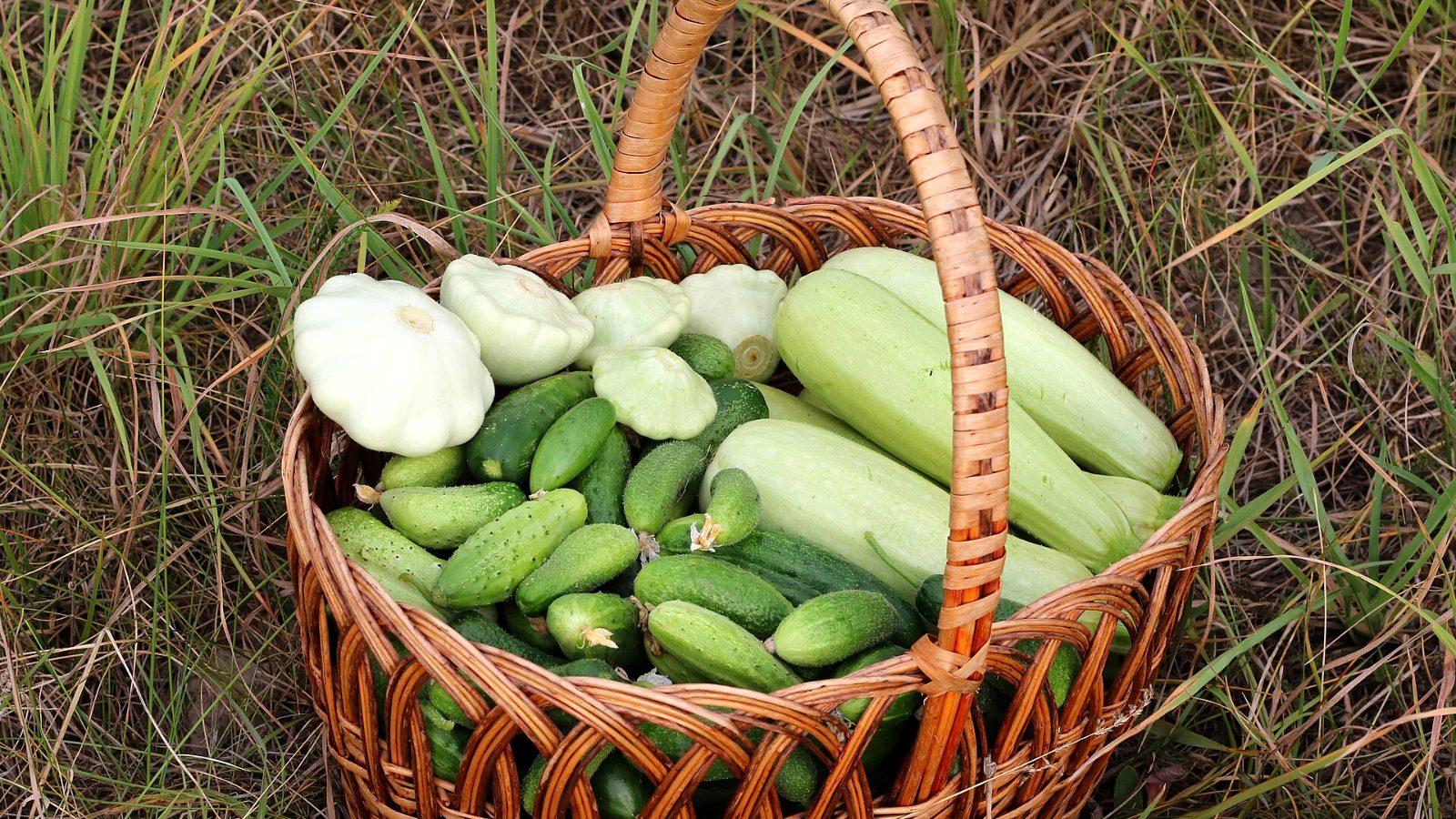
Featured image: Basket with vegetables G1. Photo: George Chernilevsky (Public domain), via Wikimedia Commons.
When this advice does not apply
If the aim is to save money rather than to maximise weight, the ranking changes: herbs, salad leaves and cherry tomatoes replace the most expensive shop items, while potatoes, onions and carrots are cheap to buy and poor value for space. In hot climates courgettes and beans stall above 35°C and okra and sweet potato take their place.