Tomatoes reward careful gardeners, but they also expose weak spots in a garden routine. Uneven watering, poor air movement, weak support, and planting too early can turn a promising plant into cracked fruit, disease pressure, or a tangled vine.
A tomato season in one view
Tomatoes need warm soil, full sun, consistent moisture, deep planting, strong support, and regular observation. The goal is not to force fast growth; it is to keep plants steady enough to flower, set fruit, and ripen without stress.
Seed, transplant, support, and harvest
- Start seeds indoors six to eight weeks before your last expected frost, or buy stocky transplants with dark green leaves.
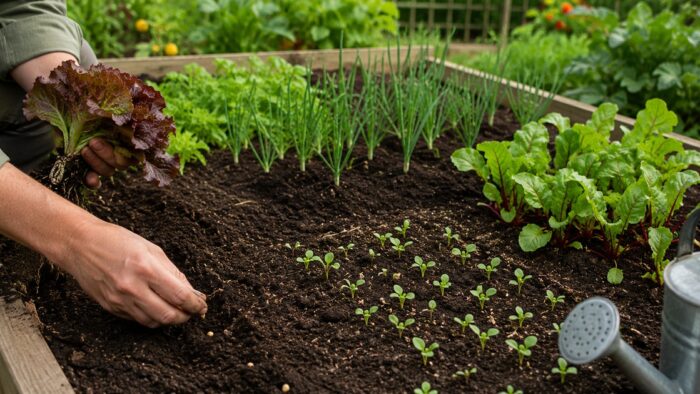
- Harden off seedlings gradually by exposing them to outdoor conditions over a week. This reduces transplant shock.
- Plant deeply, burying part of the stem so additional roots can form. Remove lower leaves before planting.
- Install cages, stakes, or trellises at planting time rather than after roots and stems are established.
- Water deeply and consistently, then mulch after soil warms to reduce splashing and moisture swings.
Tomatoes need warmth, light, and steady growth
Tomatoes are warm-season plants. They dislike cold soil, respond strongly to sunlight, and grow best when roots have steady access to moisture and nutrients. Many problems blamed on disease begin with environmental stress: drought followed by heavy watering, crowding, or wet leaves that stay wet overnight.
Problems that begin before fruit forms
- Planting before nights are reliably warm. Cold stress delays growth and can cause purple leaves.
- Using weak cages that collapse under mature vines.
- Watering overhead late in the day, which keeps leaves wet.
- Adding too much nitrogen, creating large leafy plants with fewer fruits.
How to read a tomato plant mid-season
A productive plant is not simply the tallest one. Look for sturdy stems, leaves that hold their colour, new flower clusters, and fruit that continues to size up. Very dark, lush foliage with few flowers may indicate excess nitrogen. Thin growth and long gaps between leaves often point to weak light or crowding.
After a heat wave or missed watering, avoid reacting with a heavy feed. Restore even moisture first. Tomatoes often show the effect of stress later through blossom drop, cracking, or irregular fruit, so a steady routine is usually more useful than a dramatic correction.
Managing water, feeding, and pruning
Indeterminate tomatoes keep growing and need tall supports; determinate tomatoes stay more compact and suit containers or sauce harvests.
Cherry tomatoes are often more forgiving than large slicing tomatoes because they set fruit more easily in variable weather.
Pruning is useful for indeterminate plants when it improves airflow, but excessive pruning can expose fruit to sunscald.
Blossom-end rot is linked to calcium movement in the plant and often shows up when soil moisture is inconsistent.
Harvest tomatoes when they begin to color if pests, cracking, or storms are a problem; they can finish ripening indoors.
Cracking, blossom-end rot, and weak growth
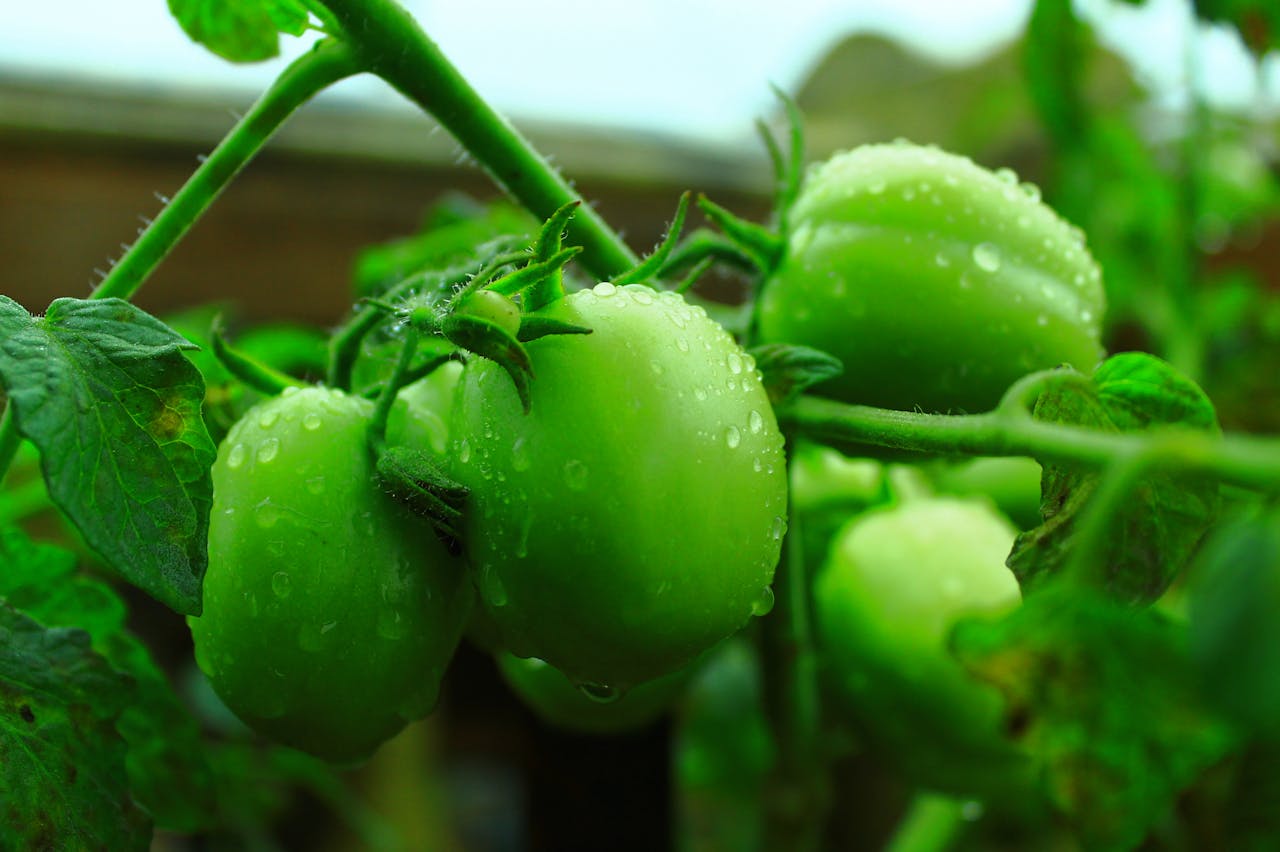
Cracking usually follows moisture swings. Leaf spots often increase when plants are crowded or splashed with soil. Flowers dropping can occur during extreme heat or cold. Small, pale plants may need warmer soil and steady nutrition rather than more pruning.
Support systems and useful supplies
Choose varieties based on use and disease resistance. For small spaces, look for compact or determinate types. For flavor diversity, grow one dependable hybrid and one heirloom instead of filling the garden with varieties that all ripen at once.
A five-minute tomato check prevents bigger problems
Once fruit begins to form, walk around the plants every few days. Look at the newest leaves, the lowest leaves, the soil surface, stems tied to supports, and fruit hidden inside the canopy. Small changes are easier to interpret than a plant that has been ignored for two weeks. Remove leaves that touch the soil, retie stems before they kink, and check that water reaches the full root zone.
Tomatoes respond better to steady moisture than alternating drought and soaking. The layout ideas in the drip irrigation guide help deliver water at soil level, while a suitable vegetable-garden mulch can reduce splashing and slow evaporation. Neither tool replaces observation: adjust watering after rain, during heat, and as roots fill more of the bed.
Tomato questions gardeners ask
Do tomatoes need full sun?
Yes. Tomatoes are among the vegetables that benefit most from full sun. In partial shade they may grow leaves but produce fewer fruits.
Should I remove tomato suckers?
Remove some suckers on indeterminate plants if the plant is crowded. Do not strip every shoot unless you are training to a single stem.
How often should I water tomatoes?
Water when the root zone begins to dry, aiming for deep and even moisture. Containers may need daily checks in hot weather.
Why are my tomatoes cracking?
Cracking is commonly linked to rapid changes in water availability. Mulch and consistent watering help reduce the problem.