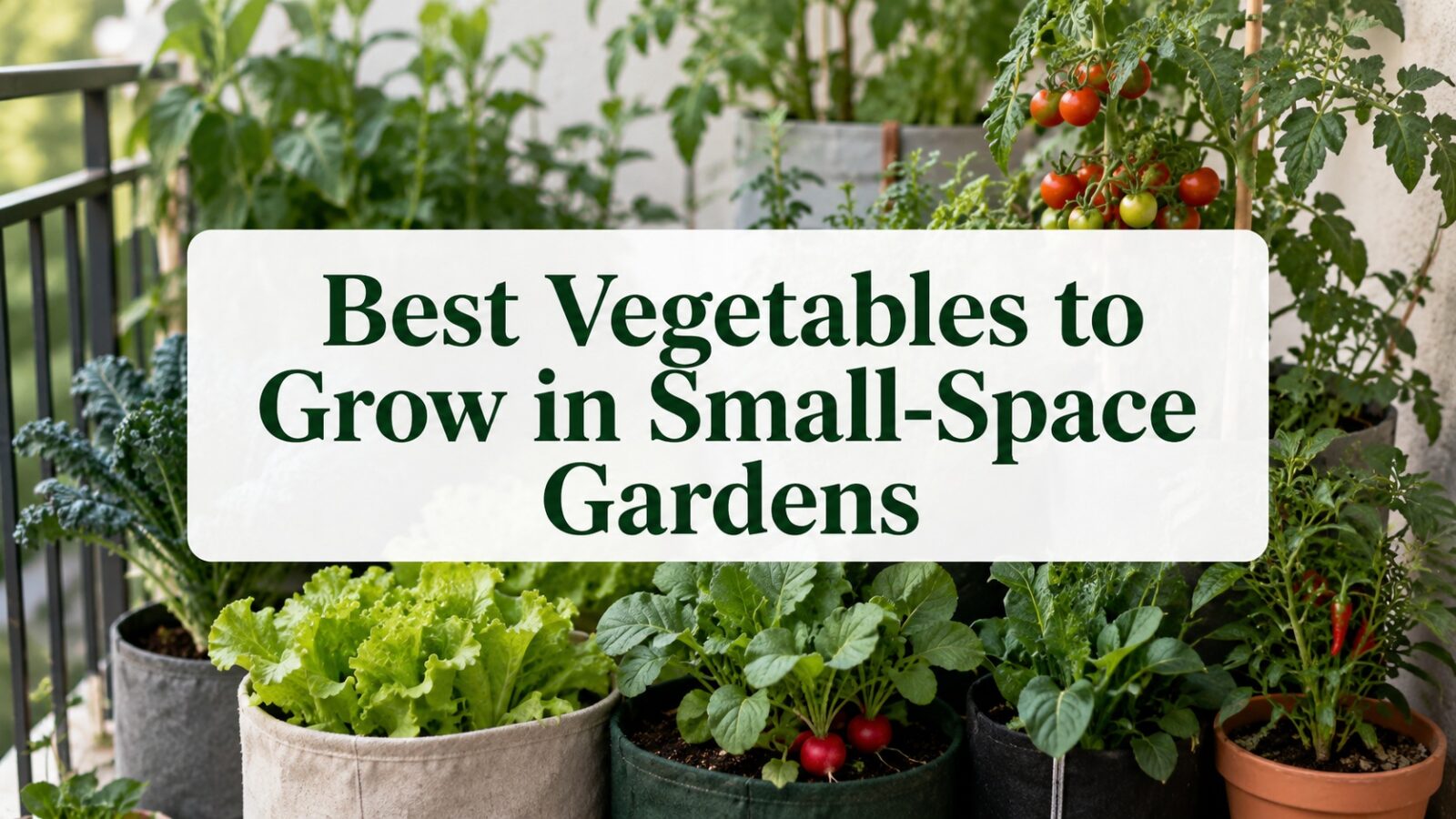
A small garden can be productive when every plant earns its space. The key is choosing crops that produce quickly, grow vertically, repeat harvests, or stay compact instead of planting large sprawling vegetables that shade everything else.
Select crops for yield per square foot
Choose leafy greens, herbs, bush beans, compact tomatoes, peppers, cucumbers on trellises, radishes, carrots, and cut-and-come-again crops. Prioritize sunlight, containers with enough soil volume, and steady watering.
Small gardens punish poor spacing
Small-space gardening is less about squeezing in more plants and more about reducing wasted space. Vertical support, succession planting, and smart variety selection can turn a balcony, patio, or narrow bed into a steady harvest area.
Planning a compact edible garden
- Measure sunlight before choosing crops.
- Select compact, dwarf, bush, or patio varieties when available.
- Use trellises for cucumbers, pole beans, and some squash.
- Plant quick crops between slower crops early in the season.
- Harvest often to keep plants producing and free space for the next sowing.
Crops that suit pots, rails, and vertical supports
Lettuce, arugula, spinach, and Asian greens produce quickly in cool weather.
Bush beans give good yields without a large trellis.
Cherry tomatoes are often more reliable in containers than large slicers.
Peppers suit containers because they stay upright and productive.
Root crops need depth and loose mix, not just surface area.
Plan around harvest frequency
Leafy greens, herbs, climbing beans, compact peppers, and cherry tomatoes can provide repeated harvests from a small footprint. Large storage crops may be satisfying, but they occupy space for a long time and produce one main harvest.
Place crops you pick often near the easiest access point. Put taller plants where they will not shade the rest of the garden. A small space becomes more productive when the layout matches how often you water, inspect, and harvest.
Crop choices for different small spaces
A railing planter suits shallow-rooted greens and herbs, while a deep patio pot can support a pepper or compact tomato. A wall trellis may carry beans or cucumbers if it is strong enough and does not shade neighbouring homes.
Weight, drainage, and wind matter on balconies. Confirm that the surface can support wet containers and that runoff will not create a problem below.
Supports and containers that earn their footprint
Look for seed packets labeled patio, bush, dwarf, compact, or container. Invest in trellises, good potting mix, and larger containers rather than many small pots.
What wastes limited growing space
- Planting full-size pumpkins, melons, or indeterminate tomatoes without support or room.
- Using containers too small to buffer heat and moisture.
- Ignoring succession planting and ending up with one short harvest.
- Putting shade-tolerant greens and sun-loving fruiting crops in the same light plan.
Shade, crowding, and uneven watering
If plants dry out too fast, increase container size or add mulch. If fruiting crops bloom but do not fruit, check sunlight, heat, pollination, and nutrition. If greens bolt, shift to shade and succession sowing.
Choose crops by usable harvest, not just plant size
A compact crop is only useful if it produces something your household will pick and eat. One patio tomato may supply more value than six small pots of a vegetable no one enjoys. Think about harvest frequency, kitchen use, and how quickly a crop can be replaced.
Leaf lettuce, radishes, herbs, and bush beans can be replanted in small gaps, while long-season crops occupy space for months. The scheduling approach in the succession planting guide helps keep containers productive. For leafy harvests, the container lettuce guide explains how smaller sowings avoid a single overwhelming crop. Match the plan to the time you can water and harvest, not to the maximum number of pots that fit.
Small-space vegetable questions
What vegetable gives the most harvest in a small space?
Leafy greens, herbs, bush beans, cherry tomatoes, and trellised cucumbers are strong choices.
Can I grow vegetables on a balcony?
Yes, if there is enough sun, safe weight capacity, drainage management, and wind protection.
Are grow bags good for small gardens?
They work well when sized correctly, but they dry faster than solid containers.
How do I avoid overcrowding?
Use mature spacing, choose compact varieties, and grow vertically where possible.