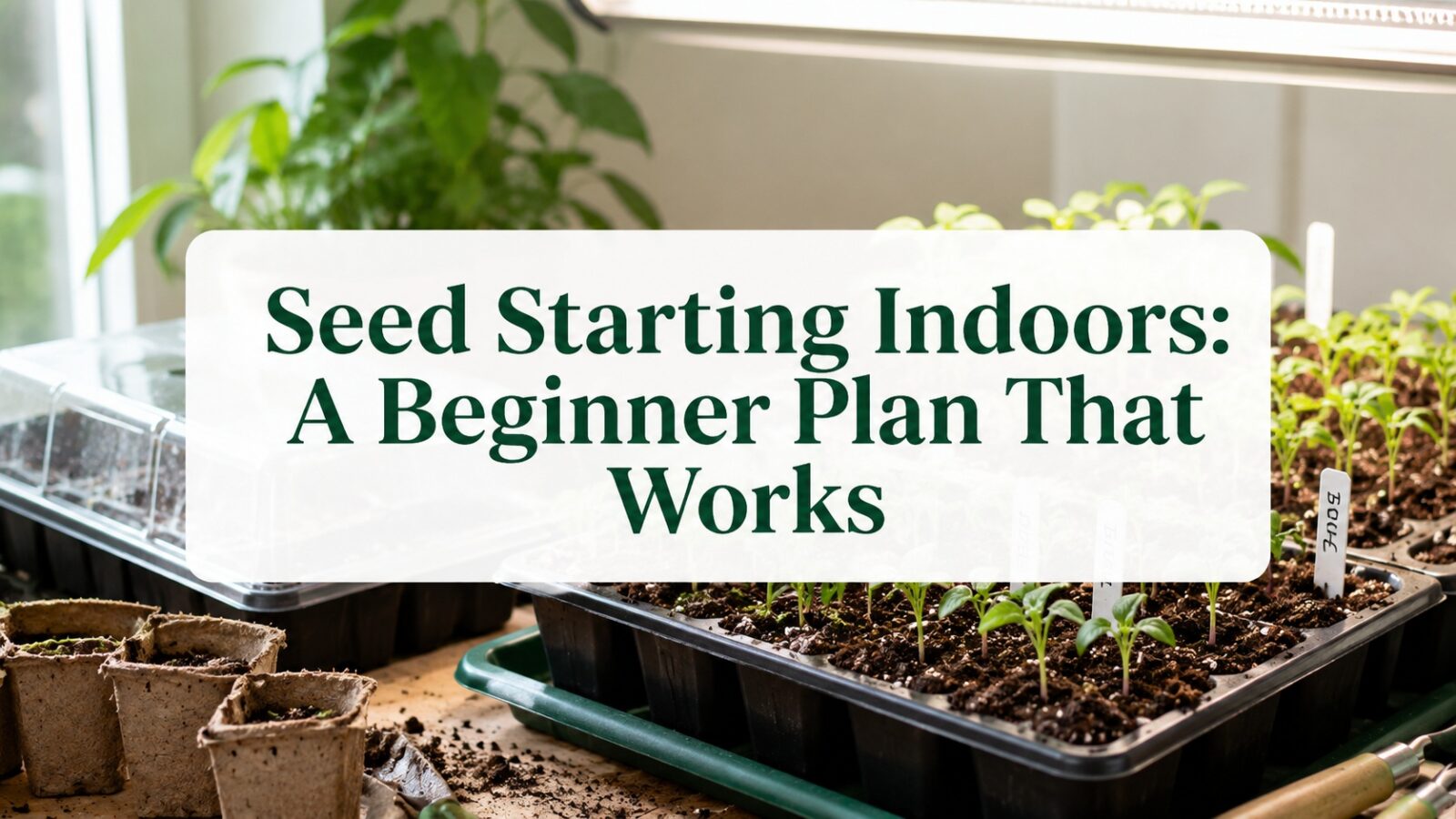
Seed starting indoors gives gardeners more variety and better timing, but it also magnifies small mistakes. Weak light, soggy mix, crowded trays, and skipped hardening-off can ruin seedlings that looked promising in the first week.
Setting up trays from sowing to true leaves
- Read the seed packet for timing based on your last frost date.
- Use clean trays with drainage and a fine seed-starting mix.
- Moisten the mix before sowing so seeds do not float away later.
- Place lights close to seedlings once they emerge and run them long enough each day.
- Harden seedlings off gradually before transplanting outdoors.
Healthy seedlings need strong light and controlled moisture
Use fresh seed, sterile seed-starting mix, strong light close to the seedlings, careful watering, and gradual hardening-off. Start only as many plants as you can care for and transplant at the right time.
The first weeks shape transplant quality
A seed contains enough stored energy to germinate, but after that the seedling depends on light, roots, temperature, and air movement. A bright windowsill is often not enough, which is why grow lights make seed starting much more reliable.
Temperature, airflow, feeding, and spacing
Tomatoes and peppers are commonly started indoors; beans, peas, and many root crops are usually direct sown.
Warm-season crops need warm conditions but also strong light as soon as they sprout.
Air movement helps strengthen stems and reduce disease.
Bottom watering can reduce surface disturbance, but trays should not sit in water indefinitely.
Labels are essential because seedlings can look similar in early stages.
Seedling size is not the same as seedling quality
A short plant with a thick stem and several true leaves is usually better prepared for transplanting than a tall seedling leaning toward the window. Strong light close to the canopy helps keep growth compact. Gentle airflow encourages sturdier stems and reduces stagnant humidity.
Do not try to speed weak seedlings with heavy fertilizer. Correct light, spacing, temperature, and moisture first. Feeding a stressed root system often produces soft growth without solving the underlying problem.
Spacing seedlings before they compete
Seedlings can germinate well and still decline when leaves overlap and roots crowd the cell. Thin early or move strong seedlings into separate containers before they become tangled. Hold plants by a leaf or support the root ball rather than squeezing the stem.
More space improves light and airflow, but it also increases the area under the lights. Plan shelves and fixtures before sowing more trays than the setup can support.
Damping off, algae, and pale growth
Leggy seedlings need stronger or closer light. Damping-off appears as collapsed stems and is linked to excess moisture, poor airflow, or contaminated conditions. Purple leaves may indicate cold stress or nutrient issues.
Why seedlings stretch or collapse
- Starting too early and ending up with rootbound, stressed plants.
- Using garden soil in seed trays.
- Keeping humidity domes on after germination.
- Moving seedlings outdoors suddenly into sun and wind.
What is useful and what is optional
Buy a simple light setup before buying many seed varieties. Seed-starting mix, labels, a spray bottle or watering tray, and a small fan are practical tools.
Airflow matters as much as warmth
Warm trays with wet mix and still air create ideal conditions for weak seedlings and damping-off organisms. Once seeds emerge, remove humidity covers, provide gentle air movement, and water early enough that leaf surfaces dry before night. A small fan should move air around the tray, not blast seedlings continuously.
Keep lights close enough to prevent stretched stems, but check heat at leaf level. Before transplanting, seedlings need the gradual outdoor exposure described in the hardening-off guide. If seedlings collapse at the soil line, do not automatically add more water or fertiliser. Clean containers, fresh mix, and restrained moisture are more useful than trying to rescue a badly affected tray.
Seed-starting questions
When should I start seeds indoors?
It depends on crop and local frost dates. Many tomatoes are started six to eight weeks before transplanting.
Do I need a heat mat?
Heat mats help warm-season crops germinate but should be used carefully and removed if seedlings get too warm.
Can I reuse old seed trays?
Yes, if they are cleaned well. Dirty trays can carry disease problems.
What is hardening off?
It is the gradual process of introducing indoor-grown seedlings to outdoor sun, wind, and temperature changes.