Mulch protects the soil surface, slows evaporation, reduces weed germination, and can add organic matter as it breaks down. The right material depends on the crop, climate, slug pressure, watering method, and how often the bed is replanted. Mulch works best as part of a wider weed-control routine and efficient root-zone watering.
Straw for annual vegetable beds
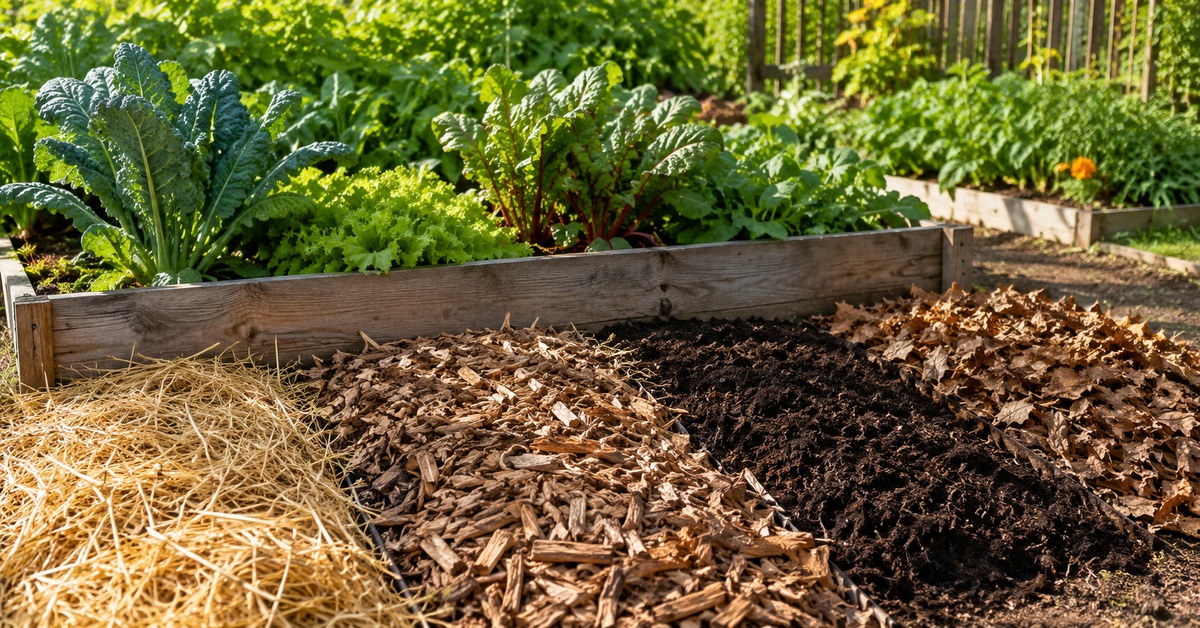
Clean straw is light, easy to spread, and useful around tomatoes, cucumbers, strawberries, and other crops. It keeps fruit away from soil and reduces splash. Check that the material is straw rather than hay containing many seeds. Apply it after the soil warms where early-season heat is important.
Shredded leaves
Leaves are widely available and add organic material as they decompose. Shredding helps prevent whole leaves from matting into a water-shedding layer. Use a moderate depth and keep leaves away from direct contact with small seedling stems.
Compost as a surface layer
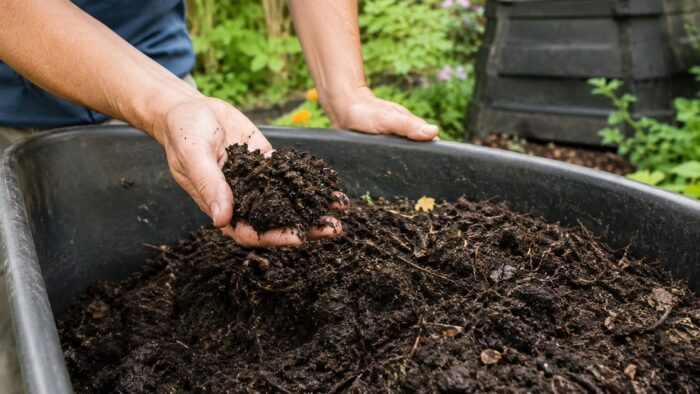
Mature compost can protect soil while contributing organic matter, but it may not suppress weeds as strongly as coarser mulch. It is useful where frequent planting makes thick woody material inconvenient. Compost should be fully finished and free of problem weeds.
Wood chips and bark
Coarse wood chips suit paths, perennial beds, and areas that remain in place for several years. They can be used around established fruit plants when kept away from crowns and trunks. Mixing fresh wood deeply into the soil is different from leaving it on the surface and may affect nitrogen availability near decomposing material.
Grass clippings
Thin layers of untreated, seed-free clippings can dry into a useful mulch. Thick wet piles become slimy and restrict airflow. Do not use clippings from lawns recently treated with herbicides unless the product label confirms that the material is safe for the intended use.
Living mulch and close planting
Low-growing plants and cover crops can protect soil, but they also use water and nutrients. In a vegetable bed, living mulch must be managed so it does not compete with young crops or harbour pests. It is a design choice, not a maintenance-free substitute.
How deep should mulch be
The correct depth varies with material. Fine dense mulch should be shallower than coarse chips. Leave a small open ring around stems, crowns, and tree trunks. Mulch piled against living tissue keeps it damp and can invite rot or pests.
Mulch can create new problems
- Cold wet soil in spring
- Hidden slugs or rodents
- Water running off a matted surface
- Seedlings buried by a heavy layer
- Weed seeds introduced with poor-quality material
- Drip emitters moved where their water no longer reaches roots
Review the bed during the season
Pull mulch aside occasionally to check moisture and soil condition. Add material only where it has thinned, and remove anything that smells sour or has formed a dense barrier. At the end of the crop, decide whether the mulch should remain, move to a path, or enter a compost pile.
When to apply mulch
In spring, wait until the soil has warmed enough for the crop. In hot weather, apply mulch before severe drying begins, after watering the bed thoroughly. In autumn, mulch may protect soil and perennial roots, but timing should follow local winter guidance.
Newly seeded rows need a different approach from established transplants. Leave the seed line open until seedlings emerge, then add a thin layer without burying them.
Mulch and irrigation should work together
Place drip lines where water reaches the root zone and cover them with mulch to reduce evaporation. After changing mulch depth, check the wetting pattern. Water may travel sideways in fine soil but move more vertically through coarse or dry potting mixes.
Sourcing clean mulch
Know where the material came from. Straw may contain grain seed, compost may contain persistent weed seed, and chipped wood from diseased plants may be unsuitable for some uses. Municipal products can be useful when processing standards are clear. Avoid material contaminated with paint, treated wood, plastics, or unknown chemicals. A free mulch that introduces weeds or residues can cost more time than a smaller amount from a reliable source.
Renew mulch according to what remains
Do not add a full new layer automatically every season. Pull the material aside and inspect the soil surface. Fine leaves and compost may have mostly broken down, while coarse straw or wood chips can remain useful. Adding too much can keep cool spring soil wet or make direct seeding difficult.
Top up only where coverage is thin, keep mulch away from seedling stems, and leave a small inspection gap near irrigation outlets. During very hot weather, the watering priorities in the heat-wave guide help distinguish surface dryness from a dry root zone. As organic mulch decomposes, it also becomes part of the longer soil-building approach described in the soil health guide.
Mulching vegetable gardens: quick answers
How thick should vegetable garden mulch be?
Most materials work best around 5-8cm (2-3 inches). Thicker layers can trap excess moisture against stems.
Can mulch attract pests like slugs?
Some materials, particularly straw and grass clippings in damp climates, can increase slug shelter. Adjust the material or pull mulch back from stems if this happens.
Should mulch touch the base of plant stems?
No. Leave a small gap around stems to reduce rot and pest hiding spots.