Extreme heat changes how quickly plants lose water, but it does not mean every bed needs shallow watering twice a day. The best response is to protect the active root zone, prioritise plants at sensitive stages, and check soil below the hot surface before changing the schedule.
Decide what needs attention first
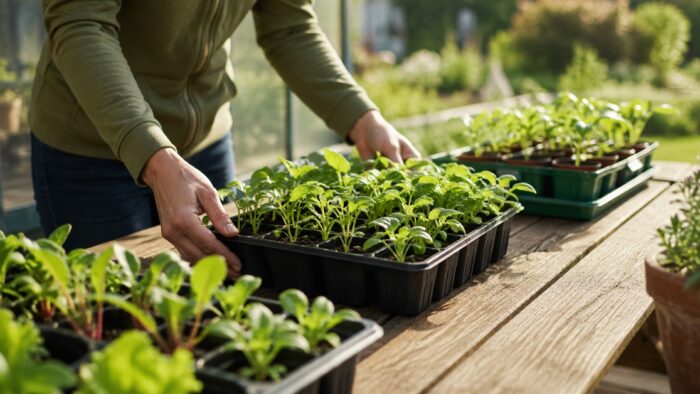
New transplants, seedlings, containers, shallow-rooted greens, flowering vegetables, and fruiting crops usually need closer monitoring than established drought-tolerant plants. A large tree or shrub may need deep watering, but wetting the soil beside a tiny annual every hour does not help the tree’s deeper roots.
Water early enough to inspect the result
Morning watering reduces midday stress and gives time to correct a blocked emitter. Watering at soil level also limits unnecessary leaf wetness. Evening watering can be suitable in some climates, but avoid leaving dense foliage wet overnight where disease pressure is high.
Check depth, not only surface colour
Push a trowel or probe into the soil after watering. The aim is a moist root zone, not a dark patch on top. Sandy soil may need shorter, more frequent applications, while clay soil may need slow watering and time to absorb it without runoff.
Use mulch after the soil is moist
Mulch slows evaporation and buffers soil temperature, but it cannot rehydrate dry soil on its own. Water first, then maintain an appropriate layer. Compare straw, leaves, compost, and other materials in the vegetable mulch guide.
Give temporary shade selectively
Shade cloth can protect newly planted greens or heat-sensitive seedlings during an exceptional event. Keep air moving and remove or reduce shade when conditions moderate. Mature sun-loving crops may tolerate heat better than abrupt darkness.
Adjust irrigation systems rather than guessing
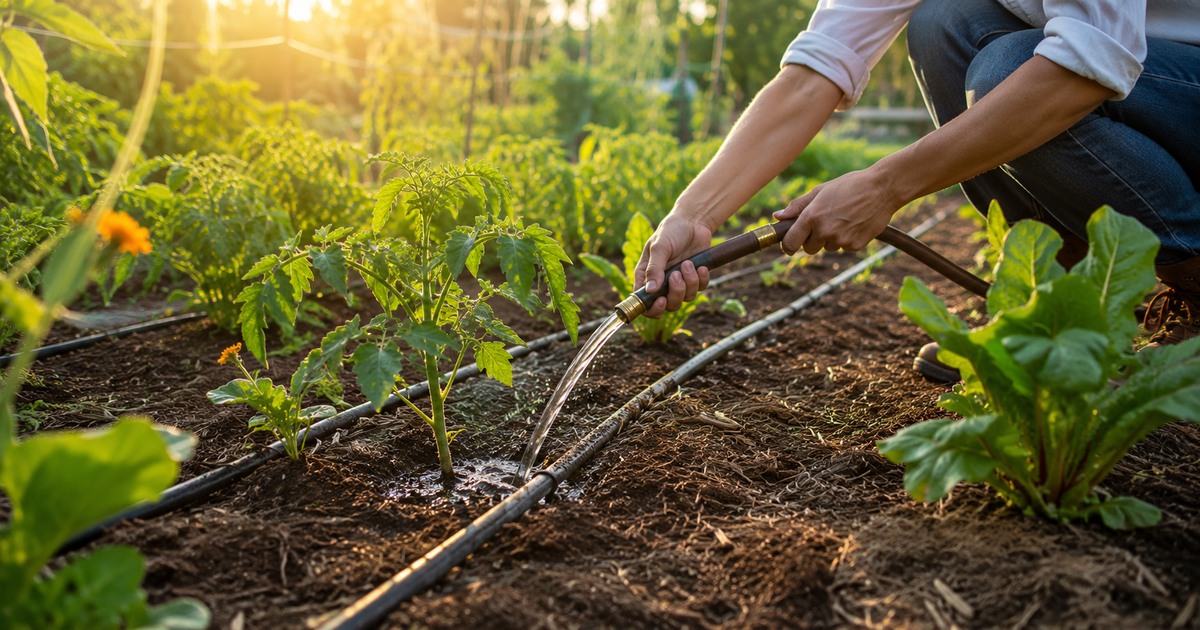
Run drip lines long enough to wet the intended depth, then check emitters individually. The testing method in the drip irrigation guide helps identify clogs and uneven flow. Increase duration or frequency only after checking soil and plant stage.
Recognise temporary midday wilt
Some broad-leaved plants droop during the hottest part of the day even when soil is moist, then recover in the evening. Watering again immediately can create saturated roots. If the plant remains wilted after temperatures fall, inspect the root zone, stem, and soil moisture more closely.
After the heat breaks
Return gradually to normal watering. Remove damaged fruit or leaves only when their condition is clear, and do not apply a strong fertiliser to heat-stressed roots. Record which areas dried fastest; that information is useful for future mulch, shade, and irrigation planning.
Containers need a separate strategy
Small pots, hanging baskets, and dark containers can heat rapidly. Move vulnerable pots out of reflected afternoon heat, group them where watering is efficient, and use saucers only when the species tolerates the temporary moisture. A larger outer cachepot can shade the container, but do not trap standing water around the roots.
Trees and shrubs need water beyond the trunk
Established woody plants absorb water through roots extending well beyond the stem. Apply water slowly across the active root area rather than pouring a small amount at the trunk. Newly planted trees need closer monitoring because their roots are still concentrated in the original root ball.
Measure what the irrigation system delivers
Place several straight-sided containers across a sprinkler zone and compare depth. For drip irrigation, measure output from selected emitters over a set time. This reveals pressure differences and clogged lines. Record the runtime that wets the intended depth so future adjustments are based on evidence.
Water restrictions change priorities
Follow local restrictions and public-health guidance. Prioritise newly planted trees, food crops at critical stages, and valuable perennials. Lawns and established drought-tolerant plants may be allowed to go dormant where appropriate. Capture safe household warm-up water or roof runoff only where local rules and water quality permit.
Heat damage is not always drought
Sunscald, blossom drop, pollen failure, and leaf scorch can occur even in moist soil. Extra water cannot correct every heat effect and can create root problems. Temporary shade, mulch, wind protection, or choosing heat-tolerant varieties may be more effective.
Aftercare once temperatures fall
Remove temporary shade gradually, check for split fruit or damaged leaves, and reassess irrigation. Do not keep the emergency schedule running into cooler weather. A simple note about which beds wilted first can guide autumn soil improvement and next year’s irrigation design.
Why this matters most in arid and dry climates
Everything in this guide applies anywhere a heat wave occurs, but it is a near-permanent reality in Köppen B (arid and semi-arid) regions – the American Southwest, the Middle East, North Africa, inland Australia, and similar zones with limited, unpredictable rainfall. Gardeners in these climates benefit most from pairing the watering practices above with permanent infrastructure: drip irrigation, deep mulch, and shade structures planned before the hottest months rather than improvised during them.
Heat-wave watering: quick answers
Is it better to water a little every day or deeply less often during a heat wave?
Deep, less frequent watering generally encourages stronger roots than frequent shallow watering, even during extreme heat.
Should I water in the middle of the day during a heat wave?
Early morning is usually best. Midday watering loses more to evaporation and a sudden temperature change at the roots can add stress.