A yellow leaf is a symptom, not a diagnosis. Houseplant leaves can lose colour because of normal ageing, wet roots, dry roots, poor light, nutrient imbalance, cold damage, pests, or a sudden change in the room. The quickest route to a useful answer is to look at where the yellowing starts and what changed recently. Pair this guide with better watering habits and a close pest inspection.
Start with the pattern, not the colour alone
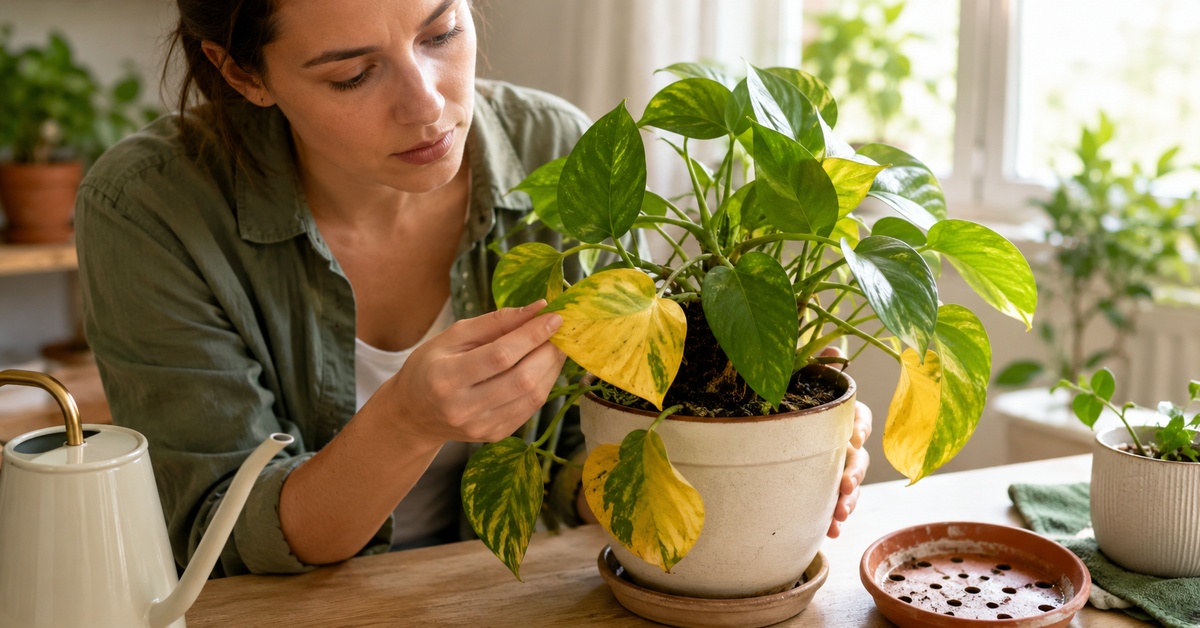
One old lower leaf turning yellow on an otherwise healthy plant may be normal. Several lower leaves yellowing together often point to prolonged moisture or a root problem. Pale new leaves can suggest weak light, unavailable nutrients, or damaged roots. Yellow patches with speckling, webbing, sticky residue, or raised bumps deserve a pest check.
Check the root zone before adding anything
Push a finger, wooden skewer, or moisture probe into the mix far enough to assess the centre of the pot. A dry surface can hide wet soil below. If the mix is damp, cool, and heavy several days after watering, the roots may be receiving too little air. If the root ball has pulled from the pot and feels very light, water may be running around it without soaking in.
Do not fertilize a plant simply because it looks pale. A stressed root system cannot use nutrients efficiently, and extra salts can make the problem worse.
Consider light and recent movement
A plant moved farther from a window may slowly lose older leaves because it can no longer support the same amount of foliage. A sudden move into strong sun can create bleached or scorched areas rather than an even yellow colour. Seasonal changes also matter. Plants often use less water in shorter winter days and more in warm, bright conditions.
Look closely for pests
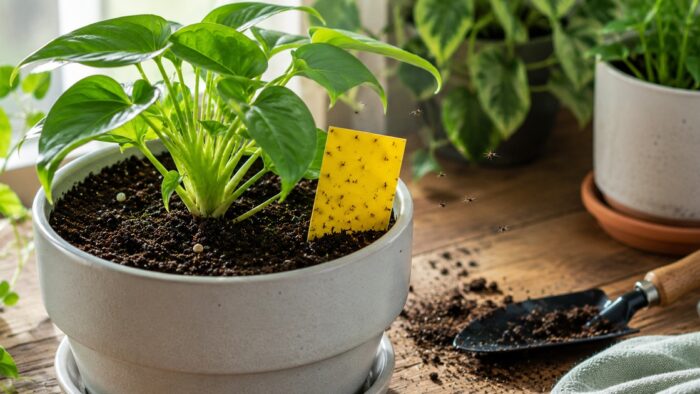
Check the underside of leaves, leaf joints, new growth, and the soil surface. Spider mites can cause fine pale stippling before obvious webbing appears. Scale insects may look like small fixed bumps. Mealybugs gather in protected joints, while fungus gnats usually indicate persistently damp potting mix rather than serious leaf feeding.
If pests are present, isolate the plant before treatment. Cleaning one plant is easier than treating an entire shelf.
When nutrients or pH may be involved
Nutrient problems are more likely when a plant has been in the same exhausted mix for a long time, receives no feeding during active growth, or is watered with very hard water. The shape of the yellowing can offer clues, but symptoms overlap. Repotting, changing fertilizer, and altering water quality at the same time makes it difficult to learn which factor mattered.
A practical order of checks
- Remove only leaves that are fully yellow or damaged beyond recovery.
- Check moisture through the root ball and inspect drainage.
- Review any move, temperature change, missed watering, or recent feeding.
- Inspect for insects with a bright light.
- Watch the newest leaves for one to three weeks after correcting the most likely cause.
- Unpot the plant only when the root zone remains suspicious or decline continues.
What not to expect
A yellow leaf rarely turns green again. The goal is to stop the pattern and support healthy new growth. If new leaves emerge with normal colour and the plant holds its remaining foliage, the correction is probably working even though old damage is still visible.
When several plants yellow at once
A shared change is more likely than several unrelated diseases. Check room temperature, heating vents, watering routines, water quality, and light levels. Plants grouped in the same decorative container may also be sitting in pooled water without it being visible from above.
Patterns that can narrow the search
Yellowing between green veins on young leaves differs from an old leaf fading evenly. A wet lower canopy with soft stems points in a different direction from crisp yellow edges on a dry root ball. Photograph the plant in the same light each week. A sequence of images is more useful than relying on memory.
Check whether yellowing is limited to one side. Leaves close to cold glass, a heating vent, or intense afternoon sun can show local damage while the rest of the plant remains healthy. This is a placement problem rather than a whole-plant nutrition problem.
When to unpot the plant
Remove the plant from its pot when the mix stays wet unusually long, the base smells sour, stems soften near the soil, or decline continues despite corrected watering. Root inspection is disruptive, so it should follow simpler checks rather than being the first response to every yellow leaf.
A short diagnostic example
Suppose three lower leaves yellow while the newest growth stays green. The pot feels heavy five days after watering and sits inside a decorative cover pot. That pattern makes trapped water more likely than a sudden nutrient shortage. Emptying the cover pot, improving drainage, and waiting for the root zone to dry is a more sensible first step than adding fertilizer. A different pattern, such as pale new leaves on a plant that dries normally, would lead to a different investigation.
Change one variable at a time
Yellow leaves often trigger several changes at once: more fertiliser, less water, a new window, and a new pot. That makes the result harder to interpret and can add stress. Start with the most likely cause based on soil moisture, which leaves are affected, and whether the plant recently moved.
Check for pests before assuming a nutrient problem; the houseplant pest guide shows where to inspect. If the mix stays wet or has collapsed, compare it with the potting-mix guide. Make one reasonable correction, mark the date, and watch new growth. Old yellow tissue will not turn green again, so judge the plant by what happens next.
Yellowing houseplant leaves: quick answers
Is one yellow leaf on an otherwise healthy plant a problem?
Usually not. Older leaves yellow and drop as part of normal turnover. The pattern across the plant matters more than a single leaf.
Can a yellow leaf turn green again?
No, but the plant’s overall growth can recover once the underlying cause – usually a root or light issue – is corrected.
What’s the fastest way to narrow down the cause?
Check the roots first. Both overwatering and underwatering can look similar from above but need opposite fixes.