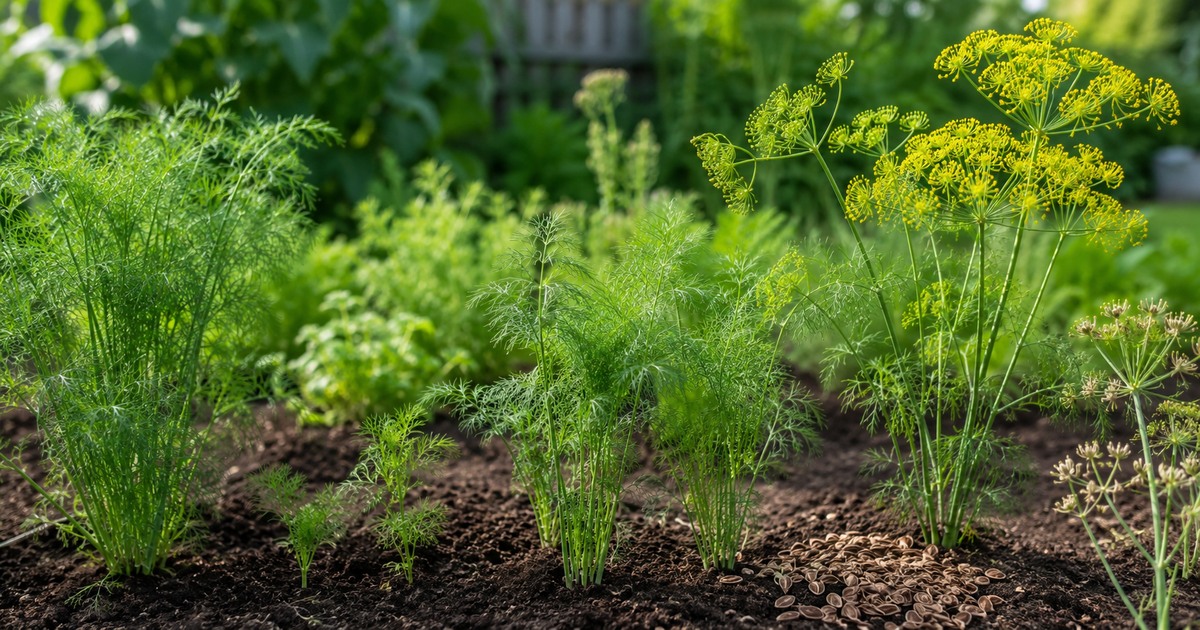
Dill is several crops in one plant. Young leaves flavour food, flowers support many small beneficial insects, and mature seed is used in pickling and cooking. One plant cannot maximise every use at the same time, so decide whether a sowing is mainly for leaves, flowers, or seed.
Sow where the plant will grow
Dill develops a taproot and generally dislikes being moved. Direct-sow into prepared, well-drained soil after severe cold has passed. Cover lightly and keep the surface moist until seedlings establish.
Thin for airflow and stronger stems
Crowded dill becomes weak and competes for light. Thin according to the mature height of the variety. In exposed gardens, sow near a support or among lower plants that do not shade the base heavily.
Harvest leaves before the flower head opens
Take a few outer leaves from several plants rather than stripping one stem. Flavour and leaf tenderness are usually best before flowering. Cool harvested leaves quickly and use them fresh where possible.
Sow small batches
Dill moves to flower naturally, especially as plants mature and weather warms. Sow another short row every few weeks while conditions suit germination. The planning method in the succession planting guide helps avoid one brief harvest.
Leave some flowers
The broad flower heads attract pollinators and predatory insects. If seed is not wanted everywhere, remove most heads before they mature and leave a selected few in a controlled area.
Collect seed when it is dry enough
Cut heads as seeds turn tan and begin to loosen. Place them upside down in a paper bag in a dry airy location. Rub out fully dry seed and store it in a labelled container away from heat and moisture.
Watch related crops in rotation
Dill shares a plant family with carrots, parsley, cilantro, and fennel. Where family-specific pests or diseases are a concern, include it on the rotation map described in the small-garden crop rotation guide.
Choose a dill type for the job
Compact varieties suit containers and leaf harvest, while tall types produce large flower heads and seed. Bouquet-type dill is commonly used for both foliage and pickling. Read mature height because a tall plant can shade smaller herbs and may need wind support.
Dill in a mixed vegetable garden
Dill flowers attract many small beneficial insects, but mature plants can cast shade and self-sow. Place them at an edge or in planned gaps. Avoid relying on dill scent as a complete pest-control method. Its main value is harvest, flowers, and habitat diversity.
Self-seeding without losing control
Allow a few selected heads to mature and remove the rest before seed drops. Mark the area because young dill resembles other carrot-family seedlings. Thin volunteers early. If dill appears where crop rotation or spacing makes it inconvenient, transplanting established volunteers may fail because of the taproot; remove and resow instead.
Pests and leaf problems
Aphids and caterpillars can appear on dill. Inspect stems and flower heads, use water or hand removal where practical, and protect caterpillars only when they are identified as desirable species and the plant can support them. Yellowing can also follow waterlogged soil or root disturbance.
Harvesting for pickles
Recipes may use leaves, immature flower heads, or mature seed. Harvest the plant stage the recipe specifies. Food-preservation recipes must come from a tested source because acidity, jar size, processing method, and ingredient proportions determine safety.
Seed storage
Dry seed until it does not bend or feel soft, remove chaff, and store in a labelled airtight container in a cool dry place. Keep culinary seed separate from seed intended for planting if treatments or storage conditions differ.
Growing dill: quick answers
Can dill be grown for both leaves and seed from one planting?
One plant can provide some of each, but maximizing one use comes at the expense of the other. Sow separate batches for a strong harvest of both.
Will dill self-seed and come back on its own?
Often, yes, especially if some flower heads are left to mature, though this can become uncontrolled without management.
How do I keep dill self-seeding without it taking over?
Remove most spent flower heads before seed drops, leaving only the amount you want to reseed.