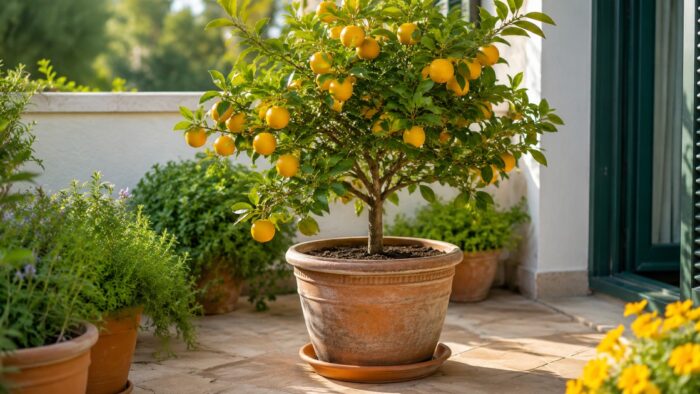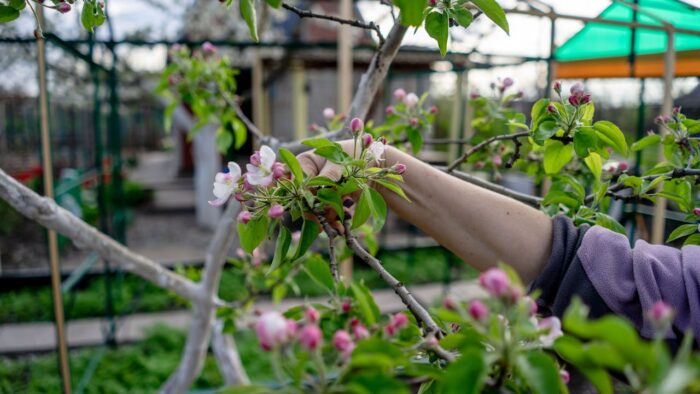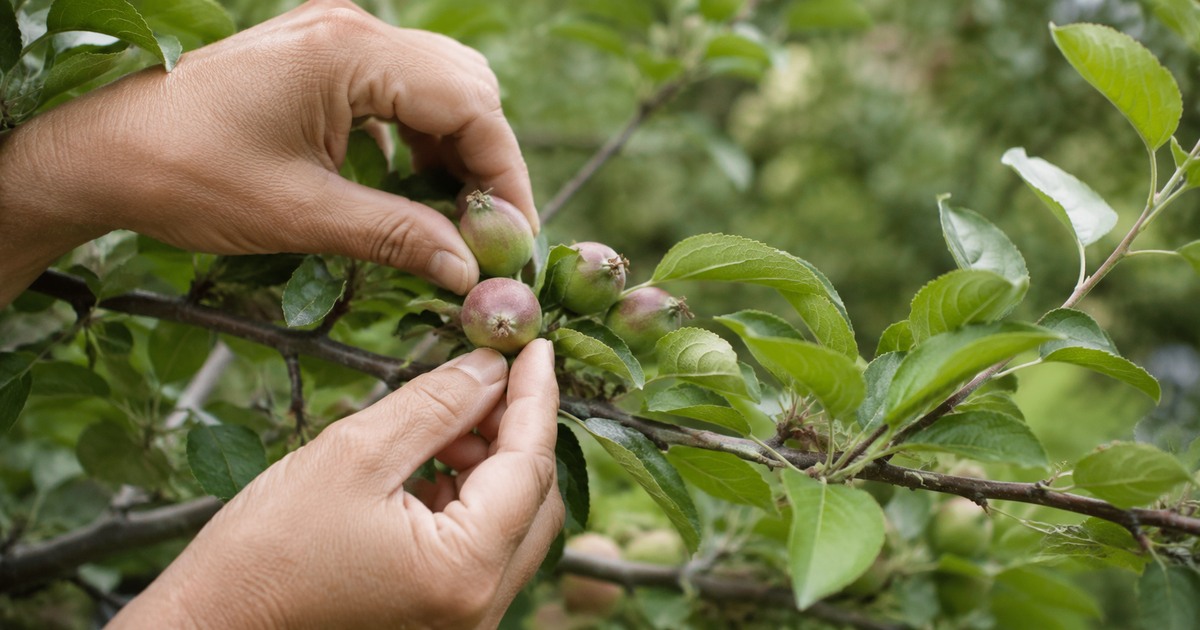
A healthy fruit tree may set more fruit than it can mature well. Natural drop removes some, but crowded clusters can still leave small fruit, broken branches, and a tree with little energy for the following year. Hand thinning is slow but practical for a small home tree.
Wait until the first natural drop
Many trees shed weak fruitlets after bloom. Begin thinning once the remaining fruit is large enough to handle and the natural drop has eased. Timing varies with climate and species, so observe the tree rather than using one calendar date.
Keep the strongest, best-positioned fruit
Remove damaged, misshapen, diseased, or tightly crowded fruit first. In an apple cluster, keep a well-positioned fruit with space around it. Avoid tearing the fruiting spur; use small scissors where twisting would damage it.
Spacing matters more than a perfect number
Home recommendations often describe several inches between apples, but branch strength, variety, and leaf area also matter. The goal is a canopy where fruit is not rubbing and slender branches are not carrying heavy groups at their tips.
Support is not a substitute for thinning
Props may protect a valuable branch temporarily, but an overloaded tree still divides resources among too many fruit. Thin before branches bend sharply. Check ties and supports so they do not cut bark.
Do not thin before checking pollination
A sparse set may reflect poor bloom overlap or weather rather than a need to remove fruit. The factors in the fruit-tree pollination guide help explain uneven set. Thin only after the actual crop is visible.
Pruning and nutrition influence future crops
A crowded canopy can reduce light to fruiting wood, but heavy pruning may trigger vigorous shoots. Use the measured approach in the pruning guide. Avoid adding nitrogen simply because fruit is small; crop load, water, variety, and sunlight may be more important.
Dispose of damaged fruit thoughtfully
Remove fruit showing significant pest or disease symptoms from the immediate area when local guidance recommends it. Healthy thinned fruitlets can often be composted in a well-managed pile. Continue checking the tree as fruit gains weight, especially after wind or heavy rain.
Different fruits need different handling
Apples and pears are commonly thinned by spacing fruit along branches. Peaches may require substantial thinning because individual fruit becomes large and branches are brittle. Plums and cherries are handled differently depending on crop load and tree strength. Use species-specific local guidance rather than applying an apple rule to every tree.
Crop load and biennial bearing
Some apple varieties tend to produce heavily one year and lightly the next. Excessive fruit can reduce flower-bud formation for the following season. Timely thinning may moderate this pattern, although variety, pruning, weather, and tree age also contribute.
Thin safely
- Use a stable ladder designed for orchard or garden work where a ladder is necessary.
- Do not climb wet branches or overreach.
- Keep cutting tools closed or sheathed while moving.
- Work in shorter sessions; fatigue makes branch and ladder accidents more likely.
- Leave high inaccessible fruit rather than taking an unsafe position.
Check the tree again as fruit gains weight
A cluster that looked acceptable when fruit was marble-sized can become crowded later. Inspect weak branch angles and long flexible limbs. Remove damaged fruit and reduce load where a branch is bending sharply. Props should be broad, stable, and checked after wind.
Thinning and pests
Codling moth, apple maggot, plum curculio, and other pests differ by region. Thinning removes some damaged fruit, but it does not replace monitoring or an integrated local plan. Bagging selected fruit can be practical on a small tree when timed correctly.
Use the harvest record next year
Note how much fruit remained, average size, branch damage, and whether the tree flowered the following spring. This is more useful than trying to remember whether thinning “felt heavy.” Adjust gradually because tree age and weather change crop capacity.
Chilling hours and hemisphere timing
Apples and most tree fruit need a minimum number of cumulative hours below roughly 7°C (45°F) each winter, known as chilling hours, before they will flower and fruit normally. Köppen D (continental) and cooler C climates easily meet this requirement; warm Csa, Cfa, and especially tropical climates may not, which is why low-chill apple, peach, and plum varieties exist for warmer regions. None of this changes the thinning method in this guide – only the calendar. Southern Hemisphere gardeners should apply every step here three to four months after natural petal fall in their own spring, typically October through December rather than May through July.
Thinning apples and tree fruit: quick answers
How soon after bloom should fruit thinning happen?
Most guidance recommends thinning shortly after the first natural fruit drop, once it’s clear which fruit the tree intends to keep.
Does thinning reduce total harvest weight?
Often not significantly. Thinning trades a higher number of small fruit for fewer, larger, better-quality ones.
What is biennial bearing, and does thinning help?
It’s a pattern of alternating heavy and light crop years. Consistent thinning can help even out the cycle over time.