Thyme often fails in a garden that is too kind to it. Rich wet soil, frequent watering, and shade produce weak growth and rotting stems. The plant is adapted to bright conditions and fast drainage, though a new transplant still needs enough moisture to establish.
Choose sun and airflow
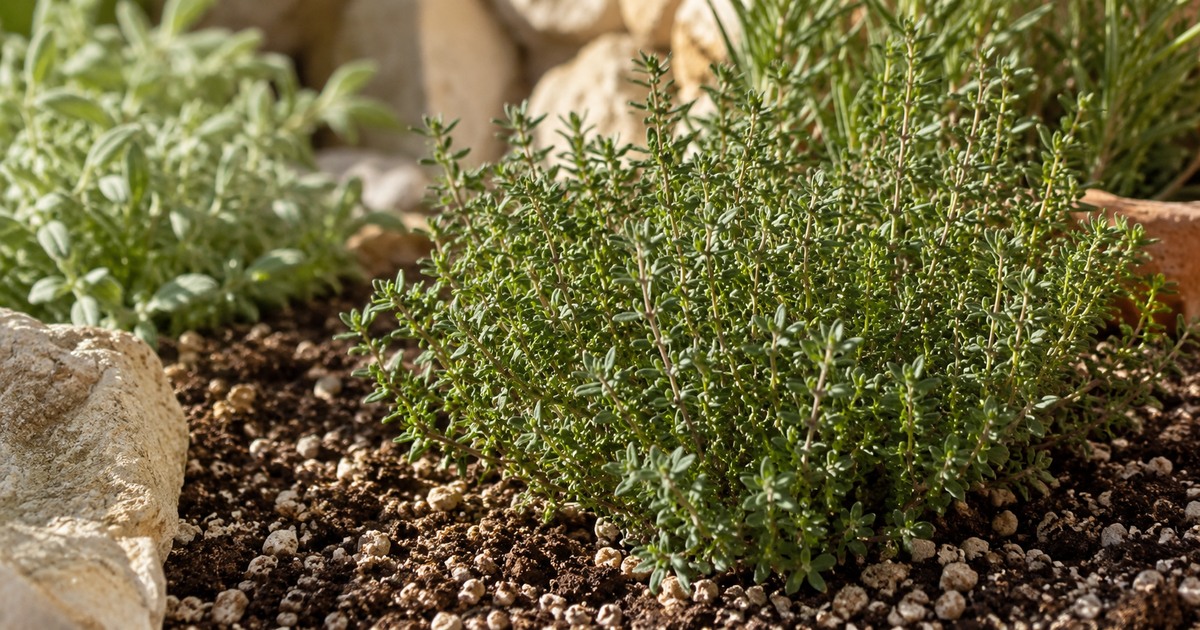
Give thyme a bright outdoor position or the strongest indoor light available. Crowded, shaded stems become soft and sparse. In humid climates, spacing and a raised or sloping site help leaves dry after rain.
Use a lean, open root zone
Garden soil should drain freely. Containers need drainage holes and a mix that does not collapse into a dense wet mass. Avoid planting a small thyme root ball in a very large pot.
Water deeply, then wait
Water new plants enough to establish roots. After that, allow the upper soil to dry before watering again. Do not judge by wilt alone during extreme heat; check the soil. Constantly damp crowns are more dangerous than a short dry interval.
Harvest before stems become bare and woody
Cut green growth lightly and often, leaving foliage on the lower part of the stem. Avoid cutting hard into old leafless wood unless the variety is known to reshoot. Remove flowers if the goal is maximum leaf harvest, or leave some for pollinators.
Feed sparingly
Thyme usually needs little fertiliser in reasonable soil. Excess nitrogen creates soft growth with weaker aroma. A light spring top-dressing may be enough for garden plants, while container plants can receive a diluted feed during active growth.
Protect against winter wet
Cold tolerance varies, but wet frozen soil is a common problem. Improve drainage, avoid heavy mulch packed against the crown, and shelter containers from prolonged saturation. Indoors, use the seasonal adjustment in the winter care guide and provide strong light.
Preserve surplus without losing the plant
Take several modest harvests rather than one severe cut. Dry sprigs in a clean airy place and strip leaves after they are fully dry. The comparison in the herb preservation guide helps match drying and freezing to different herbs.
Culinary thyme, lemon thyme, and groundcover types
Not every plant sold as thyme has the same growth habit or kitchen value. Upright culinary types are convenient for harvest. Lemon-scented forms add a different flavour. Creeping types can cover edges and paths but may be harder to keep clean for cooking. Check the botanical name and mature spread before planting.
Propagation from cuttings and division
Soft or semi-ripe cuttings can root in a light medium when kept moist but not saturated. Older clumps may be divided if they have several rooted sections. Propagate from healthy, compact growth rather than weak shaded stems, and label named varieties.
Container design
A terracotta pot can help mix dry faster, but it may need frequent checks in very hot weather. Combine thyme only with herbs that prefer similar sun and drainage. A mixed container with moisture-loving parsley or mint becomes difficult to water correctly.
Reading thyme symptoms
| Symptom | What to check |
|---|---|
| Blackening at base | Wet crown, poor drainage, cold saturated soil |
| Long pale stems | Insufficient light, crowding, excess nitrogen |
| Dry brown interior | Ageing woody growth, drought, poor airflow |
| Few new shoots | Cold season, root restriction, heavy cutting |
Using flowers and stems
Thyme flowers are edible when the plant is correctly identified and grown without unsuitable treatments. They also attract pollinators. Woody stems can flavour soups or roasting dishes and be removed before serving. Keep a few plants for flowering if regular leaf harvest is not the only goal.
Renovating an old plant
A woody thyme plant does not always respond to hard cutting into bare stems. Take cuttings from healthy tips before attempting renovation. Replace plants that have become open, weak, and difficult to harvest rather than overwatering or overfeeding them.
Thyme in different climate zones
Like rosemary, thyme is a Mediterranean native (Köppen Csa/Csb) built for dry summers and free-draining, often rocky soil. In humid subtropical climates (Köppen Cfa) – the southeastern United States, much of southern China, or coastal Japan – high summer humidity is the main obstacle, not heat or cold. Raised beds, wide plant spacing, and gritty soil matter more there than mulch. In cold continental climates, established thyme can survive winter outdoors in well-drained ground, but containers should be moved to an unheated, bright space to avoid waterlogged, frozen roots.
Growing thyme: quick answers
Why does my thyme plant keep dying in winter?
Winter wet, not cold, is the usual cause. Ensure sharp drainage and avoid letting the root zone sit saturated through winter rain.
Can old, woody thyme be revived by cutting it back hard?
Not reliably. Take cuttings from healthy new growth and replace the plant rather than expecting hard pruning to regenerate bare wood.
Is thyme better in the ground or in containers?
Either works, but containers make it easier to control drainage and protect the plant from excess winter moisture.