Cilantro naturally moves from leafy growth to flowering as days lengthen and temperatures rise. Bolting is not a disease, and no technique can keep one plant leafy forever. The practical solution is to grow cilantro in cool conditions, harvest promptly, and sow small batches over time. It fits well beside container lettuce and other quick cool-season crops.
Choose the coolest part of the season
Cilantro grows best when weather is mild. In hot climates, spring and autumn are often more productive than midsummer. Afternoon shade can help in containers, but deep shade produces weak growth. A site with morning sun and protection from the hottest part of the day is often useful.
Direct sow when possible
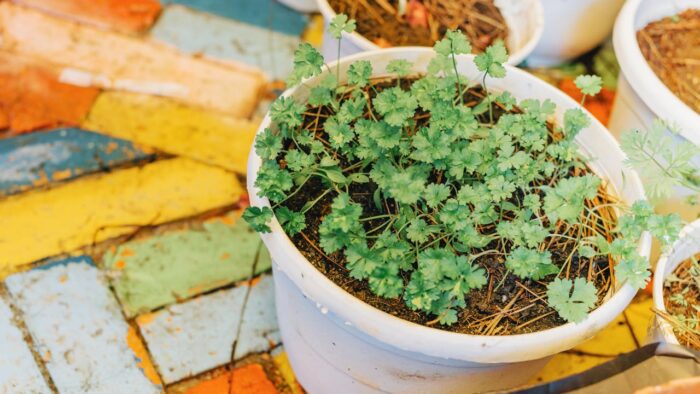
Cilantro forms a taproot and can dislike root disturbance. Sow seed where the plant will grow, using loose soil with good drainage. If using a pot, choose one deep enough for the roots and make sure excess water can leave freely.
Use succession planting
Sow a short row or a small pot every two or three weeks rather than planting the entire packet at once. Older plants can flower while younger plants enter harvest. This approach produces a steadier supply and accepts the plant’s natural life cycle.
Keep growth steady
Irregular moisture, crowding, and heat stress can shorten the leafy stage. Water when the upper soil begins to dry, thin seedlings so leaves receive light and air, and avoid heavy feeding. Rich nitrogen applications create soft growth without stopping bolting.
Harvest without exhausting the plant
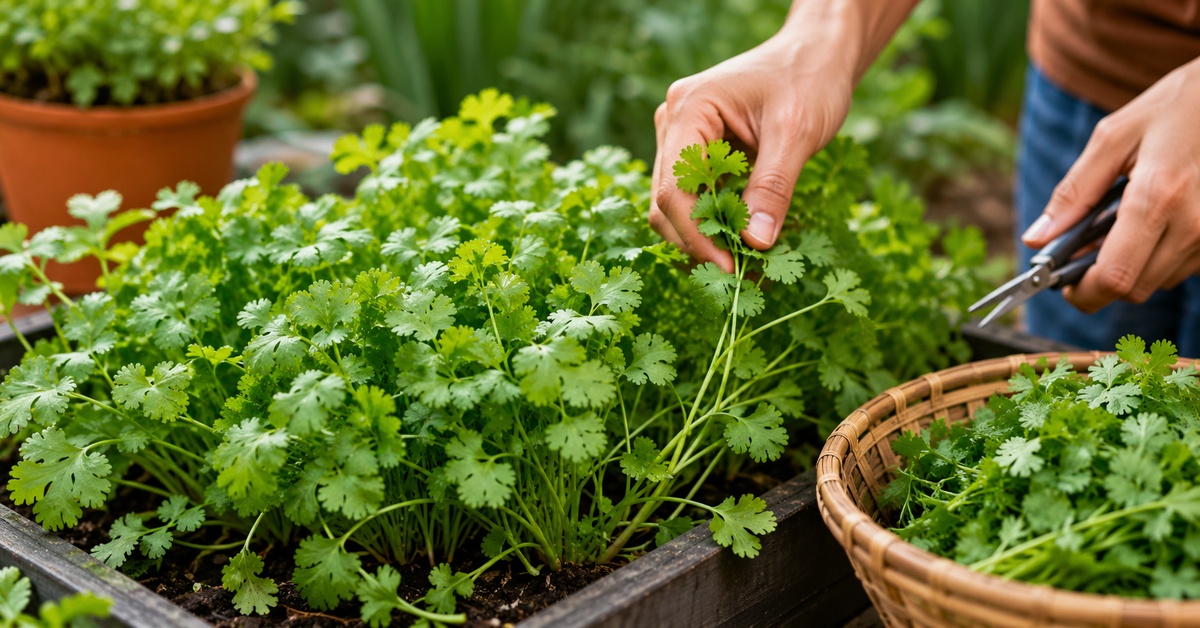
Cut outer leaves or short bunches once the plant is established. Leave enough centre growth for another harvest. Cilantro is best used fresh, so frequent small cuts usually give better quality than waiting for a large mature plant.
When the flower stalk appears
You can continue harvesting some leaves, but flavour and texture will change as flowering advances. The flowers support small beneficial insects, and the developing seeds can be harvested as coriander. Allow selected plants to mature if you want seed for the kitchen or the next sowing.
Container problems to watch
- Shallow pots that dry within hours
- Overcrowded seedlings with thin stems
- Hot dark containers placed against reflective walls
- Waterlogged saucers after rain
- Moving indoor seedlings directly into strong sun
- Expecting one planting to supply leaves all season
Saving coriander seed
Wait until seed heads become dry and tan, then cut them into a paper bag. Let them finish drying in a ventilated place before storage. Label the variety and year. Seed saved from healthy open-pollinated plants may be used for future sowing, although garden conditions can affect purity when related varieties flower nearby.
Slow-bolt varieties and realistic expectations
Some varieties are selected to remain leafy a little longer, but they still flower when conditions push the plant to reproduce. A slow-bolt label is useful for summer shoulders, not a promise of endless leaves in heat. Succession sowing remains the most dependable strategy.
If buying seed for repeated harvest, compare days to maturity, plant height, and whether the variety is bred mainly for leaves or coriander seed. This helps align the crop with the kitchen.
Growing cilantro indoors
Indoor cilantro needs strong light and a deep container. It can be grown on a bright shelf, but weak windows often produce thin stems and limited harvest. Indoor temperatures may also be warm enough to speed flowering. Treat it as a short-cycle crop and reseed rather than expecting one pot to last for months.
Using the whole plant
Leaf harvest is only one stage of cilantro. Flowers are edible and useful for pollinators, while green seed has a bright flavour different from dry coriander. Mature dry seed can be used in cooking or saved for planting. Letting a few plants finish their cycle turns bolting from a failure into a planned second crop. Mark those plants so they are not removed during bed cleanup.
Treat cilantro as a sequence of short crops
Cilantro naturally moves toward flowering as days lengthen and temperatures rise. Instead of trying to keep one plant leafy all summer, sow small batches and allow some older plants to produce coriander seed. This creates a more reliable harvest and supports beneficial insects when flowers are left in place.
The timing principles in the succession planting guide work especially well for cilantro. Harvest stems before the plant becomes tall and feathery, then use extra leaves with the storage methods in the herb preserving guide. In hot periods, switch to another herb rather than using excessive shade and water to fight the plant’s normal life cycle.
Cilantro and bolting: quick answers
Can bolting be stopped once it starts?
No. Once a cilantro plant begins to bolt, leaf production slows for good. Harvest what remains or let it flower and collect seed.
Does growing cilantro indoors avoid bolting?
Indoor cilantro still bolts with warmth and long light exposure, though stable indoor temperatures can delay it compared with outdoor summer heat.
Are slow-bolt varieties worth choosing?
Yes, they buy extra harvest time in warm weather, though no variety is fully bolt-proof once temperatures climb consistently.