A fruit tree can flower heavily and still set little fruit when the pollen source is unsuitable, bloom times do not overlap, or cold weather reduces pollinator activity. The phrase self-fertile is useful, but it does not mean every tree crops equally well alone. Pollination planning should happen before planting, alongside long-term pruning and measured fertility management.
Self-fertile, self-sterile, and cross-pollinated
A self-fertile variety can set fruit with its own pollen, although another compatible variety may improve yield in some cases. A self-sterile or self-incompatible variety needs pollen from a genetically different compatible tree. Apples and many pears commonly require cross-pollination, while requirements vary among cherries, plums, peaches, and other fruits.
Compatibility is more than planting two trees
Two trees of the same variety are usually not a useful pollen pair. The varieties must also flower at roughly the same time. Nursery pollination charts are helpful, but local bloom timing can shift with climate and site conditions.
A compatible tree may already grow in a nearby garden. Crabapples can pollinate many eating apples when bloom overlaps, but distance, building barriers, and pollinator activity still affect the result.
Pollinators must be able to work
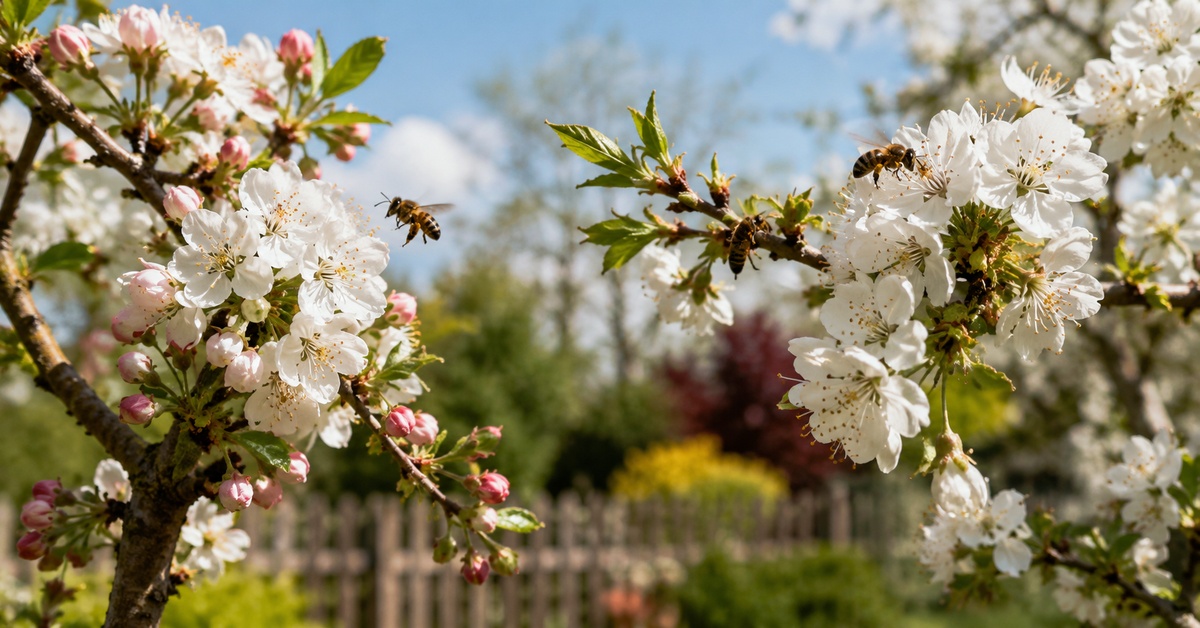
Bees and other insects move pollen between flowers. Cold, wind, rain, and poorly timed sprays can reduce visits during the short bloom period. Avoid using insecticides on open flowers and provide a garden with varied flowering plants rather than relying on one crop alone.
Why flowers may fall without fruit
- Late frost damaged flower parts
- The two varieties bloomed at different times
- The tree is young or under severe stress
- Pollinator activity was low during cold or wet weather
- Pruning removed much of the fruiting wood
- Excess nitrogen encouraged shoots instead of balanced flowering
- A biennial-bearing tree is in a light-crop year
Small gardens still have options
Where space is limited, consider dwarf rootstocks, multi-grafted trees, espalier training, or a neighbour’s compatible tree. Multi-grafted trees can provide several varieties on one root system, but each branch must be labelled and pruned carefully so one variety does not dominate.
Hand pollination has limits
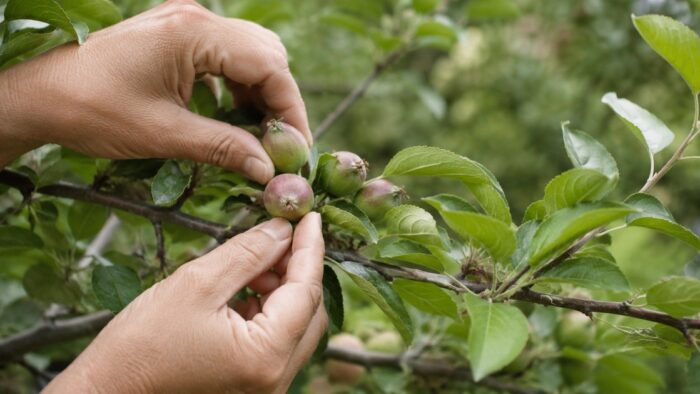
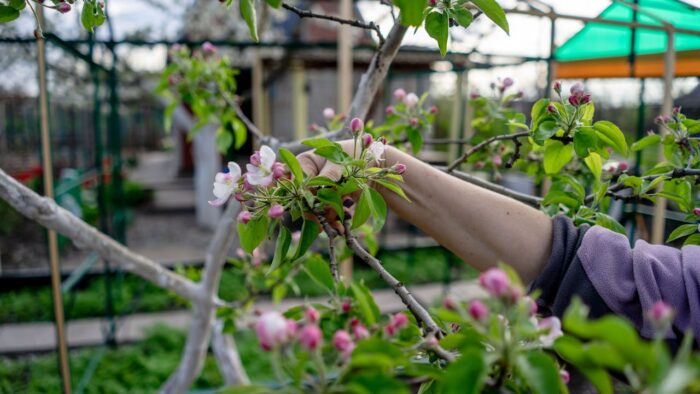
For a small tree or sheltered garden, transferring pollen with a soft brush can help when insect activity is weak, but it is labour-intensive and still requires compatible, viable pollen. It is a backup for a few flowers, not a replacement for good variety selection and a pollinator-friendly garden.
Keep a bloom record
Write down first bloom, full bloom, weather, and fruit set for each tree. After two or three seasons, the record reveals whether varieties overlap reliably. It also helps separate pollination trouble from frost damage or alternate bearing.
Before buying another tree
Confirm the exact variety, rootstock, mature size, chill needs, and local disease concerns. Ask the nursery for a compatible pollen partner suited to the same climate. A second tree should solve a pollination gap without creating a maintenance problem the garden cannot support.
Bloom groups and local climate
Variety charts often group apples or pears by early, mid, or late bloom. Choose partners from the same or neighbouring group, then confirm with local nurseries because regional weather can shift flowering. A warm wall, slope, or sheltered courtyard may make one tree open earlier than another only a short distance away.
Cold pockets can damage flowers even when the rest of the garden escapes frost. Planting site, air drainage, and tree form therefore affect fruit set along with pollen compatibility.
Fruit thinning is separate from pollination
A tree may set more fruit than it can mature. Thinning small fruit after natural drop improves spacing and can reduce limb breakage. Poor fruit size after a heavy set is not evidence that pollination failed; it may mean the tree carried too many developing fruits.
Bloom overlap can change from one spring to the next
Variety charts are useful, but local weather still controls when flowers open. A warm spell can accelerate one tree, while a shaded position delays another. Record first bloom, peak bloom, and the last open flowers for a few seasons. This reveals whether two varieties truly overlap in your garden.
Pruning and tree vigour also affect flowering wood. Review the pruning guide before removing productive spurs, and avoid assuming that more fertiliser will create fruit. The cautions in the fertilising guide help separate leafy growth from reproductive growth. If pollinators are scarce during cold or wet bloom, provide flowering plants across the season rather than relying on a single ornamental.
Questions to ask the nursery
Ask for the flowering group, compatible varieties, rootstock, expected mature size, and whether the tree is self-fertile in your climate. Confirm that names on both labels refer to distinct cultivars rather than two trees of the same selection. A good nursery should also explain whether the chosen rootstocks suit local soil and winter conditions. Keep the labels and add the information to a garden record before the print fades.
Chilling hours and bloom mismatches across climates
Apples, pears, and many stone fruit need a minimum number of winter chilling hours to flower normally. In climates that fall short of a variety’s chilling requirement – increasingly common in warm temperate and Köppen Csa/Cfa zones – bloom can become erratic or staggered, which is often mistaken for a pollination compatibility problem. Before assuming two varieties simply do not overlap, check whether the regional chilling requirement is consistently met; if not, low-chill varieties bred for that climate will be a more reliable fix than adding a second tree.