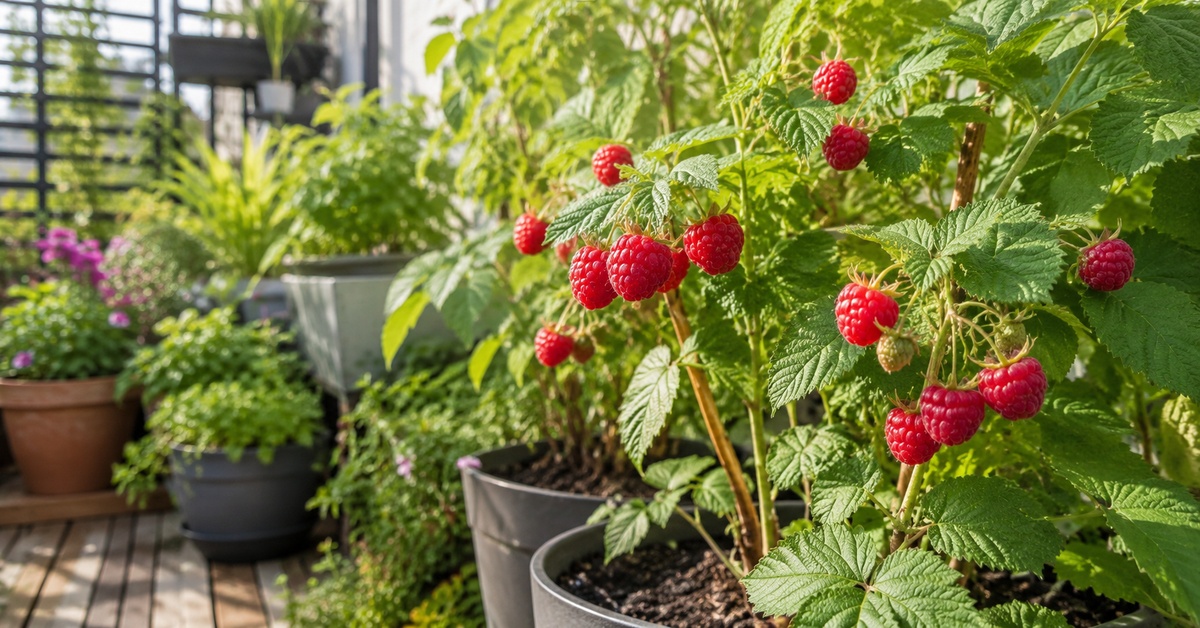
Raspberries can grow in large containers when the variety, pot, support, and winter plan are chosen together. The plant is not a compact annual. Its roots live for several years, while the canes follow a fruiting cycle that affects pruning. Container growing works best when space is limited and the gardener is willing to monitor moisture closely. For other small-space fruit options, see container strawberries and potted blueberries.
Choose a variety that fits the space
Compact or upright primocane-fruiting raspberries are often easier in containers because all canes can be cut down during dormancy for one late crop. Summer-bearing types need older canes preserved for fruiting, which requires more careful pruning and winter protection.
Buy healthy, correctly labelled plants from a reputable nursery. Raspberries can carry viruses that cannot be cured, so unknown divisions from an unhealthy patch are a poor starting point.
Use a large, stable container
A mature raspberry needs more root volume than a typical patio herb. Choose a large pot with several drainage holes and enough weight to resist wind. A broad container is generally more stable than a tall narrow one. Use a well-drained potting mix enriched with mature compost, not dense garden soil.
Build support at planting time
Canes become awkward to control after they lengthen. A small obelisk, sturdy stakes, or a simple wire frame keeps growth upright and makes fruit easier to reach. Tie canes loosely and leave room for air movement.
Watering is the main container challenge
Raspberry roots should not sit in saturated mix, but flowering and fruiting plants also struggle when the root ball dries. Check moisture below the surface during warm weather. Mulch can reduce evaporation, but keep it away from direct contact with the crown.
Water deeply enough to wet the root zone, then let excess drain. Frequent shallow splashes encourage an uneven moisture pattern.
Pruning depends on the fruiting type
For a fall-only crop from primocane-fruiting raspberries, cut all canes close to the base during dormancy. New canes will grow and fruit later in the season. For summer-bearing types, remove canes that have fruited while preserving healthy first-year canes for the next crop.
If the plant label is missing, observe where fruit forms before pruning heavily. Brown woody canes and green first-year canes play different roles.
Pollination and fruit set
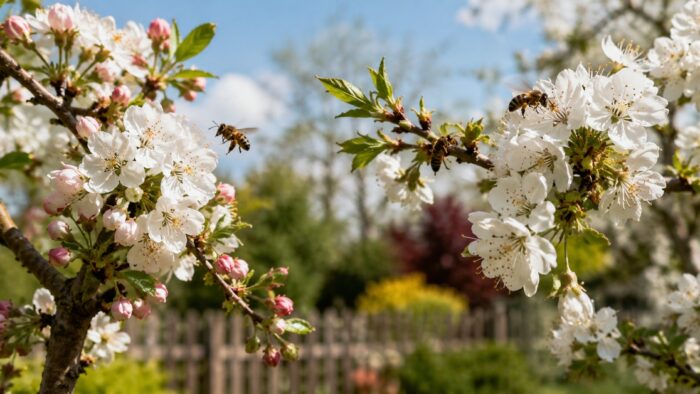
Raspberry flowers benefit from bee activity. Place the container where flowers are easy for pollinators to reach and avoid spraying open blooms. Even self-fruitful plants may produce better fruit with active pollination.
Winter survival in a pot
Roots in containers are more exposed to cold than roots in the ground. Move the pot to a sheltered location, insulate it, or follow local advice for overwintering perennial containers. The correct method depends on climate and variety. Avoid bringing a dormant outdoor raspberry into a warm living room.
A realistic harvest expectation
The first season is mainly about root and cane establishment. A healthy container raspberry should make strong new canes before it carries a heavy crop. Replace part of the potting mix, check support, and divide or renew the plant when the container becomes crowded.
Renewing a container raspberry
After several seasons, roots and old potting mix can fill the container. Renovation is best done during dormancy or early growth, depending on climate. Remove dead canes, lift the root mass if practical, trim damaged roots, and replace part of the exhausted mix. Large plants may be divided only when the crown structure allows it.
Do not keep expanding the container indefinitely. A plant that has become too large for the available space may be better replaced with a young disease-free plant. This keeps pruning, watering, and winter protection realistic.
Pests and disease in a small planting
Containers make inspection easier, but dense canes still trap humidity. Remove spent fruiting canes promptly, collect overripe berries, and keep air moving through the plant. If leaves, canes, or fruit show unusual spots or dieback, use a local extension diagnostic resource before applying a treatment.
Choosing between one large pot and several smaller ones
One large container holds moisture more evenly and gives roots more space, but it becomes heavy to move for winter. Two smaller containers are easier to handle and allow varieties to be separated, although they dry faster and need more frequent checking. Consider the final location before planting. A pot on wheels may help, but the base must remain stable and drainage holes must stay open. Leave enough room around the plant to prune and pick berries without forcing canes against a wall.
Refresh a container raspberry planting
Large raspberries can stay in containers for several years, but the mix settles and roots eventually fill the pot. Each spring, remove loose material from the surface, add a modest layer of fresh mix or compost, and check drainage holes. If water runs down the side without soaking in, the root ball may be compacted.
Renew older canes according to whether the variety fruits on first-year or second-year growth. Do not copy a pruning method until the fruiting type is known. Mulch can protect moisture, but keep crowns open and avoid a thick wet layer. The material comparison in the mulch guide is useful for containers too. During flowering, steady watering supports fruit set more reliably than frequent light feeding.
Raspberry hardiness is global, not regional
Raspberries are one of the broadest-adapted fruits a container gardener can grow, with most varieties hardy across USDA zones 3 through 9 – from cold continental climates to warm temperate ones. The practical difference is fruiting type rather than location: floricane (summer-fruiting) varieties crop on second-year wood, while primocane (ever-bearing) varieties fruit on first-year canes and can produce two flushes in a long season. Southern Hemisphere growers follow the same pruning logic described in this guide, simply shifted by roughly six months, so a primocane variety’s main flush lands around March rather than September.
Raspberries and climate: quick answers
Can raspberries grow in a warm climate?
Yes, up to about USDA zone 9, though they generally crop better and live longer where winters provide some chill.
Do raspberries need a cold winter?
Most varieties benefit from a period of winter dormancy. In very mild or tropical climates, yields and plant longevity tend to drop.