Fruit tree pruning is where many gardeners hesitate, and for good reason. A cut is permanent, and the wrong cut can delay fruiting or create a thicket of upright shoots. But avoiding pruning altogether causes its own problems: shade, weak branches, disease pressure, and small fruit.
Prune for structure before chasing yield
Prune most fruit trees in late winter or early spring before growth begins, remove dead or crossing wood, improve airflow, and make fewer thoughtful cuts rather than many small nervous cuts. Young trees need training; mature trees need renewal and light management.
Planning and making clean cuts
- Start with safety. Use sharp bypass pruners, loppers, or a pruning saw, and avoid cutting from an unstable ladder.
- Remove dead, diseased, damaged, crossing, and rubbing branches first. These cuts are rarely controversial.
- Identify the desired structure before cutting healthy wood. Apples often use a central leader; peaches and some stone fruits often use an open center.
- Make thinning cuts where a branch meets another branch or trunk. Avoid leaving long stubs.
- Step back after every few cuts. It is easier to remove more wood later than to replace a branch.
One cut can shape several seasons of growth
A fruit tree is a balance between leaves, roots, branches, and fruiting wood. Pruning changes that balance. Heavy pruning can push leafy growth at the expense of fruit, while no pruning can leave the canopy shaded and unproductive. The best approach depends on tree age, species, and previous care.
Cuts that weaken or unbalance a tree
- Topping a fruit tree, which creates weak regrowth and long-term structure problems.
- Removing too much from a young tree and delaying fruit.
- Ignoring branch angles and leaving narrow crotches that split under crop load.
- Using dull tools that crush rather than cut cleanly.
Make a pruning plan before the first cut
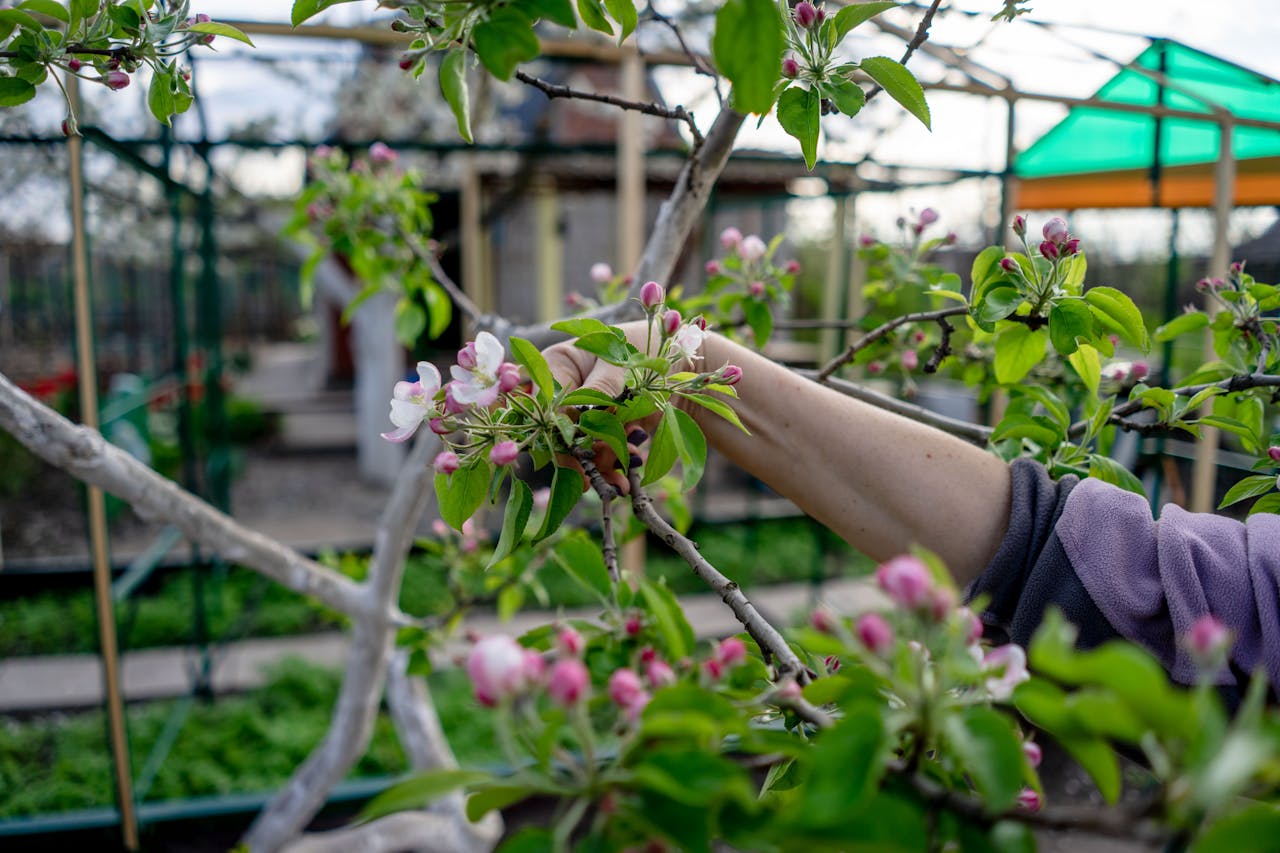
Stand back and mark the branches that are dead, damaged, crossing, or growing toward the centre. Those are usually the safest priorities. Then decide whether the tree needs height control, better light penetration, or stronger scaffold branches. Trying to solve every issue in one session can remove too much canopy.
Take photographs before and after pruning. They make it easier to judge the amount removed and to plan next year’s work. Fruit trees respond over several seasons, so a record is more useful than relying on memory.
Young trees, mature trees, and fruiting wood
Late winter pruning lets you see the branch structure and reduces the risk of stimulating tender growth too early.
Young trees should be pruned lightly to build structure without delaying fruiting.
Water sprouts are upright vigorous shoots that often appear after heavy pruning. Remove some, but also ask why the tree responded that way.
Air movement through the canopy helps leaves dry faster and can reduce disease pressure.
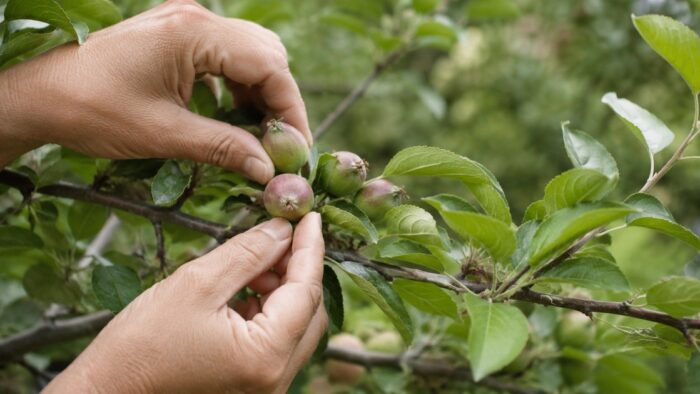
Fruit thinning after bloom can improve fruit size and reduce stress on overloaded branches.
Water sprouts, rubbing limbs, and delayed healing
If a tree makes many upright shoots after pruning, the previous cuts were likely too severe. If fruit is small, consider light, pruning, thinning, water, and fertility together. If branches die back, look for disease, winter injury, or physical damage before pruning further.
Choosing and cleaning pruning tools
Invest in sharp hand pruners, loppers, and a curved pruning saw before buying sprays or specialty gadgets. A pole pruner can help with height, but pruning is safer and more precise when trees are maintained at a manageable size over time.
Pruning cannot correct every fruit-tree problem
Weak growth, sparse fruit, and crowded branches do not always have the same cause. Before making large cuts, check planting depth, sunlight, drainage, root damage, crop load, and whether flowers are being pollinated. A saw cannot correct unsuitable soil or a variety that lacks a compatible pollination partner.
Use pruning to improve structure and light, not to force an unhealthy tree into production. If flowers appear but fruit does not set, review the fruit-tree pollination guide. If growth is excessive or leaves are pale, compare the timing and symptoms in the fruit-tree fertilising guide before adding nutrients. Remove the smallest amount of wood needed to meet a clear goal, then watch the tree through the next growing season.
Fruit-tree pruning questions
When is the best time to prune apple trees?
Late winter or early spring, after the coldest weather has passed and before active growth begins, is commonly recommended.
Can I prune fruit trees in summer?
Light summer pruning can manage vigorous shoots, but major structural pruning is usually done during dormancy for many fruit trees.
How much should I remove at once?
For most home trees, avoid removing more than about a quarter of the canopy in one year unless correcting severe damage.
Do all fruit trees get pruned the same way?
No. Apples, pears, peaches, plums, cherries, and berries have different growth habits and fruiting wood, so identify the crop before cutting.
Pruning timing in the Southern Hemisphere
Every timing recommendation in this guide is based on a biological state, not a calendar month: prune after the coldest weather has passed and before active growth resumes. In the Northern Hemisphere that window is usually February to early March; in the Southern Hemisphere, covering regions such as Australia, New Zealand, southern Africa, and South America, the equivalent window falls in August. Use local dormancy and bud swell as the real signal rather than translating a Northern Hemisphere month directly.