Fruit trees do not need to be pushed like annual vegetables. Too much fertilizer, especially nitrogen, can produce leafy growth at the expense of fruit and make pruning harder. The better approach is to understand the soil, watch tree growth, and fertilize only for a clear reason.
Excess growth can reduce fruiting and tree strength
Fruit trees are perennial systems. Their roots, branches, flower buds, and fruit load respond to care over several seasons. A fertilizer mistake can show up as weak fruiting, soft growth, pest pressure, or winter injury.
Deciding whether a tree needs nutrients
- Test soil before establishing trees and periodically afterward.
- Identify tree age and species because young trees and mature trees have different needs.
- Apply fertilizer during active spring growth if needed, not late in the season.
- Keep mulch away from the trunk while protecting the root zone.
- Review pruning, water, and fruit thinning before blaming nutrients.
Fertilize from evidence, not habit
Start with a soil test, observe annual shoot growth, fertilize at the right time, avoid late-season nitrogen, and use mulch and compost carefully. A productive fruit tree needs balance, not constant feeding.
Soil tests, compost, and measured applications
Buy soil testing before specialty fruit fertilizers. If fertilizer is needed, choose a product suited to fruit trees and apply according to recommendations rather than package enthusiasm.
Use annual shoot growth as evidence
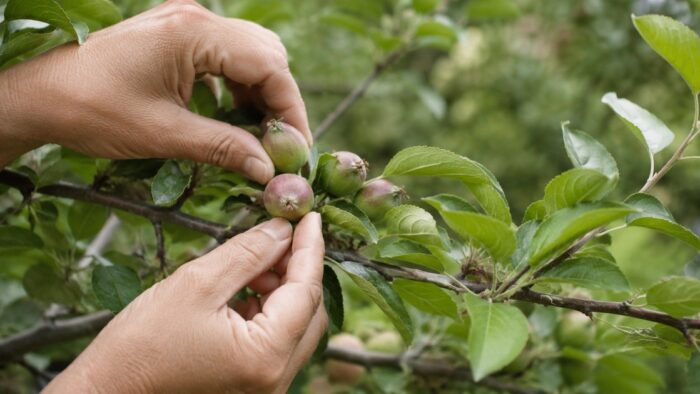
Before feeding an established fruit tree, look at the length and strength of last season’s shoots. A tree making vigorous growth may already have enough nitrogen, even if the owner expects fertilizer every spring. Excess feeding can produce dense foliage that shades fruit and requires more pruning.
Compare growth across the whole tree and consider lawn fertilizer, compost, mulch, and nearby plantings. The root zone extends beyond the trunk, so nutrients applied elsewhere may already be reaching the tree.
Fertilizer and drought stress
A nutrient application cannot compensate for dry soil. Fertilizer salts become more concentrated when the root zone lacks moisture and may damage fine roots. Restore normal watering and wait for the tree to recover before deciding whether feeding is needed.
Mulch can reduce moisture swings, but keep it away from the trunk and account for nutrients from composted materials.
Timing for young and established trees
Nitrogen encourages leafy growth, which can be useful for young trees but excessive for mature fruiting trees.
Phosphorus and potassium needs are best judged from soil tests rather than guesswork.
Compost improves organic matter but still contributes nutrients, so more is not always better.
Grass competition around young trees can reduce growth.
Fruit thinning can improve fruit size and reduce biennial bearing in crops like apples.
Why more fertilizer is not better
- Fertilizing every year automatically.
- Applying nitrogen late, encouraging tender growth before winter.
- Piling mulch against the trunk.
- Assuming poor fruiting is always a fertilizer problem when pollination, pruning, frost, or variety may be responsible.
Fertiliser cannot fix a pollination problem
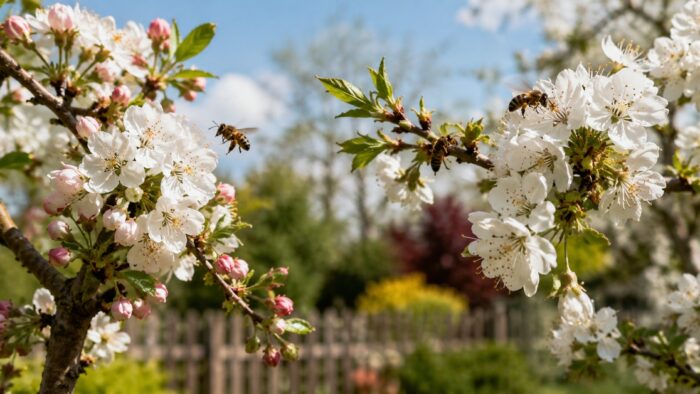
A tree can grow vigorously and still carry little fruit. If flowers open normally but fruitlets never form, look at weather, pollinator activity, compatible varieties, and bloom overlap before adding nutrients. Excess nitrogen may produce even more leafy growth without improving the crop.
The compatibility questions in the pollination guide help separate nutrition from pollen problems. Pruning also influences light and flower wood, but timing matters; review the fruit-tree pruning guide before removing branches. A soil test, growth history, and leaf appearance provide stronger evidence for feeding than a disappointing harvest on its own.
Fruit-tree feeding questions
Should fruit trees be fertilized every year?
Not always. Growth, soil tests, and tree performance should guide fertilizer decisions.
Is compost enough for fruit trees?
Sometimes compost helps, but it may not supply the exact nutrients needed. Use soil tests for clarity.
When should I fertilize fruit trees?
Spring is generally safer than late-season feeding, but timing depends on crop and local conditions.
Can too much fertilizer reduce fruit?
Yes. Excess nitrogen can encourage leafy growth instead of balanced fruit production.
Pale leaves, weak shoots, and poor fruit set
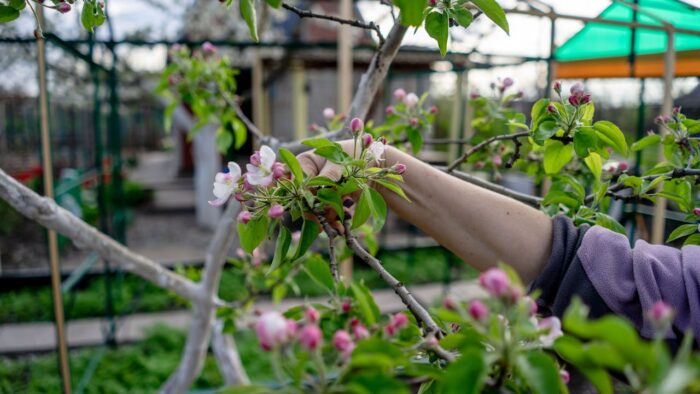
If a tree grows vigorously but fruits poorly, check pruning, nitrogen, pollination, and flower bud damage. If leaves are pale and growth is weak, test soil and inspect roots, water, and competition.
Spring feeding means different months in different hemispheres
“Early spring,” used throughout this guide, refers to the point just before active growth resumes – typically February to March in the Northern Hemisphere and August to September in the Southern Hemisphere. Gardeners in tropical or near-equatorial climates with no strong winter dormancy should instead time feeding to the start of the main growth flush after the driest part of the year, which a local agricultural extension service can usually confirm.