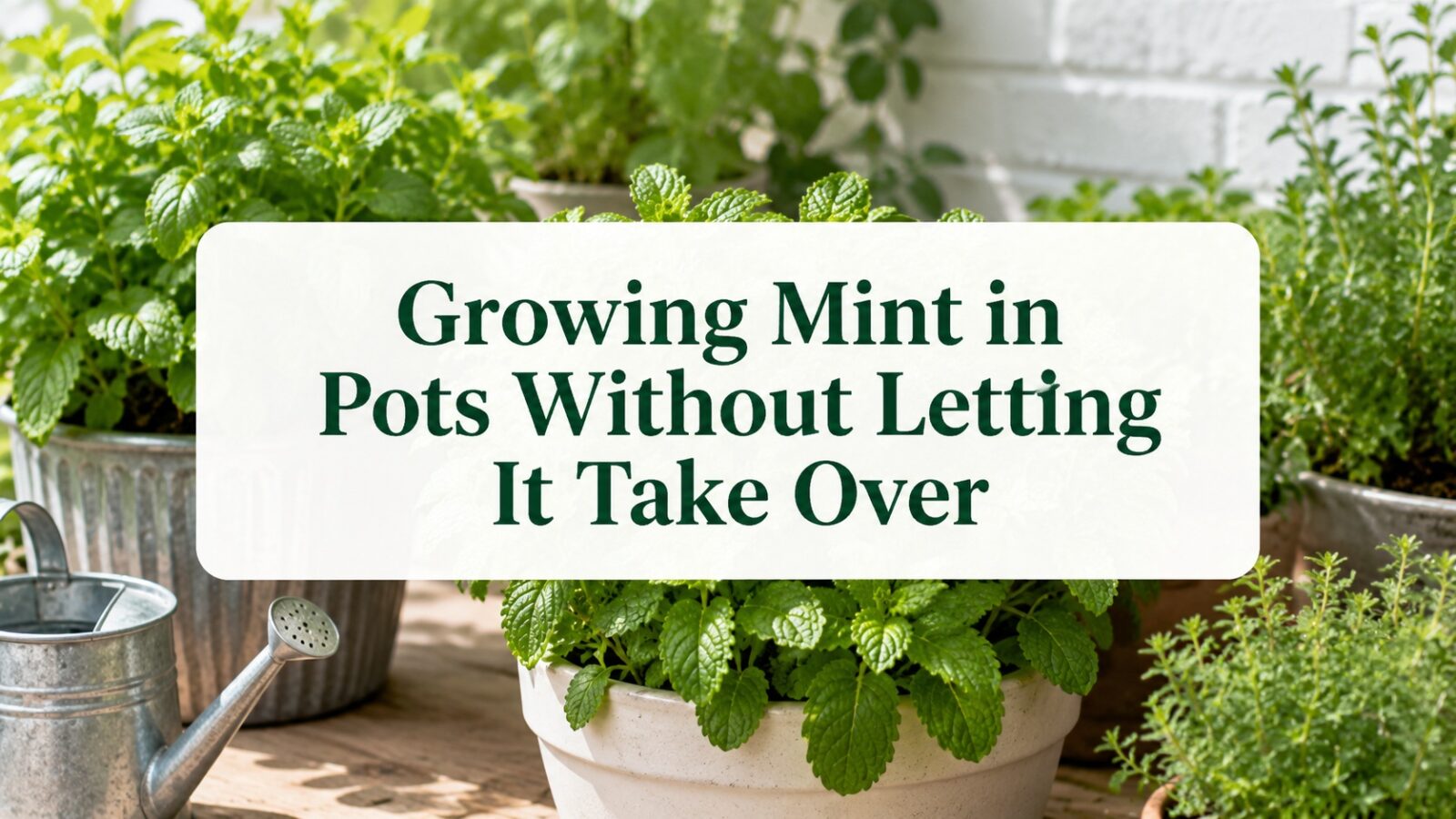
Mint is one of the easiest herbs to grow and one of the easiest to regret planting in the ground. Its spreading stems can overrun beds, but in pots it becomes a reliable kitchen herb for tea, salads, chutneys, desserts, and summer drinks.
Mint belongs in a container with firm boundaries
Grow mint in its own container, give it bright light to partial sun, keep soil evenly moist, harvest often, and divide or refresh the plant when it becomes crowded. Never plant mint loose in a small mixed herb bed unless you want it everywhere.
Light, water, trimming, and division
Peppermint, spearmint, chocolate mint, and apple mint have different flavors and vigor.
Mint can grow indoors under strong light, but outdoor pots usually produce more.
Flowers attract pollinators, but leaf flavor is often best before heavy flowering.
Sinking a pot in the ground can reduce spread, but runners may still escape over the rim or through holes.
Mint appreciates moisture more than many Mediterranean herbs.
Roots spread farther than the visible stems
Mint spreads through runners and roots. That growth habit makes it resilient, but also invasive in many garden situations. Container growing gives you the benefits without surrendering the bed.
Planting mint for easy harvest and control
- Choose a wide pot with drainage holes.
- Use good potting mix and keep it consistently moist.
- Place mint where it receives several hours of sun, with afternoon shade in hot climates.
- Harvest by cutting stems above leaf nodes to encourage branching.
- Divide or repot when roots fill the container and growth declines.
Divide mint before the pot becomes solid roots
Mint can fill a container quickly. When water runs around the root ball or growth becomes thin despite regular care, lift the plant and inspect the roots. Dividing the clump restores space and gives you younger sections to replant.
Keep only healthy pieces with fresh shoots and firm roots. Refresh part of the potting mix rather than placing the entire old mass back into a larger container every year. Division controls size and keeps harvesting convenient.
Harvesting mint for better regrowth
Cut stems above a leaf pair and remove flower stalks if leaf production is the priority. A light harvest every few weeks keeps stems tender and encourages branching.
If leaves are needed for drying, harvest healthy growth before flowering dominates. Wash only when necessary and dry thoroughly before storage.
How mint escapes or becomes woody
- Planting mint directly in a vegetable bed.
- Letting pots dry completely during hot weather.
- Harvesting only leaves instead of cutting stems.
- Mixing mint with drought-loving herbs in one container.
Rust, pale leaves, and thin stems
Woody stems and small leaves often mean the plant is crowded or under-harvested. Yellow leaves may come from poor drainage or nutrient depletion. If flavor weakens, refresh growth with pruning and better light.
Growing mint in pots
Can mint grow indoors?
Yes, with bright light or a grow light, but it is usually more productive outdoors.
How do I stop mint spreading?
Keep it in a container and trim runners before they root elsewhere.
How often should I harvest mint?
Harvest regularly once established, cutting stems rather than stripping leaves.
Does mint need full sun?
It grows well in sun to partial shade, with moisture becoming more important as light and heat increase.
Pots that stand up to vigorous roots
Buy one healthy plant and propagate from cuttings rather than collecting too many varieties at once. Choose a container wide enough to support regrowth after harvest.
Renewing an old pot of mint
After a few seasons, mint can become a dense mat of roots with weak shoots in the centre. In early active growth, lift the root ball, divide healthy outer sections, discard tired woody centres, and replant a smaller piece in fresh mix. This is often more effective than moving the entire mass into an ever-larger pot.
Use a mix that drains while holding enough moisture for steady leaf growth. The principles in the potting-mix guide can be adapted for herb containers. Harvest frequently and use extra stems with the drying and freezing options in the herb preserving guide. Keep divisions contained; even small pieces of mint stem or root can establish where they are discarded.
Growing mint in pots: quick answers
Can mint be grown without a container at all?
It’s possible in open ground with a buried physical barrier, but most gardeners find a pot simpler and more reliable for keeping mint from spreading uncontrollably.
Why is my potted mint turning woody and sparse?
This usually means it’s overdue for division or has gone too long between harvests. Cut it back hard and divide the rootball to restore vigorous growth.
Can different mint varieties share the same pot?
They can, but they tend to compete for space and blur together in flavor. Separate pots keep each variety distinct and easier to manage.