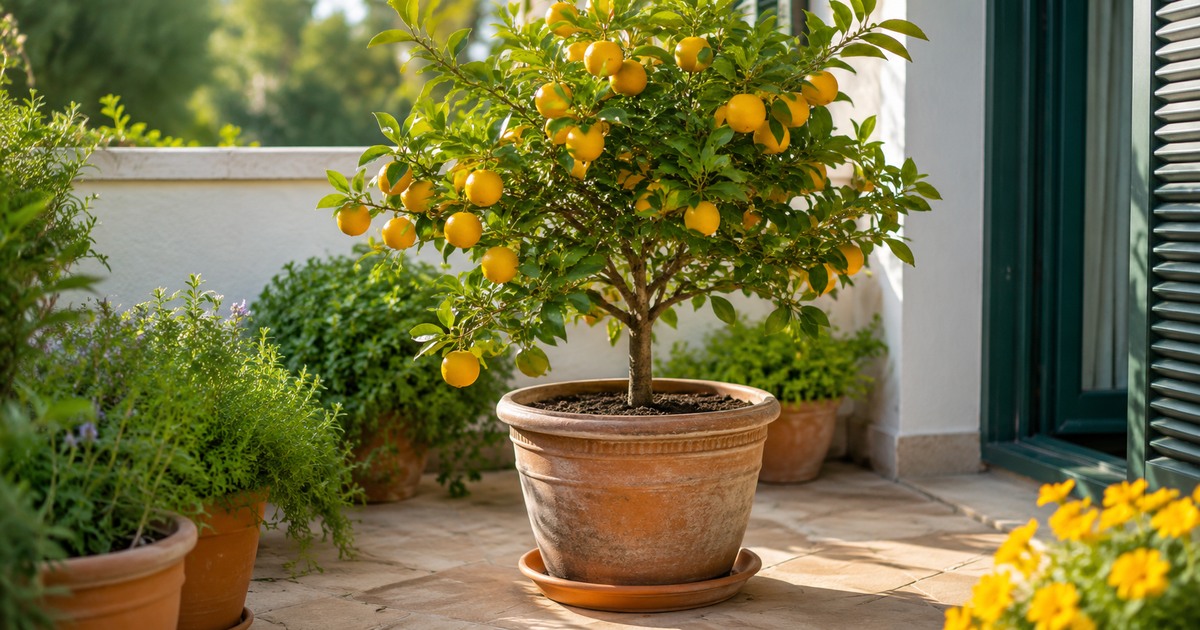
A citrus tree in a container can live for years, but the pot magnifies every care mistake. Roots heat and cool quickly, salts accumulate, and a tree loaded with flowers can still drop fruit when light or moisture changes suddenly. Choose a manageable variety and plan for winter before buying the tree.
Start with the brightest realistic position
Citrus generally needs strong direct light to flower and hold fruit. Outdoors, acclimate leaves gradually to full sun. Indoors, place the tree at the brightest window and consider supplemental light where winter days are weak.
Use a pot that drains freely
Choose a stable container with several drainage openings. Move up in size gradually; a huge volume of wet mix around a small root ball can create root problems. Use a coarse, container-appropriate mix rather than heavy garden soil.
Water the full root ball
Water until excess drains, then wait until the upper mix has dried appropriately. Do not leave the pot standing in water. During hot weather, containers may need frequent checks, while an indoor winter tree may dry much more slowly.
Feed according to growth and the product label
Citrus removes nutrients from a limited root zone. Use a fertiliser formulated or labelled for container citrus, following the rate and seasonal guidance. More is not better; salt buildup can damage roots and leaf edges. Periodic deep watering helps move some accumulated salts through a well-drained pot.
Expect flowers, but manage the crop
Many citrus types are self-fertile, though insects or gentle movement can improve pollen transfer indoors. A young or stressed tree may drop flowers and fruitlets naturally. Thin an excessive crop so branches and roots are not supporting more fruit than the plant can mature.
Move indoors before cold damage
Inspect for pests, clean the pot, and begin the move before nights become too cold. A sudden change from outdoor sun to a dim warm room can cause leaf drop. The gradual seasonal approach in the winter houseplant guide helps with light, watering, and pest checks.
Prune for access and structure
Remove dead, damaged, crossing, or rootstock shoots. Avoid heavy pruning simply to keep the tree decorative; fruit forms on healthy mature growth. If roots fill the pot, repot or root-prune at an appropriate time rather than repeatedly trimming the canopy.
Read problems in context
Yellow leaves can reflect roots, pH, nutrients, cold, or normal ageing. Check the whole pattern and recent changes. Container citrus rewards consistency more than frequent correction.
Leaf drop after moving indoors
A citrus tree can drop leaves after a sharp change in light, temperature, or watering even when roots are healthy. Place it in the brightest suitable location before leaf loss becomes severe. Avoid compensating with frequent water. A partly defoliated tree uses less water, so the mix may dry more slowly.
Common indoor pests
Scale insects, mites, and mealybugs can build on sheltered winter growth. Inspect leaf undersides, twigs, and the junctions of leaves and stems. Isolate the tree while identifying the pest, wash or remove limited infestations where practical, and use only a product labelled for indoor citrus when treatment is needed.
Rootstock shoots and graft unions
Many citrus trees are grafted. Vigorous shoots arising below the graft can belong to the rootstock and may overtake the desired variety. Remove them cleanly at their origin. Do not confuse them with ordinary low branches above the graft.
Repotting and root pruning
Repot when water runs through channels, roots circle densely, growth declines despite suitable care, or the container becomes unstable. Increase pot size gradually. For a mature tree that must remain in the same container, selective root pruning and fresh mix can be used by experienced growers at an appropriate season.
Fruit drop is not always failure
Citrus often sets more flowers and small fruit than it can support. Changes in light, moisture, temperature, or root condition can increase drop. Keep conditions stable and thin an obviously excessive crop. Do not use a large fertiliser dose to force fruit retention.
Harvest and storage
Colour alone does not always indicate ripeness, especially in warm climates. Taste a fruit when it reaches expected size and colour for the variety. Cut or twist carefully to avoid tearing branches. Citrus can remain on the tree for a period, but overripe fruit and exhausted branches should not be ignored.
Where citrus thrives outdoors vs needs a container
Citrus grows outdoors year-round across Köppen Csa and Cfa zones (Mediterranean and humid subtropical climates such as coastal California, the Mediterranean Basin, southern China, and parts of South Africa) and in tropical zones with good drainage. Outside these bands – in continental or temperate climates with regular frost – citrus must be grown as a container plant that spends winter indoors or in a heated greenhouse, even though the day-to-day care described in this guide stays the same. Gardeners in hot, arid climates (Köppen B) can grow citrus outdoors but need consistent irrigation, since natural rainfall will not sustain the tree through summer.
Growing citrus in containers: quick answers
Why did my citrus tree drop leaves after I brought it indoors?
Some leaf drop is a normal adjustment to lower indoor light. Stabilizing light and airflow before assuming a feeding problem usually resolves it.
Is fruit drop on a container citrus tree always a problem?
No. Citrus naturally sets more flowers and fruit than it can mature, so some drop is expected; only sudden, heavy drop signals an issue.
How often should a potted citrus tree be repotted?
Most need repotting every two to three years, or sooner if roots are tightly circling the pot.