Winter problems indoors often come from keeping summer habits while the room has changed. Daylight is shorter, sun angles shift, heating systems dry the air unevenly, and some windows become cold enough to damage leaves. Most houseplants do not need dramatic treatment; they need a calmer routine based on slower growth.
Move plants for usable light, not for decoration
A plant that was comfortable several feet from a window in summer may stretch or drop leaves in winter. Move it closer gradually, clean dust from leaves, and rotate only when the species tolerates changing orientation. Avoid pressing foliage against cold glass.
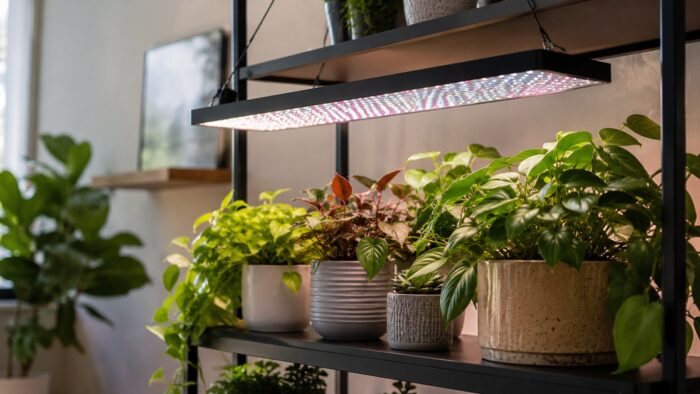
If daylight remains weak, use a timer-controlled fixture rather than leaving a lamp on unpredictably. The measurements in the grow-light placement guide help set a useful distance without overheating leaves.
Expect the pot to dry more slowly
Less light generally means less water use. Feel below the surface and lift the pot before watering. A plant near a radiator may dry faster at the edge while remaining wet in the centre, so one quick finger test can be misleading. Empty outer pots after watering and keep drainage holes clear.
Protect plants from temperature extremes
- Keep tropical plants away from freezing drafts and exterior doors.
- Do not place foliage directly above a hot vent.
- Move pots off very cold floors if roots are sensitive.
- Check night temperatures near windows rather than relying on the thermostat across the room.
Pause routine feeding when growth pauses
Fertiliser does not compensate for weak light. If a plant is not producing healthy new growth, heavy feeding can add salts to slowly drying mix. Resume a modest programme when days lengthen or supplemental light supports active growth. A species that grows year-round under strong light may still need some feeding, but use plant response rather than the calendar.
Inspect for pests in warm, dry rooms
Spider mites and scale can build quietly when plants are grouped indoors. Look under leaves and along stems every week or two. Sticky residue, stippling, fine webbing, or bumps that scrape away deserve attention. The inspection routine in the houseplant pest guide helps separate insects from moisture or light problems.
Humidity is not the same as wet leaves
A humidifier can help a room, but constant misting rarely changes humidity for long and may leave foliage wet. Group compatible plants with space for airflow, use a room humidifier safely, and keep water reservoirs clean. The article on practical indoor humidity compares these options.
Make changes gradually in spring
Stronger spring sun can scorch leaves that adapted to winter light. Move plants back from glass or use a sheer curtain, increase watering only as the mix dries faster, and inspect roots before repotting. Winter care is successful when a plant reaches spring stable, not when it is pushed into constant new growth.
Cold windows create small climates
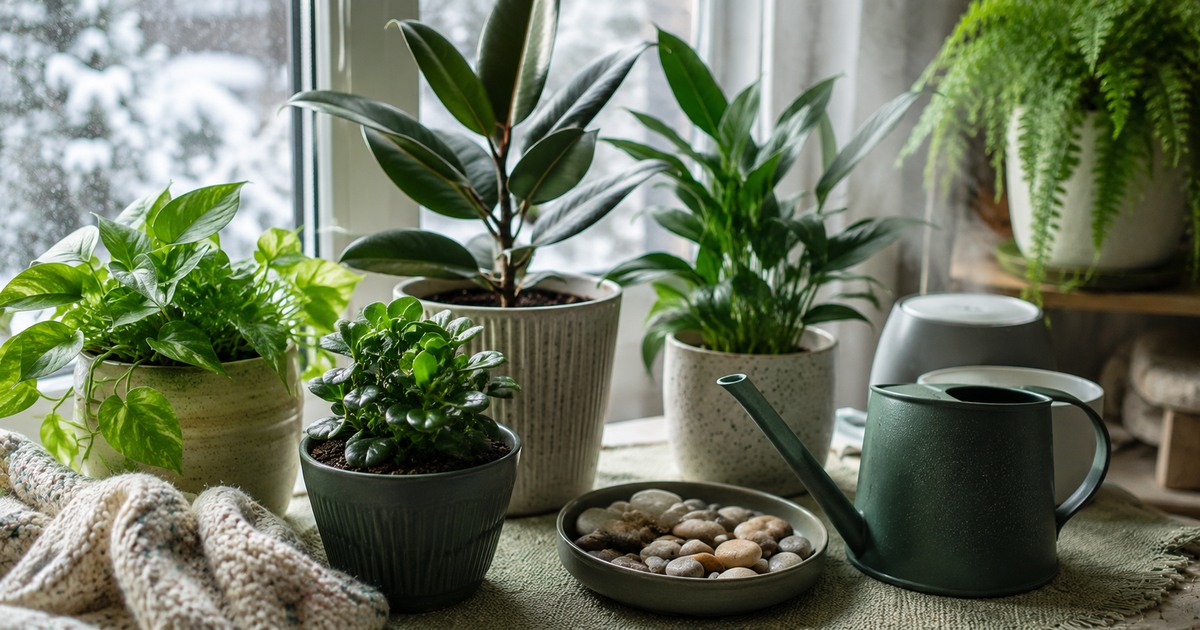
The temperature at a window can be much lower than the centre of the room. Leaves touching glass may suffer cold damage even when the thermostat reads comfortably. Use a small thermometer near sensitive plants, close curtains without trapping foliage against the glass, and move pots back during severe cold nights. Avoid relocating them to a dark corner for the entire season.
Holiday travel needs a plant-specific plan
Watering every plant heavily before leaving can be worse than a short dry interval. Group plants by expected drying rate, move only the fastest-drying pots away from hot air, and ask a helper to water only marked plants. Self-watering devices should be tested for several weeks before travel. A large reservoir attached at the last minute can saturate the root zone.
Winter pest checks are easier with a routine
- Look under the newest leaves and along leaf veins.
- Inspect stems and the point where leaf stalks meet the plant.
- Wipe dust from broad leaves so stippling and scale insects are easier to see.
- Check sticky residue on shelves and windowsills.
- Quarantine holiday plants and new gifts before placing them in the main collection.
Repotting can usually wait
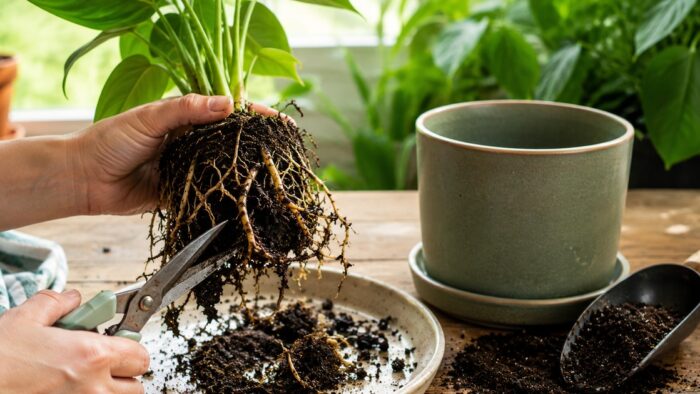
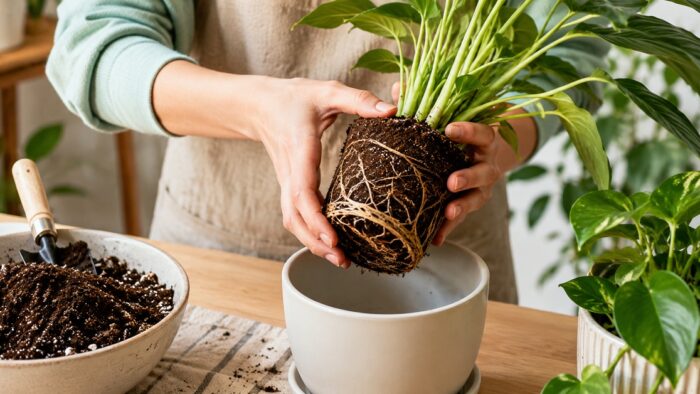
A healthy plant that is slightly rootbound can often remain in the same pot until stronger spring growth. Winter repotting is justified when media is sour, drainage has failed, roots are rotting, or the container has broken. Otherwise, stable light and careful water are usually more valuable than fresh soil.
A room-by-room winter strategy
South- or equator-facing rooms may offer useful winter sun, while interior bathrooms can become too dark despite higher humidity. Bedrooms may be cool at night, and kitchens may fluctuate in heat and steam. Place plants according to the complete environment rather than one appealing feature.
The spring reset
As daylight strengthens, check for new growth before increasing fertiliser. Clean leaves, rotate pots gradually, repair supports, and reassess whether roots truly need more room. Plants moved outdoors later must be hardened to sun and wind just as seedlings are. A stable winter makes that transition easier.
Winter houseplant care: quick answers
Should I fertilize houseplants in winter?
Most benefit from paused or greatly reduced feeding in winter, since growth naturally slows with shorter daylight.
Why does the soil seem to stay wet longer in winter?
Lower light and cooler temperatures slow a plant’s water use, so a summer watering schedule often leaves soil wet for longer.
Is it safe to repot in winter?
It’s usually better to wait for spring, when a plant can root into fresh mix more quickly as light levels rise.