Parsley is often labelled easy, yet the seed can take long enough to make beginners think the tray has failed. Once established, it is a sturdy herb that tolerates regular harvest and cooler weather. The key is patient germination followed by enough root room and steady moisture.
Use fresh seed and expect a wait
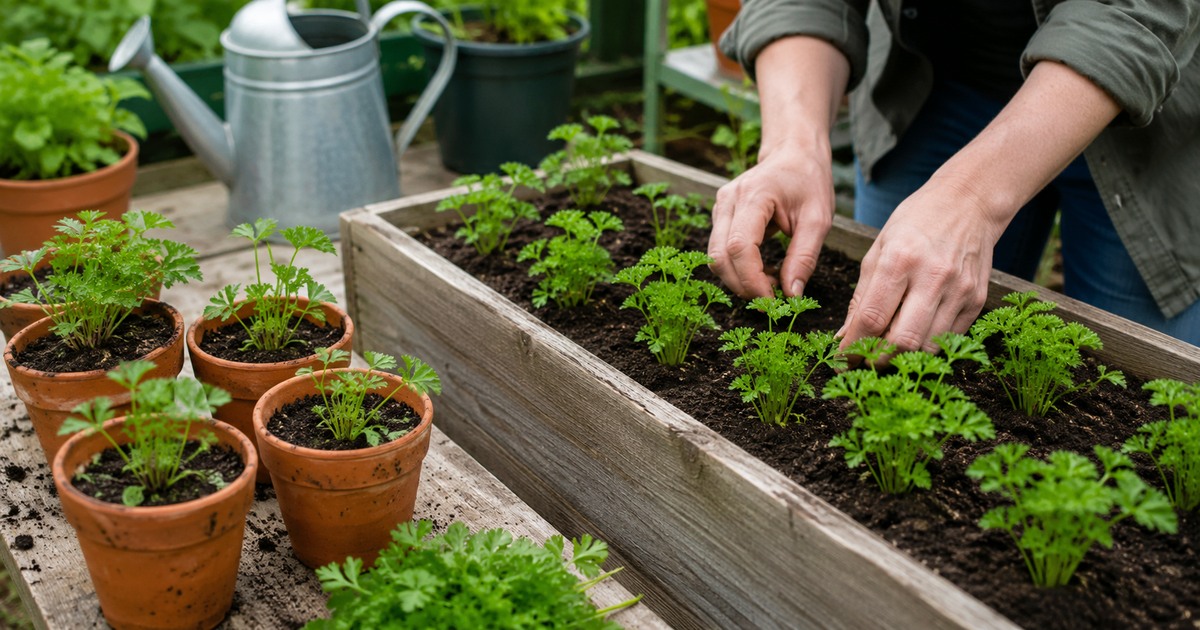
Sow in a fine, moist seed-starting mix or directly into prepared soil. Cover at the packet depth and keep the seed zone evenly moist without saturating it. Pre-soaking is sometimes used, but consistent temperature and moisture matter more than a complicated treatment.
Give seedlings light as soon as they emerge
Parsley seedlings are small and can stretch quickly indoors. Place them under bright overhead light and provide airflow. Thin crowded seedlings rather than leaving a dense clump that never develops strong crowns.
Choose a deeper container
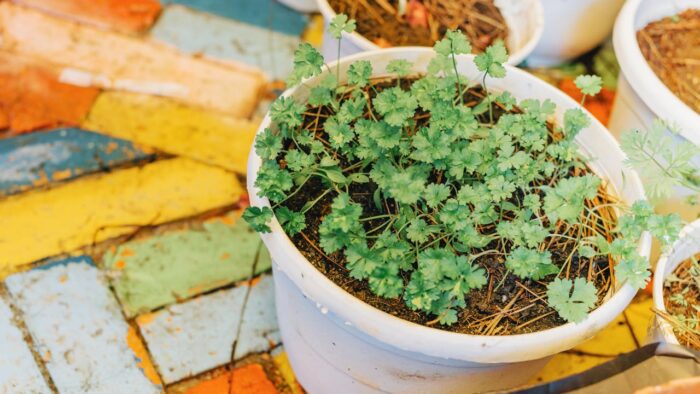
Parsley forms a substantial root system. Use a pot with drainage and enough depth to buffer moisture. A single healthy plant may become wider than expected, so avoid planting many seedlings in a small decorative pot.
Keep moisture steady
Established parsley prefers soil that is moist but not waterlogged. Containers need closer checks in heat and wind. Mulch garden plants lightly after they are growing strongly.
Harvest from the outside
Cut whole outer stems near the base and leave the central growing point. Removing only leaflets leaves bare stalks and does not encourage a clean new harvest. Regular cutting keeps the plant productive.
Plan for heat and the second year
Parsley is biennial. In its second season it tends to flower and set seed, after which leaf quality declines. Hot weather can also slow tender leaf production. Start fresh plants periodically rather than expecting one pot to remain in perfect condition indefinitely.
Store the harvest according to use
Fresh parsley keeps best when cooled soon after cutting. Freeze chopped leaves for cooked dishes or use the broader options in the herb preservation guide. For an indoor collection, the spacing and light principles in the indoor herb setup help prevent weak growth.
Flat-leaf and curly parsley
Flat-leaf types are often chosen for strong flavour and easy chopping. Curly parsley has a compact textured leaf and can remain neat in edging or containers. Both follow the same basic care, so choose by kitchen use rather than assuming one is fundamentally easier.
Why parsley germination feels slow
Seed coats and natural germination behaviour mean emergence can be uneven. Keep the seed zone moist and leave the tray or row in place longer than you would for radish or lettuce. Mark outdoor rows so they are not disturbed while waiting. If nothing appears after a reasonable period, check seed age, temperature, and surface crusting before sowing again.
Indoor parsley needs more light than a kitchen counter often provides
A pot can grow indoors, but weak window light produces long pale stems. Use a bright window or overhead light and rotate the pot only as needed for even growth. Keep foliage away from cold glass and hot cooking steam. Harvest outer stems so the centre remains active.
Common problems
- Yellow lower leaves can follow wet soil, poor drainage, or normal ageing.
- Leaf miners or caterpillars may mark foliage; inspect before treating.
- Crowded plants remain small and dry unevenly.
- Tall flowering stems indicate the plant is entering its second-year reproductive stage.
Allowing parsley to flower
Flowers support small beneficial insects and can produce seed, but the leaves usually become coarser. Keep flowering plants away from areas where unwanted seedlings would be a problem. Seed from an open-pollinated type may be saved once fully mature and dry, though nearby varieties can cross.
Using the roots
Some parsley varieties are grown for large edible roots, but ordinary leaf parsley roots are not a substitute for those cultivars. Grow root parsley in deep loose soil and follow food-safety guidance for harvesting and storage.
Growing parsley from seed: quick answers
Why is my parsley taking so long to germinate?
Parsley seed is naturally slow, often taking two to three weeks. Fresh seed and consistently moist soil help, but patience is the main requirement.
Can parsley be grown indoors year-round?
Yes, but it needs significantly more light than a typical kitchen counter provides, so supplemental lighting usually helps.
What happens if parsley is allowed to flower?
Leaf production slows once it flowers. Harvest remaining leaves promptly, or let it flower to support pollinators and collect seed.