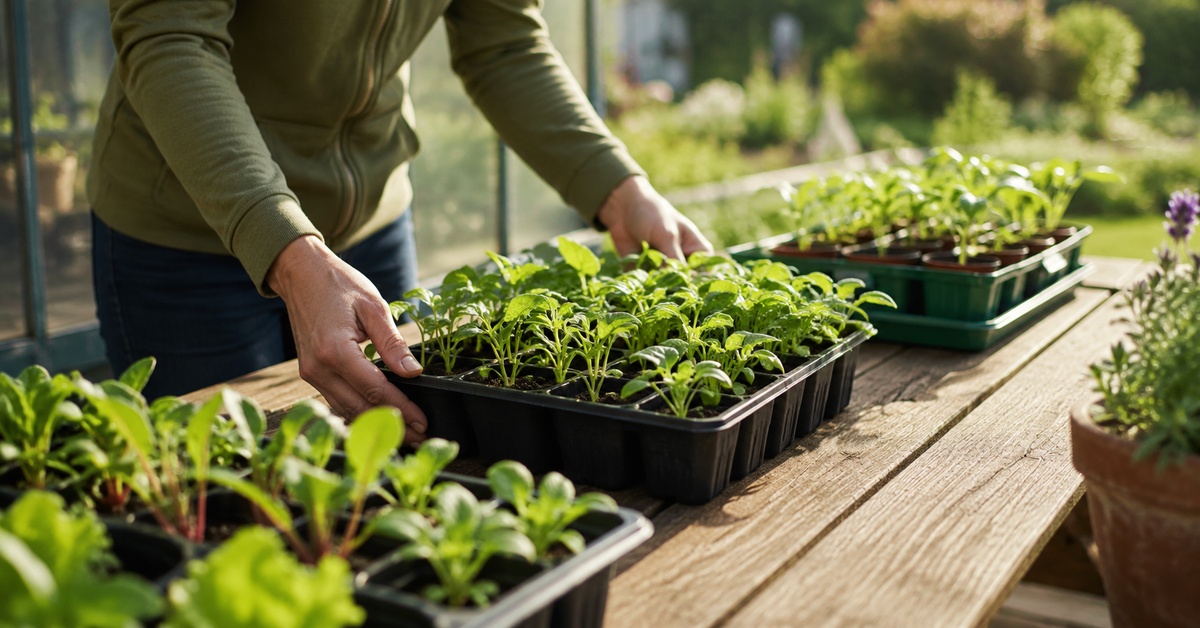
Seedlings raised indoors have soft leaves and stems because they have not experienced full sun, wind, cool nights, or rapid moisture loss. Moving them straight into the garden can cause scorching, wilting, and stalled growth. Hardening off is a gradual transition, not a single afternoon outside. It follows naturally after starting healthy seedlings indoors and before planting a new vegetable garden.
Wait until the seedlings are ready
Most seedlings should have several true leaves, a root ball that holds together, and stems strong enough to stand without support. Check the weather and the crop’s cold tolerance. Tomatoes and basil should not be treated like lettuce or brassicas because warm-season plants are more sensitive to low temperatures.
A simple seven to ten day transition
- On the first day, place seedlings in bright shade for one or two hours, protected from strong wind.
- Add time outside gradually over the next few days while keeping the plants out of harsh midday sun.
- Introduce gentle morning sun, then extend exposure as leaves remain firm and unscorched.
- Allow mild breezes, but bring trays in during strong wind or heavy rain.
- Reduce watering slightly so the mix is not constantly wet, but never allow small cells to dry completely.
- Near the end of the process, leave suitable crops outside overnight only when temperatures are safe.
- Transplant on a cloudy day or in late afternoon and water the root zone well.
Sunburn and water stress look different
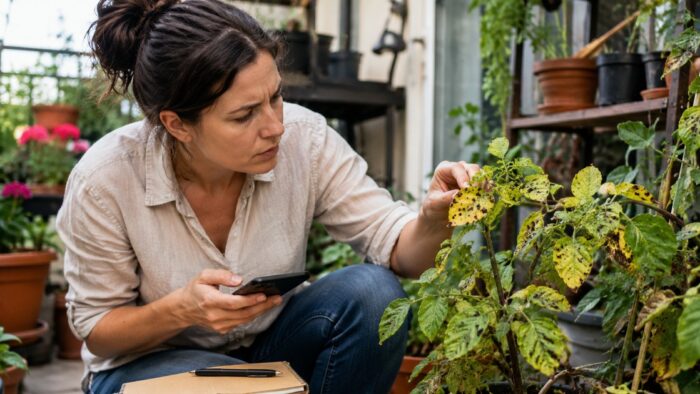
Sunscald often appears as pale, bleached, or papery patches on the upper leaf surface. Water stress usually affects the whole plant, causing limp leaves and dry mix. Wind can cause brown edges and rapid moisture loss. Move stressed seedlings back to shade and restore steady moisture rather than feeding them.
Do not harden off by starving the plants
Withholding water until seedlings wilt repeatedly does not create toughness. It damages roots and can delay establishment. The goal is to expose plants to normal outdoor variation while keeping them healthy enough to adapt.
Watch small containers closely
Cell trays dry much faster outdoors than they did under indoor lights. Sun and wind can remove moisture in a few hours. Check the weight of trays before leaving them outside, and place them where excess water can drain.
When weather interrupts the schedule
A cold snap, severe heat, or several stormy days may pause the process. Bring plants back to a protected place and resume when conditions improve. A delay is safer than forcing tender seedlings through unsuitable weather.
Transplanting with less shock
Handle seedlings by the root ball or a leaf rather than squeezing the stem. Set them at the correct depth for the crop, firm the soil gently, and water immediately. Temporary row cover or light shade can reduce stress during the first days, especially in exposed gardens.
After planting
A small amount of drooping can occur, but the plant should regain firmness as roots begin working in the new soil. Hold off on heavy fertilizer. Stable moisture, suitable temperature, and protection from strong wind are more useful during establishment.
Different crops need different treatment
Cool-season crops such as lettuce, kale, and many brassicas can tolerate lower temperatures than tomatoes, peppers, cucumbers, or basil. Harden each group according to its planting window rather than moving every tray outside together. Local frost dates are only a starting point; the short-term forecast matters more.
Seedlings grown under strong lights with a small fan may adapt faster than soft windowsill seedlings, but they still need gradual sun exposure. UV light and outdoor wind are new stresses even when indoor growth looks sturdy.
Balcony and rooftop gardens
Upper floors can be windier and hotter than ground-level gardens. Start hardening seedlings near a wall or screen, then move them into the final exposure. Secure lightweight trays and avoid leaving black plastic cells on a surface that becomes hot in direct sun.
A flexible schedule for busy gardeners
Hardening off does not require perfect daily weather, but it does require supervision. Group trays by crop tolerance and use a sheltered staging area near the door so moving them is practical. If you can only manage mornings or evenings, extend the process over more days. The important part is gradual exposure without repeated wilting or cold injury. A slower transition that fits the household routine is safer than an aggressive schedule that is difficult to monitor.
Let the weather interrupt the schedule
Hardening off is a process, not a fixed seven-day promise. Strong wind, a sudden cold night, or intense sun may justify repeating an easier day instead of moving forward. Seedlings that wilt badly or develop pale scorched patches need shelter and time to recover.
Water before exposure so roots are moist but not waterlogged, and check small cells because they dry quickly outdoors. The preparation in the indoor seed-starting guide produces sturdier plants before the process begins. If plants remain limp after moving into the garden, use the steps in the transplant shock guide to separate normal adjustment from root damage or extreme weather.
Hardening off seedlings: quick answers
How long does hardening off typically take?
Most seedlings are ready for the garden after seven to ten days of gradually increasing outdoor exposure.
What happens if I skip hardening off?
Seedlings moved straight outdoors often show scorched or bleached leaves, wilting, and stalled growth from sudden sun and wind.
Can the process be shortened in a pinch?
It can be trimmed slightly in mild, overcast weather, but skipping it meaningfully raises the risk of transplant shock.