Container strawberries are one of the best fruit projects for small gardens, patios, and balconies. They are compact, productive, and easy to watch closely, but they fail quickly when grown in tiny pots, weak light, or soil that dries out every afternoon.
Choose the right strawberry type first
Use a wide container with drainage, give plants at least six hours of direct sun, choose the right strawberry type, water consistently, and replace tired plants after a few seasons. Pot size and light matter more than decorative planters.
Flowers, runners, moisture, and feeding
June-bearing strawberries give a larger flush of fruit, while day-neutral types produce smaller harvests over a longer season.
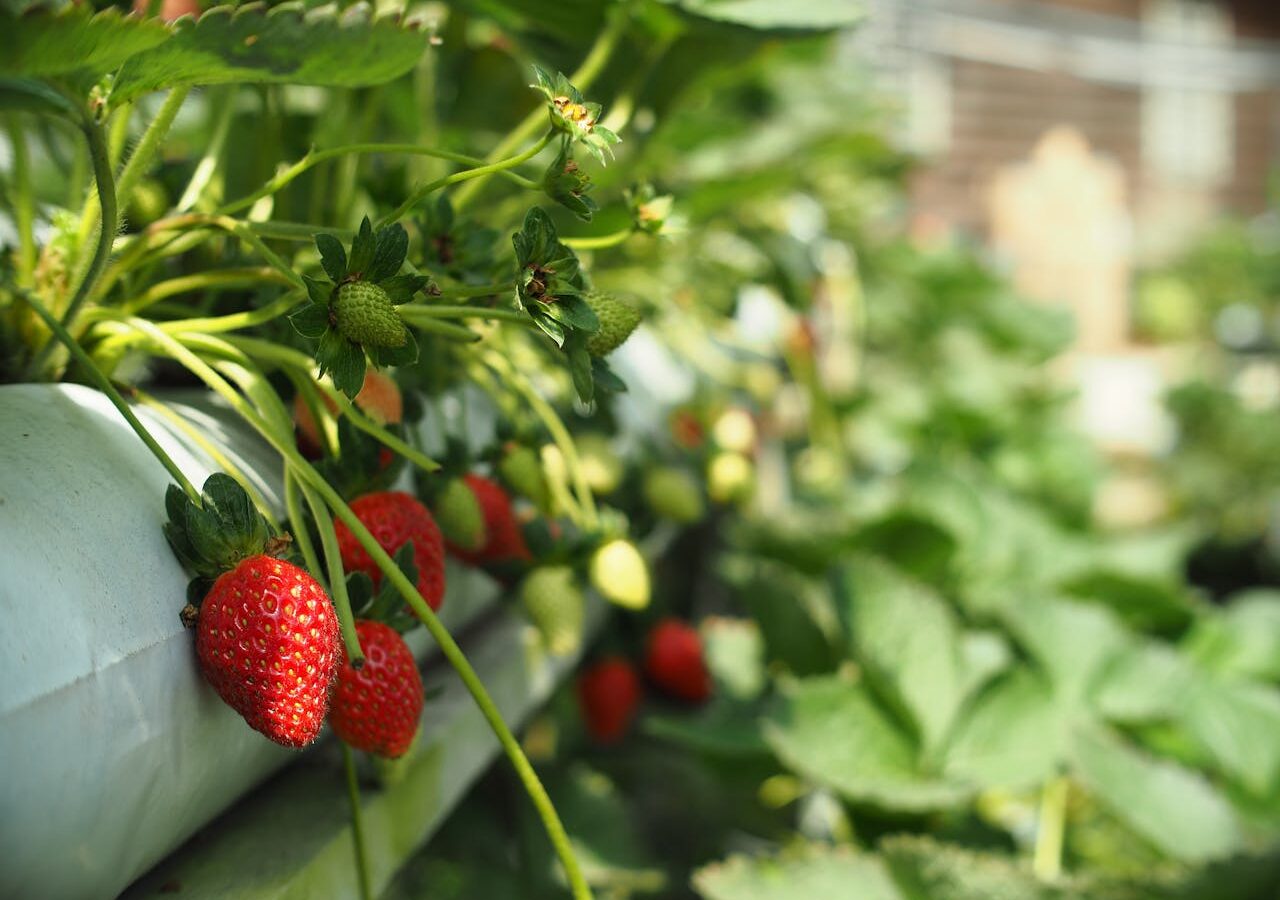
Hanging baskets look attractive but dry quickly, so they need frequent checks.
Mulch with clean straw or a light organic mulch to reduce fruit contact with wet soil.
Remove early flowers on weak newly planted crowns if the plants need time to establish.
Bird netting may be necessary once fruit begins to color.
Containers change heat, drainage, and runner control
Strawberries are perennial fruiting plants with shallow roots. In the ground, soil buffers heat and moisture changes. In containers, the root zone heats up, dries out, and runs out of nutrients faster, so care must be steadier.
Planting a productive strawberry pot
- Choose a container at least 8 to 12 inches deep with several drainage holes. Wider pots support more crowns and more even moisture.
- Use a quality potting mix rather than garden soil. Garden soil can compact, drain poorly, and bring weed seeds.
- Plant crowns at soil level. Burying the crown causes rot; leaving roots exposed dries the plant.
- Place the container where it receives morning and midday sun. Afternoon shade can help in very hot climates.
- Feed lightly during active growth and keep soil evenly moist, especially when flowers and fruit are forming.
Planning for the second year
Container strawberries can crop in the first season, but long-term performance depends on renewing the planting. Crowns become crowded, potting mix settles, and runners compete for water. Decide whether you want a tidy fruiting pot or a source of new plants. For a fruiting display, remove most runners. For propagation, root selected daughter plants in small pots and separate them after they establish.
At the end of the season, inspect the crown rather than judging only the leaves. A firm crown with healthy roots is worth carrying forward. Plants with chronic rot, severe pest damage, or weak crowns are poor candidates for overwintering.
Why container berries disappoint
- Planting strawberries in small decorative pockets that dry out before roots can grow well.
- Covering the crown with soil or mulch.
- Letting containers dry completely during flowering.
- Keeping old plants too long after productivity declines.
Small fruit, pale leaves, and fruit rot
Small berries can result from heat, poor pollination, low moisture, or crowded plants. Brown leaf edges may indicate drought stress or salt buildup. Slugs, birds, and pill bugs often find ripe berries before people do, so inspect daily as fruit colors.
What to do after the main strawberry harvest
Container strawberries often look tired after fruiting. Remove damaged leaves, trim unwanted runners, top up settled potting mix, and keep watering while healthy foliage remains. Do not strip all leaves from the crown. The plant still needs them to rebuild energy and form buds for the next season.
Where winters are cold, protect the roots as well as the leaves. Pots lose heat faster than garden soil, so move them to a sheltered place or insulate the container without sealing it in wet plastic. If you are expanding a small fruit area, the container-care lessons in the raspberry guide are useful too. Keep mulch light around strawberry crowns; the comparison in the mulch guide explains why wet material piled against stems can cause trouble.
Container strawberry questions
How much sun do container strawberries need?
At least six hours of direct sun is a practical minimum, while more light usually supports better fruiting if watering is consistent.
Can strawberries grow indoors?
They can grow under strong grow lights, but a sunny outdoor balcony or patio is usually easier and more productive.
How many strawberry plants fit in a pot?
Spacing depends on container width, but avoid crowding. Many growers use roughly one plant per 8 to 10 inches of container width.
Do strawberries come back every year?
Yes, but container plants may need winter protection and are often most productive for only a few seasons.
Pots, mix, mulch, and supports
Look for disease-free plants from reputable nurseries. Bare-root plants are economical, but potted starts are easier for beginners. For balconies, choose compact day-neutral varieties and a container you can water without flooding the space below.