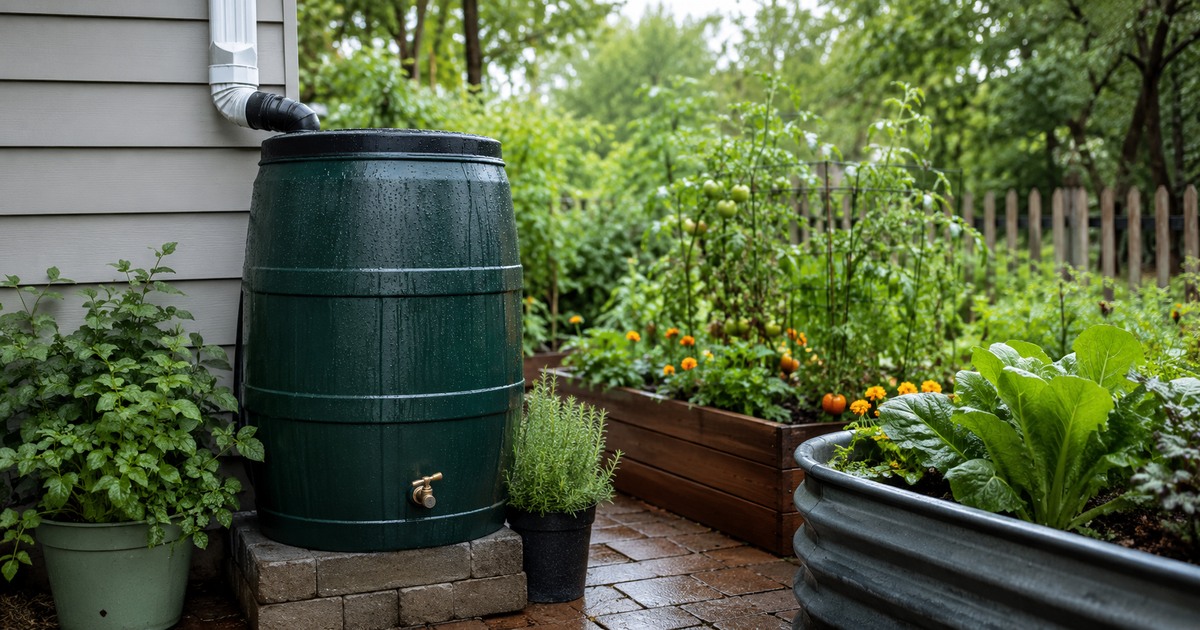
A rain barrel can capture a useful amount of roof runoff, but it is not a complete irrigation system. A full barrel may supply only a few deep waterings for a modest garden, and the water reflects whatever is on the roof, gutters, and collection system. Good setup focuses on stability, overflow, insects, and cautious use.
Check local rules and roof materials
Rainwater collection rules differ by location. Some roofing materials, treatments, or nearby contamination sources may make the water unsuitable for certain garden uses. When food safety is uncertain, use collected water on ornamental plants or at soil level away from edible portions, following local public-health or extension guidance.
Build a stable base
Water is heavy. Place the barrel on a level, strong base that cannot tip or sink. Raising it can improve gravity flow, but the stand must safely carry the full weight. Secure lids and openings so children and animals cannot access the water.
Screen every opening
Use fine screening to exclude mosquitoes and debris. Keep the lid closed and repair gaps. Empty or treat the system according to local mosquito guidance if insects become established. Do not leave open buckets as overflow containers.
Plan overflow before the first storm
A barrel fills quickly in heavy rain. Direct overflow away from foundations, paths, and neighbouring property. Maintain the original drainage function of the downspout where necessary, and check the route after large storms.
Keep the system reasonably clean
Clear gutters, remove sediment, and clean the barrel periodically. A first-flush diverter can reduce the earliest roof debris, but it does not sterilise the water. Never drink barrel water unless it has been collected and treated under a system designed for potable use.
Use water at the root zone
A watering can or low-pressure hose can deliver water to soil without wetting edible leaves and fruit. Gravity pressure may be too low for some irrigation equipment. If connecting to drip lines, test the farthest emitters using the method in the drip irrigation guide.
Understand the storage limit
During a dry hot period, one barrel can empty faster than expected. Prioritise containers, new plants, or a small high-value bed. Combine stored water with mulch and the decisions in the heat-wave watering guide.
Prepare for cold weather
Disconnect, drain, and store or protect the barrel before freezing conditions if the system is not designed for winter use. Ice expansion can split containers and fittings. Reconnect only after checking seals, screens, and the overflow route.
How quickly a barrel fills
A small roof area can produce more runoff than expected. As a rough concept, one millimetre of rain on one square metre of roof is about one litre of water before losses. Use local units and a runoff factor for the roof, then compare the result with barrel volume. This often shows why overflow design matters more than adding another small watering can.
First-flush and filtration limits
A leaf screen and first-flush diverter can reduce debris, bird droppings, and dust from the earliest runoff, but they do not make water sterile or drinkable. Clean the diverter and screen so they continue to work. Fine filters clog quickly when gutters are neglected.
Gravity, pumps, and backflow
A raised barrel creates modest pressure, often enough for a watering can or short hose but not every sprinkler or long drip system. A small pump can increase pressure, but it adds electrical, maintenance, and backflow considerations. Never connect a rainwater system to household plumbing without approved backflow protection and local compliance.
Watering edible gardens cautiously
Where roof water is used on food crops, apply it to soil rather than directly over edible leaves or fruit, avoid splashing, and stop using questionable water close to harvest according to local guidance. Do not collect from roofs or gutters containing materials that local authorities consider unsuitable.
Managing algae and odour
Keep sunlight out with an opaque barrel and closed lid. Odour suggests debris, stagnant organic matter, or contamination. Drain and clean the system rather than masking the smell. Do not add household chemicals that could later reach plants or soil.
A maintenance calendar
- Spring: inspect stand, lid, screens, overflow, seals, and downspout connection.
- During use: clear debris and check mosquito exclusion after storms.
- Dry periods: use stored water before it becomes stagnant, while following local guidance.
- Autumn or freeze season: disconnect, drain, clean, and store or secure components.
Rainwater harvesting rules vary by region
Rain barrels deliver the most value in dry-summer and arid climates (Köppen B and Csa/Csb), where stored winter or off-season rain can offset summer watering restrictions. Legal rules differ widely by country and even by state or municipality – some regions encourage harvesting with rebates, others restrict the volume or placement of storage. [INSERT: confirm and link to current local/regional regulations for the markets this article targets] before publishing region-specific guidance.
Rain barrels for gardens: quick answers
Is rainwater from a barrel safe for vegetable gardens?
Generally yes for soil-applied watering, but avoid using it on edible leaves close to harvest unless the catchment and storage are well filtered and clean.
How fast does a rain barrel actually fill?
A surprisingly small amount of rain can fill a standard barrel quickly from a large roof area, but total seasonal capture is still limited compared with garden demand.
Do I need approval to install a rain barrel?
Rules vary widely by location. Check local regulations before relying on stored rainwater for anything beyond casual garden use.