Compost does not become finished on a fixed day. A pile can look dark while the centre is still heating, or it can cool because it is too dry rather than because decomposition is complete. Maturity matters most when compost will touch seeds, young roots, or sensitive container plants.
Start with temperature over time
Turn or mix the pile, moisten it if needed, and watch whether it heats again. Finished compost generally stays close to ambient temperature after turning. A hot centre means active decomposition is continuing.
Use smell as a warning system
Mature compost should smell earthy. Sour, ammonia-like, rotten, or strongly fermented odours suggest imbalance or unfinished material. Correct excess moisture, add dry carbon-rich material where appropriate, and allow more time.
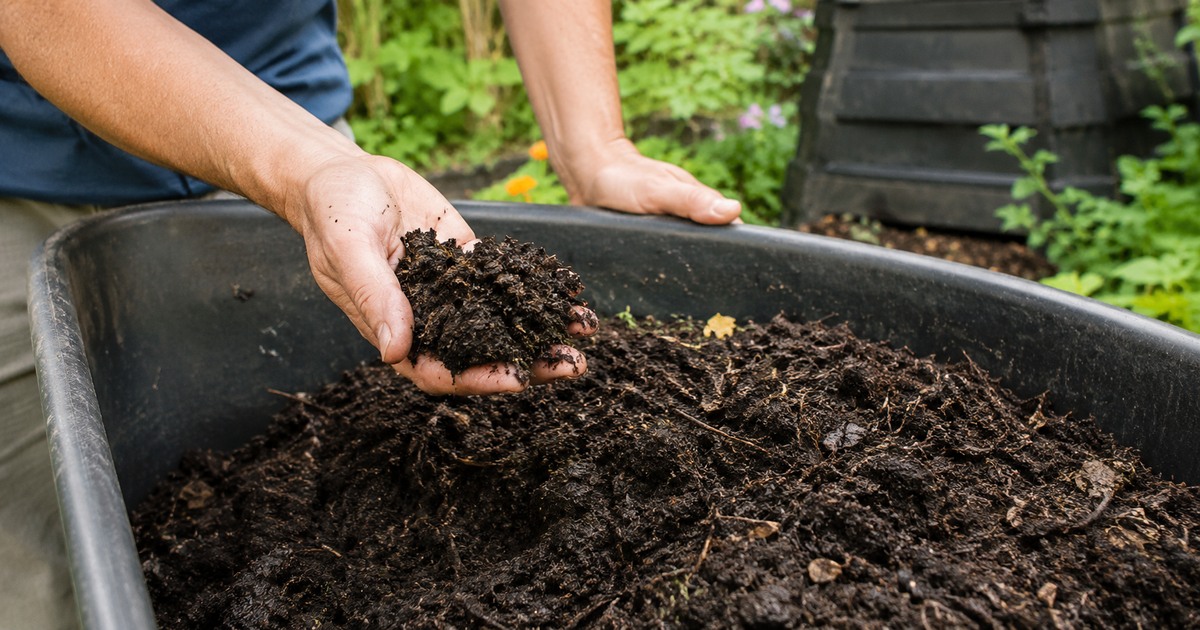
Look for a crumbly, mixed texture
Some small woody fragments are normal. Large pieces of food, thick stems, or matted grass can be screened out and returned to the next pile. Compost does not need to look identical to bagged soil, but it should no longer resemble a collection of recent kitchen scraps.
Try a sealed-bag check
Place a damp sample in a sealed bag for several days at room temperature. Open it carefully. A strong sour or rotten smell indicates that the material is not stable enough for sensitive uses. This is a rough home check, not a laboratory test.
Use a germination comparison for important batches
Grow quick seeds in a mix containing the compost and compare them with seeds in a known seed-starting medium. Poor germination or stunted roots can reveal salts or immature material, although many variables affect a home trial.
Match the use to the confidence level
- Coarse, partly finished material may be suitable as a surface mulch away from stems.
- Mature compost can be incorporated modestly into garden beds.
- Seed starting and containers require especially stable, measured ingredients.
- Do not fill a pot with pure compost unless the product is specifically formulated and tested for that use.
Keep questionable material out of food beds
Avoid compost containing persistent herbicide residues, contaminated manure, diseased material that the pile did not heat adequately, or unknown industrial waste. The basic pile management in the home composting guide helps prevent many of these problems.
Use compost as part of a broader soil plan
Compost adds organic matter but does not automatically correct pH, drainage, or every nutrient deficiency. Combine it with testing and the practices in the soil health guide.
Curing is different from active composting
After the pile stops heating, a curing period allows slower organisms to continue stabilising the material. Keep the pile moist enough for biological activity but not saturated. Turn occasionally if the centre becomes compacted. Rushing this stage is a common reason compost looks finished but performs poorly around seedlings.
Why pile volume shrinks
Carbon is released during decomposition and water is lost, so a finished pile can be much smaller than the original ingredients. Shrinkage alone does not prove maturity. A neglected dry pile can also lose volume without fully breaking down.
Worms and other organisms
Earthworms and small decomposers often move into a cooling pile. Their presence is a sign that conditions are no longer at peak heat, but it is not a complete maturity test. Ants may indicate dryness, while foul anaerobic zones can exist elsewhere in the same pile.
Storing finished compost
Protect it from weed seeds and excessive rain while allowing airflow. A breathable cover is often more useful than sealing damp compost in plastic for months. If stored material develops a sour smell, spread or turn it and let it stabilise before use.
Using compost around trees and shrubs
Apply a modest layer over the root zone rather than piling it against trunks. Compost is not a substitute for mulch depth guidance, and a thick wet mound can damage bark or reduce oxygen. Keep the root flare visible.
When laboratory testing is worth considering
Community compost, manure-based material, compost sold for commercial production, or a batch suspected of salts or contamination may justify testing. Home sensory checks are useful, but they cannot identify every chemical residue or pathogen risk.
Is compost ready: quick answers
Can compost look finished but still not be ready to use?
Yes. A pile can look dark and crumbly on the surface while the center is still actively decomposing or too immature for sensitive seedlings.
What’s a quick way to test if compost is ready?
A sealed-bag test or a simple germination comparison can reveal whether compost is mature enough for young plants.
Is finished compost the same as cured compost?
Not quite. Curing is a settling period after active decomposition slows, and some uses benefit from compost that has cured further.