Monstera is popular because it looks dramatic without needing greenhouse-level care. Still, large leaves and split foliage do not happen by accident. Light, watering, soil structure, and support all influence whether a monstera becomes a strong indoor specimen or a floppy plant with yellow leaves.
Monstera care begins with light and support
Give monstera bright indirect light, a chunky well-drained mix, water after the upper mix dries, and provide a moss pole or sturdy support as it matures. Avoid deep shade, oversized pots, and constantly wet roots.
Setting up a healthy indoor monstera
- Place the plant near bright filtered light, not in a dark corner.
- Use a pot with drainage and a chunky mix with air pockets.
- Water thoroughly, then let the upper layer dry before watering again.
- Add support early if you want upright growth.
- Wipe leaves occasionally so dust does not reduce light capture.
A climbing plant behaves differently in a pot
Monstera is a climbing aroid. Indoors it often grows upward or outward depending on support. In weak light, leaves stay smaller and splits may be limited. In dense wet soil, roots struggle and leaves yellow.
Why leaves stay small or stems sprawl
- Keeping monstera several meters from a window and expecting giant split leaves.
- Using dense all-purpose soil without aeration.
- Watering before the pot has started to dry.
- Letting vines sprawl until support becomes difficult to add.
Support changes leaf size and plant shape
Monstera is a climbing plant. When stems can attach to a stable support, new growth is often more orderly and mature leaves may develop more pronounced splits over time. A pole does not create fenestrations by itself, but it helps the plant grow in a form closer to its natural habit.
Attach the main stem loosely and keep leaf stalks free. Reposition ties as the stem thickens. If the plant leans strongly toward a window, rotate it gradually rather than making a sudden full turn that places all leaves away from the light.
Cleaning leaves and checking aerial roots
Dust reduces light reaching broad leaves and makes early pest signs harder to see. Wipe leaves gently with water and a soft cloth instead of using polishing products that leave residue.
Aerial roots can be guided toward a support or potting mix, but they do not all need to be cut. Remove only damaged roots or those creating a genuine access problem.
Water, mix, feeding, and aerial roots
Fenestrations depend on maturity, genetics, and light. A young cutting may not split for some time.
A moss pole or plank gives aerial roots something to attach to, but it must be installed securely.
Monsteras tolerate normal home humidity but appreciate more stable conditions.
Repot when roots circle heavily or watering becomes difficult, not just because leaves are large.
Pruning can control size and provide cuttings if the plant is healthy.
Yellow leaves, brown edges, and pests
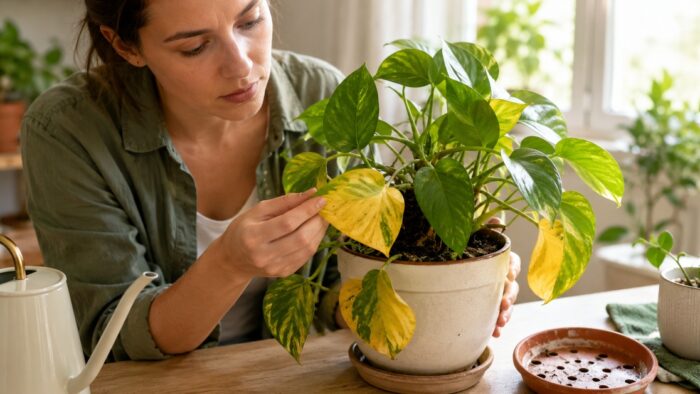
Yellow leaves usually point to watering or root issues, especially if soil stays wet. Brown crispy edges may come from dry conditions or irregular watering. Small leaves and long internodes suggest the plant needs more light.
Poles, ties, pots, and pruning tools
Choose a plant with firm stems, clean leaves, and no pests hidden in leaf joints. A smaller healthy plant often adapts better than a stressed large floor plant.
Add support before the plant starts leaning
Monstera stems become harder to redirect as they mature. Install a plank, pole, or trellis while the plant is still manageable, and tie stems loosely rather than fastening leaf stalks. A support should be stable in the pot and positioned so new growth can be guided toward stronger light.
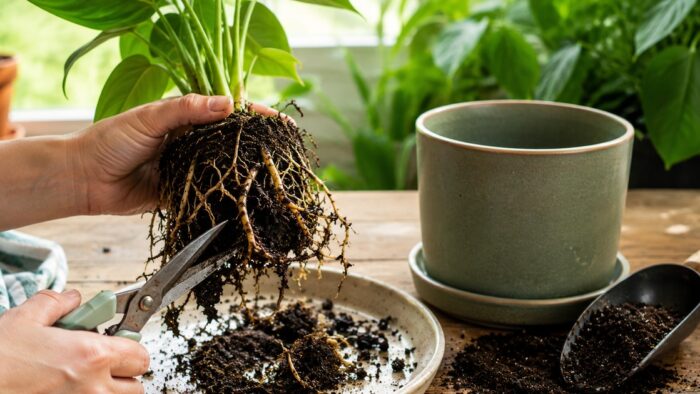
If the plant tips easily, the answer may be a heavier outer pot or a careful repot rather than a much larger container. Follow the root-handling steps in the repotting guide. When lower leaves yellow, check moisture and root condition before feeding; the yellow-leaf guide provides a useful sequence. Support improves form, but light and root health still determine growth.
Monstera questions
Why does my monstera have no holes?
It may be young, in weak light, or still adapting. Better light and maturity usually help.
How often should I water monstera?
Water when the upper mix dries rather than on a fixed schedule.
Does monstera need a moss pole?
It does not need one to survive, but support helps it grow upright and display larger leaves.
Is monstera toxic to pets?
Monstera contains irritating calcium oxalate crystals and should be kept away from chewing pets and children.