Repotting is useful when a plant has outgrown its container, the potting mix no longer drains well, or roots circle tightly around the inside of the pot. It is not a routine that every plant needs each year. A healthy plant in a suitable container can remain undisturbed until its roots, watering pattern, or stability clearly changes. Before starting, review how potting mix affects indoor roots and how watering changes after repotting.
First decide whether the plant really needs a new pot
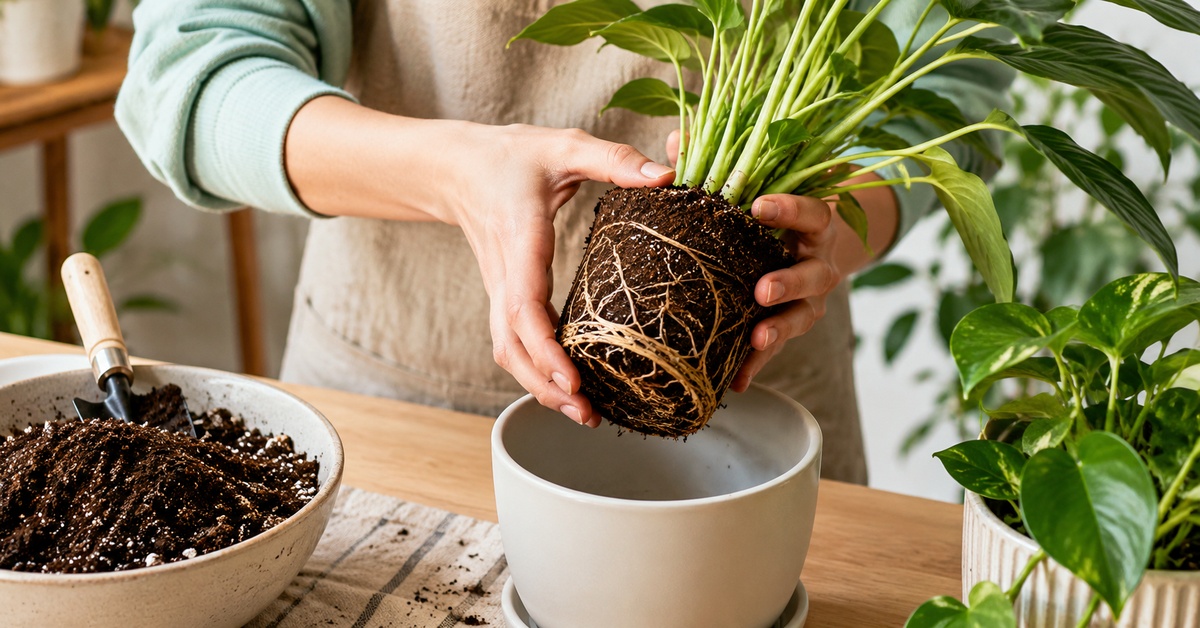
Roots visible through a drainage hole do not always mean the plant is in trouble. Some roots naturally explore the bottom of the pot. Stronger signs include water running straight through a compacted root ball, the plant becoming top-heavy, growth slowing during the active season, or the mix drying much faster than it did a few months earlier.
Repotting will not fix poor light, pests, or chronic overwatering. If leaves are yellowing while the mix stays wet for many days, the priority is to inspect roots and improve drainage rather than simply moving the plant into a larger container.
Choose a pot only slightly larger
A dramatic jump in pot size surrounds a small root system with a large volume of wet mix. That extra moisture can stay unused and reduce air around the roots. For most houseplants, moving up one pot size is enough. A plant in a 15 centimetre pot usually needs something only a few centimetres wider.
Drainage holes are essential. Decorative outer pots can still be used, but the inner growing pot should drain freely and should not stand in water after irrigation.
How to remove the plant without tearing the roots
- Water lightly a day before repotting if the root ball is extremely dry. Slightly moist roots are easier to handle than brittle, dusty roots.
- Support the base of the plant with one hand and tip the pot sideways. Squeeze flexible nursery pots or tap the sides of rigid containers.
- Slide the root ball out instead of pulling hard on the stems. If roots have grown through drainage holes, trim or free them before forcing the plant.
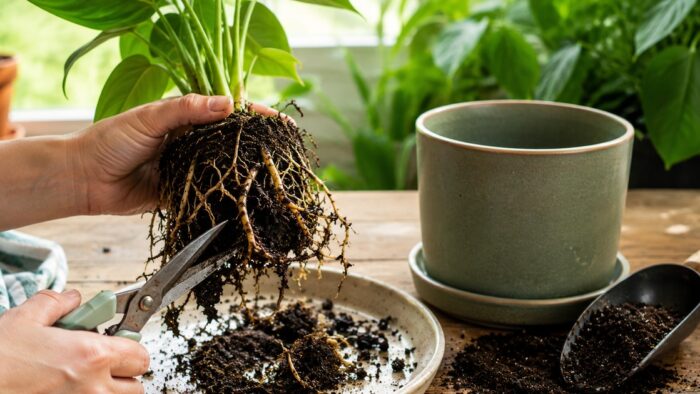
- Loosen only the outer circling roots. Healthy fine roots do not need to be stripped of all old potting mix.
- Remove black, mushy, hollow, or foul-smelling roots with clean scissors. Firm cream, tan, or pale roots are generally worth preserving.
Set the plant at the same depth
Add enough fresh mix to support the root ball, then position the plant so the original soil line remains close to the same height. Burying stems or crowns too deeply can hold moisture against tissues that were not growing underground. Fill around the sides and press gently. Heavy packing removes the air spaces the new mix was meant to provide.
Leave a little room below the rim so water can soak in without spilling immediately. Water thoroughly once, allow excess water to drain, and empty the saucer.
The first two weeks after repotting
Place the plant back in stable light rather than moving it into intense sun. Avoid feeding immediately unless the potting mix label specifically recommends otherwise. Fresh roots need time to settle, and fertilizer does not repair root damage.
A small amount of drooping can happen after handling, but persistent collapse, a sour smell, or rapidly yellowing leaves deserves attention. Check that the pot drains and that the plant is not being watered again while the centre of the root ball is still wet.
Common repotting mistakes
- Repotting a recently purchased plant before it has adjusted to the room
- Using garden soil in an indoor container
- Breaking apart every root even when the root ball is healthy
- Choosing a much larger pot because it will last longer
- Adding stones at the bottom instead of using a proper drainage hole
- Watering repeatedly because the leaves look temporarily soft
When the old pot is still the better choice
Some plants flower or grow steadily while slightly root-bound. If the mix drains, the plant remains stable, and watering is manageable, you can refresh the top layer of potting mix instead of disturbing the entire root system. Repot when there is a practical reason, not because the calendar says it is time.
Timing the job
Spring and early summer are convenient times for many actively growing houseplants because roots can resume growth under stronger light. Emergency repotting can be done at any time when rot, a broken pot, or contaminated mix is involved. In that situation, plant survival matters more than the season.
Avoid combining repotting with several other stresses. A severe prune, a major move, a pest treatment, and a root disturbance on the same day can make recovery difficult to read. Handle the urgent problem first and give the plant stable conditions.
Root pruning and dividing
A few circling roots can be loosened or shortened, but aggressive root pruning is a specialist technique and not necessary for routine houseplant care. Plants with natural clumps, offsets, or rhizomes may be divided when each section has healthy roots and shoots. Use a clean blade and do not split a plant only to make more pots if it is already weak.
The first month after repotting
A newly repotted plant may pause while roots adjust. Keep it in stable light, avoid heavy fertilising, and water according to the new mix rather than the old schedule. Extra soil around a small root ball can stay wet longer, even when the surface looks dry.
Check the pot’s weight and moisture below the top layer. The method in the houseplant watering guide is useful during this transition. If roots were soft, dark, or missing, follow the recovery steps in the root rot guide rather than placing the plant in a much larger pot. New growth is a better sign of recovery than one old leaf that continues to decline.
Repotting houseplants: quick answers
How do I know if my plant actually needs repotting?
Look for roots circling the inside of the pot, water draining unusually fast or pooling on the surface, or growth that has clearly stalled despite good care.
Is drooping normal right after repotting?
Mild, temporary drooping is common while roots adjust. Wilting that continues past the first two weeks points to overwatering or root damage during the move.
Should I move up several pot sizes at once?
No. Move into a pot only slightly larger than the current one. Oversized pots hold excess moisture that the smaller root system can’t use, raising rot risk.