Soil pH affects how nutrients behave and which plants are comfortable, but it is not a score where seven is always best. Blueberries prefer a much more acidic root zone than most vegetables. Some ornamentals tolerate a broad range. Changing pH without testing can create a problem that takes years to correct.
Test when the answer will change a decision
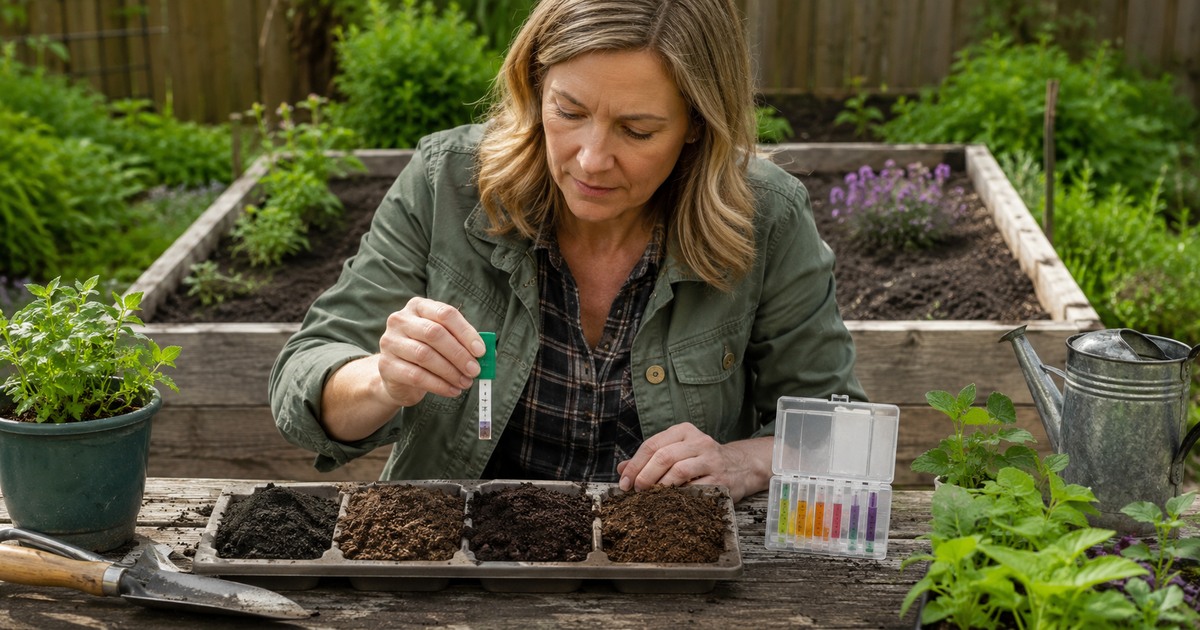
A laboratory soil test is especially useful before establishing fruit plants, applying lime or sulfur, diagnosing repeated nutrient symptoms, or filling a large new bed. Test representative soil from the root zone and follow the laboratory’s sampling instructions.
Do not treat a cheap probe as a complete soil test
Home meters can show trends when calibrated and used correctly, but results vary with moisture, salts, and contact. A laboratory test may also provide buffer information and amendment recommendations that a simple meter cannot.
Match the target to the crop
Most vegetables grow reasonably in slightly acidic to neutral soil, but exact preferences differ. Acid-loving blueberries are a special case, which is why the container method in the blueberry guide keeps their root zone separate from ordinary garden soil.
Raise pH only from a measured recommendation
Agricultural lime works gradually, and the amount depends on current pH, target pH, soil texture, and the material’s neutralising value. More lime is not a faster solution. Mix it through the recommended depth when preparing soil, or apply it to established areas according to local guidance.
Lower pH slowly
Elemental sulfur is used in some soils, but the rate depends on soil type and microorganisms, and the change takes time. Products that acidify irrigation water or provide ammonium forms of nitrogen can also affect pH. Avoid repeated additions based only on leaf colour.
Containers are a different system
Potting media, fertiliser, and irrigation water all influence container pH. Replacing or blending media may be more practical than trying to transform unsuitable garden soil inside a pot.
Retest after meaningful changes
Allow time for amendments to react, then test again. Keep records of the product, rate, date, and location. Combine pH work with organic matter, drainage, and compaction management from the seasonal soil health guide. pH correction is one part of soil care, not a cure for every plant problem.
How to take a representative sample
- Remove surface mulch and debris.
- Take several cores from the same management area and similar depth.
- Mix the cores in a clean container.
- Do not combine a vegetable bed with lawn, compost pile, or visibly different soil.
- Submit the amount and information requested by the laboratory.
Why soil texture changes the amendment rate
Clay and organic soils resist pH change more strongly than sandy soils. Two gardens with the same measured pH may need different amounts of lime or sulfur. This buffering is one reason generic internet rates can cause over-application.
Lime is a material category, not one identical product
Calcitic and dolomitic lime differ in magnesium content, and products vary in fineness and neutralising value. Apply the product and rate recommended for the test result. Wear protection and avoid spreading dust in wind. Keep granules off leaves where the label advises it.
Soil pH myths
- Coffee grounds do not provide a controlled, predictable way to acidify a bed.
- Pine needles on the surface do not rapidly turn ordinary garden soil into blueberry soil.
- Wood ash can raise pH and add salts; it should not be applied repeatedly without testing.
- A nutrient symptom does not prove that pH is the cause.
Beds, lawns, and containers should be tested separately
Each receives different fertiliser, organic matter, and water. A result from the lawn should not guide a vegetable bed. Container media may require a specialised test because ordinary field-soil recommendations do not translate directly to soilless mixes.
Protect records
Keep the report, sampling map, amendment receipt, and date. Retest at the interval recommended by the laboratory or after a substantial change. Long-term records help distinguish a stable soil from one being pushed repeatedly beyond the crop’s needs.
Garden soil pH: quick answers
Is a cheap pH probe accurate enough to act on?
Not reliably. Inexpensive probes show rough trends but shouldn’t be the sole basis for adding lime or sulfur.
How quickly does soil pH change after amending?
Changes happen gradually over weeks to months, not immediately, which is why retesting after a meaningful wait matters.
Do containers need the same pH approach as garden beds?
No. Containers behave as a separate system and should be tested and amended independently of in-ground soil.