A grow light is useful when natural light is too weak, too brief, or too far from the plant. The label on the bulb matters less than the amount of useful light reaching the leaves. Distance, duration, coverage, and heat all affect the result. This guide complements low-light plant selection and indoor seed-starting advice.
Begin with the job the light needs to do
A small foliage plant in a dim room needs less intensity than tomato seedlings or sun-loving herbs. Decide whether the light is providing basic support, extending a short day, or acting as the plant’s main light source. This determines the fixture size and how close it must sit to the canopy.
Coverage is often the hidden problem
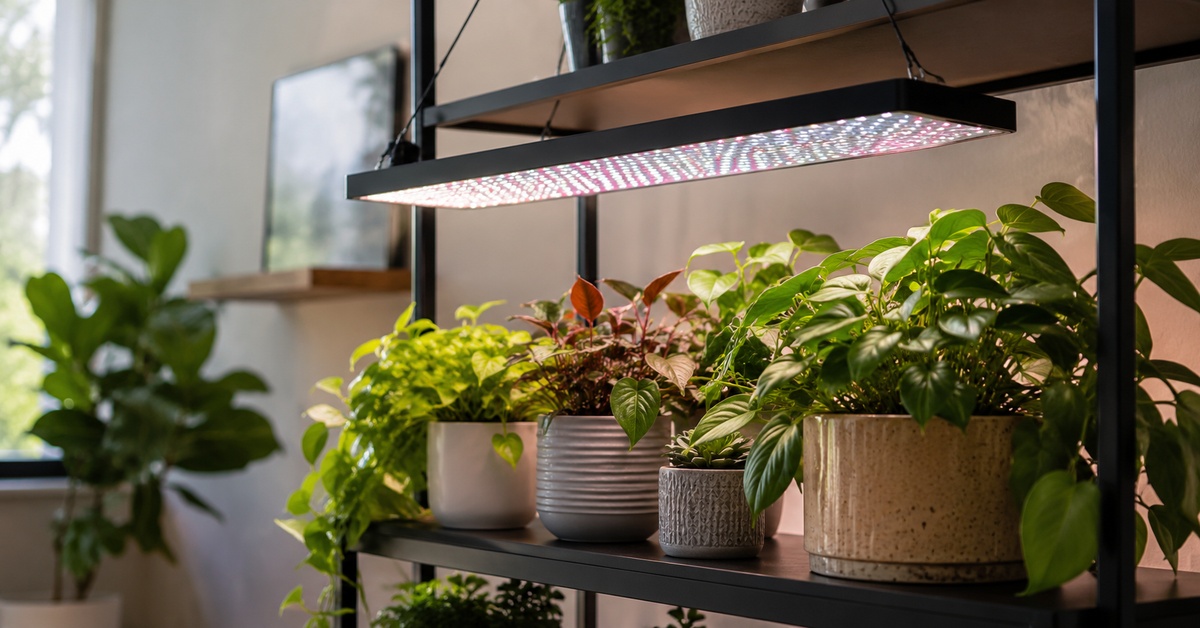
A bright bulb can still leave the outer leaves in shade. Look at the shape of the beam and the area occupied by the plants. Long shelves usually need bar-style fixtures, while a single compact plant may suit a clamp lamp. Reflective light-coloured walls can help, but they do not replace direct coverage.
Set distance by plant response and fixture guidance
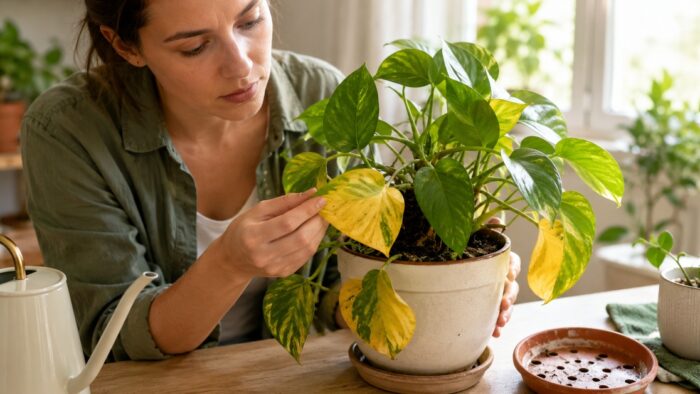
Different LEDs produce very different intensity. Use the manufacturer’s distance range as a starting point, then watch the plants. Stretched stems, wide gaps between leaves, and leaning growth suggest the light is weak or too far away. Bleached areas, curled upper leaves, or heat at the leaf surface suggest the fixture may be too close.
Place your hand at leaf height for a minute. If the heat feels uncomfortable, increase the distance or improve airflow. Many modern LEDs run cool, but the fixture and enclosed shelves can still trap warmth.
Use a timer instead of trying to remember
Consistent daily lighting is easier with a basic plug timer. Many houseplants respond well to a regular day and a dark period at night. Continuous lighting is unnecessary for most indoor plants and can interfere with normal rhythms.
Light duration cannot fully compensate for a very weak fixture. A moderate light used consistently is more useful than a tiny decorative bulb left on all day.
Adjust the setup as plants grow
- Raise the fixture to maintain a suitable gap above new growth
- Rotate plants if the fixture lights one side more strongly
- Move short plants onto risers so the canopy sits at a similar height
- Clean dust from lenses and leaves because both reduce usable light
- Separate fast-growing plants before they shade smaller ones
- Review watering because brighter light usually increases water use
Colour temperature and full-spectrum labels
For most home growers, a white full-spectrum LED is practical because it supports plant growth while keeping the room comfortable to use. Colour temperature describes how warm or cool the light looks to people; it does not by itself tell you how much plant-usable light reaches the leaves.
Claims printed on inexpensive lights can be difficult to compare. Fixture wattage, coverage area, distance guidance, and a clear return policy are more useful buying details than dramatic marketing language.
Signs the setup is working
New leaves should be compact, well coloured, and oriented toward the fixture without extreme leaning. Seedlings should develop sturdy stems rather than becoming tall and thin. Herbs should produce usable new growth after cutting. Judge the newest growth because leaves formed under previous conditions will not change shape.
Electrical and moisture safety
Keep plugs, timers, and extension connections away from runoff and wet trays. Secure hanging fixtures so they cannot fall onto plants or water. Use equipment suitable for the location, and avoid overloading a single outlet with lights, heat mats, fans, and humidifiers.
Grouping plants under one fixture
Plants with similar light needs are easier to manage together. Put sun-loving herbs and seedlings closest to the brightest centre of the fixture, while shade-tolerant foliage plants can sit toward the edges. Grouping by height also prevents tall leaves from blocking smaller pots.
A shelf with adjustable lights is easier to maintain than moving every plant individually. As the collection changes, leave space for airflow and access. A dense arrangement may look attractive but can hide pests and make watering uneven.
Using measurements without overcomplicating the setup
Phone light-meter apps can help compare locations, but they are not laboratory instruments. Use them to see whether one shelf is brighter than another, not as a guarantee of plant performance. The plant remains the final indicator. Compact new growth, steady colour, and normal water use show that the setting is close to suitable.
Planning for energy use and automation
A timer keeps the photoperiod regular and prevents lights from running unnecessarily. Smart plugs can track schedules, but automation should remain simple enough to notice failures. Check that the fixture actually turns on after a power interruption and that curtains, shelves, or new growth have not changed coverage. Efficient LEDs reduce energy use compared with older high-heat fixtures, yet the most sustainable setup is one sized correctly for the plants rather than an oversized lamp run at full output.
Use plant response to fine-tune a grow light
Manufacturer distance charts are starting points. After two or three weeks, compare new growth with leaves that formed before the light was installed. Compact growth and stable colour suggest the setup is close. Bleached patches, curled upper leaves, or hot leaf surfaces can mean the fixture is too close, while long weak stems suggest too little usable light.
Plants that tolerate dim rooms still grow differently under added light. The species choices in the low-light houseplant guide help set realistic expectations. During winter, combine light changes with the slower watering approach in the winter care guide. Adjust one factor at a time and keep the daily schedule consistent with a timer.
Grow lights for houseplants: quick answers
Does a higher-wattage grow light always mean better growth?
Not necessarily. Distance, coverage area, and duration matter more than wattage; an oversized light placed too close can stress leaves.
How many hours a day should a grow light run?
Most houseplants do well with 10-14 hours on a timer, rather than switching the light on and off manually.
Can a grow light fully replace natural light?
Yes, for most houseplants, as long as the fixture, distance, and duration are matched to that plant’s actual light requirement.