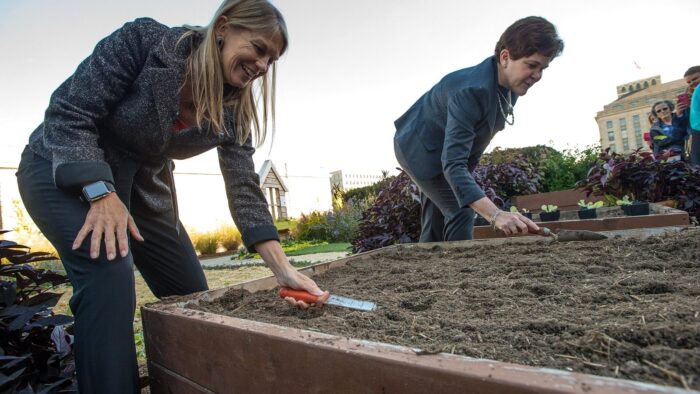
A 2 by 3 metre bed (6 m², about 65 sq ft) can supply a household with salad leaves, herbs, courgettes, beans, cherry tomatoes and chard from May to October if you plant intensively at 30 cm spacing, grow everything that can climb up a frame, and resow every gap within a week of clearing it. Skip anything that occupies ground for months and gives one harvest, such as maincrop potatoes, sweetcorn, cabbages and pumpkins; buy those.
A 6 m² plan that works
| Space | What goes in | Why |
|---|---|---|
| North edge, 2 m frame | 6 climbing bean plants and 2 cordon cucumbers | Height without shading the bed; 4 to 5 kg of crop |
| 1 m² | 2 cordon cherry tomatoes on stakes | 4 to 6 kg over the summer |
| 1 m² | 1 courgette | 3 to 5 kg; the most productive plant in the garden |
| 1 m² | 9 chard and 4 kale | Cut repeatedly from June to winter |
| 1 m² | Cut-and-come-again salad, resown every 14 days | Replaces the most expensive thing you buy |
| 1 m² | Herbs: basil, parsley, coriander, chives, plus spring onions and radish between | High value, small footprint |
| Edges and pots | Strawberries, dwarf beans, lettuce | Use every edge; pots on paths |
Water deeply twice a week rather than lightly every day, mulch everything, and feed fruiting crops fortnightly from flowering. For the numbers behind the choices, see high-yield vegetables for small gardens; for a plot with no soil at all, the container starter plan does the same job in pots.
Work out your real conditions first
Note the aspect. A south-facing balcony can exceed 40C against the wall in summer and will need shade and twice-daily watering. A north-facing one gets bright light but little direct sun and suits leafy crops and herbs. East gets gentle morning sun, which most crops like. West gets harsh afternoon heat.
Check weight limits if you are on a balcony. Wet compost is roughly 700 kg per cubic metre; a 40 litre pot soaked through weighs around 30 kg. Keep heavy containers against the building wall, over structural supports, rather than at the outer rail.
Containers for small spaces
Depth drives what you can grow. A 15 cm deep trough handles salad, radish and herbs. 25 to 30 cm covers chard, bush beans, compact peppers and dwarf carrots. 35 cm or more is needed for tomatoes, aubergines and potatoes. Fabric grow bags are light, drain well and fold away in winter; glazed and plastic pots hold moisture better than terracotta, which dries very fast in wind.
Go vertical
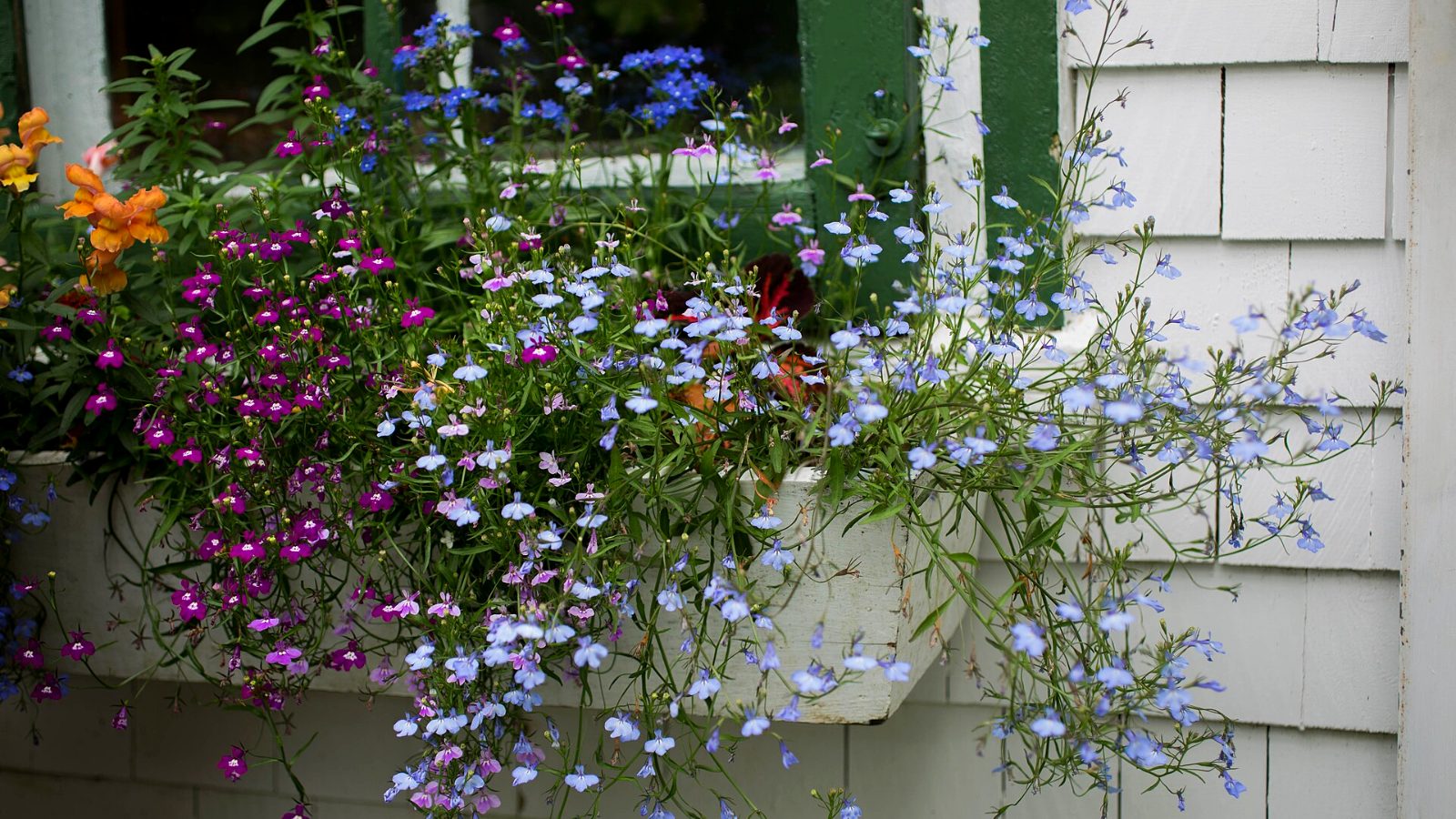
Wall-mounted planters, tiered shelving, railing troughs and a simple trellis multiply growing area without taking floor space. Keep tall plants where they will not shade shorter ones, usually along the back or the north side. Secure everything – a planter that falls from a balcony is a serious hazard, and wind on a third floor is much stronger than at ground level.
The crops that actually work
- Herbs – basil, parsley, chives, mint, thyme, coriander. Highest value, smallest footprint.
- Cut-and-come-again salad – a 60 cm trough resown every three weeks keeps a steady supply.
- Cherry tomatoes – choose compact or trailing varieties for small spaces.
- Chillies and compact peppers – ideal on a hot sunny balcony, and they overwinter indoors.
- Bush beans – productive and need no support.
- Radish and spring onion – fast and shallow rooted.
- Strawberries – excellent in hanging baskets and rail planters.
Skip sweetcorn, pumpkins, maincrop potatoes, brassicas and parsnips. They need more room, more depth or more time than the space can justify.
Watering without a tap
Most balconies have no outside tap, which makes watering the limiting factor. Options that help: self-watering containers with a reservoir, a large water store refilled from indoors, grouping pots together so they shade each other, mulching the surface of each pot with gravel or bark, and choosing larger containers that hold more moisture. A simple battery timer with a gravity-fed reservoir can cover a short holiday.
Feeding
Container compost runs out of nutrition in four to six weeks. Mix slow-release fertiliser in at planting and add a weekly liquid feed through summer. On a small balcony, a concentrated organic feed and a watering can is more practical than bulky granules.
Wind, heat and reflected light
Wind desiccates faster than sun. A section of windbreak mesh along an exposed rail reduces water loss dramatically and stops plants rocking. Pale walls reflect heat onto plants – helpful in spring, punishing in midsummer, so be ready to move containers or add 30 per cent shade cloth during a heatwave.
Make it a routine
The single biggest factor in small-space success is a two-minute daily check. Water, pick, pinch out a side shoot, look under a leaf. Containers reward attention and punish absence, and on a balcony everything is within reach of a morning coffee.
Weight, Wind and Water: The Balcony Three
Balcony growing has three constraints ground gardens never meet. Weight first: wet soil runs about 1.5 kg per litre, so a few large planters plus saturated compost approaches the load limit of some balconies; keep big containers near the wall over structural supports, and check limits for anything beyond a dozen mid-size pots. Wind second: three floors up, wind shreds squash leaves and tips tall pots, so favour low, sturdy crops and cluster containers for mutual shelter. Water third: pots dry daily in summer, and inconsistent watering is the top cause of balcony failure; self-watering containers or the micro version of drip irrigation turn daily duty into a weekly top-up.
Best crops for a windy balcony?
Bush beans, compact chillies, chard, all the cut-and-come salads, and every Mediterranean herb; thyme and rosemary genuinely prefer the fast-draining neglect a windy balcony provides, as our thyme guide explains.
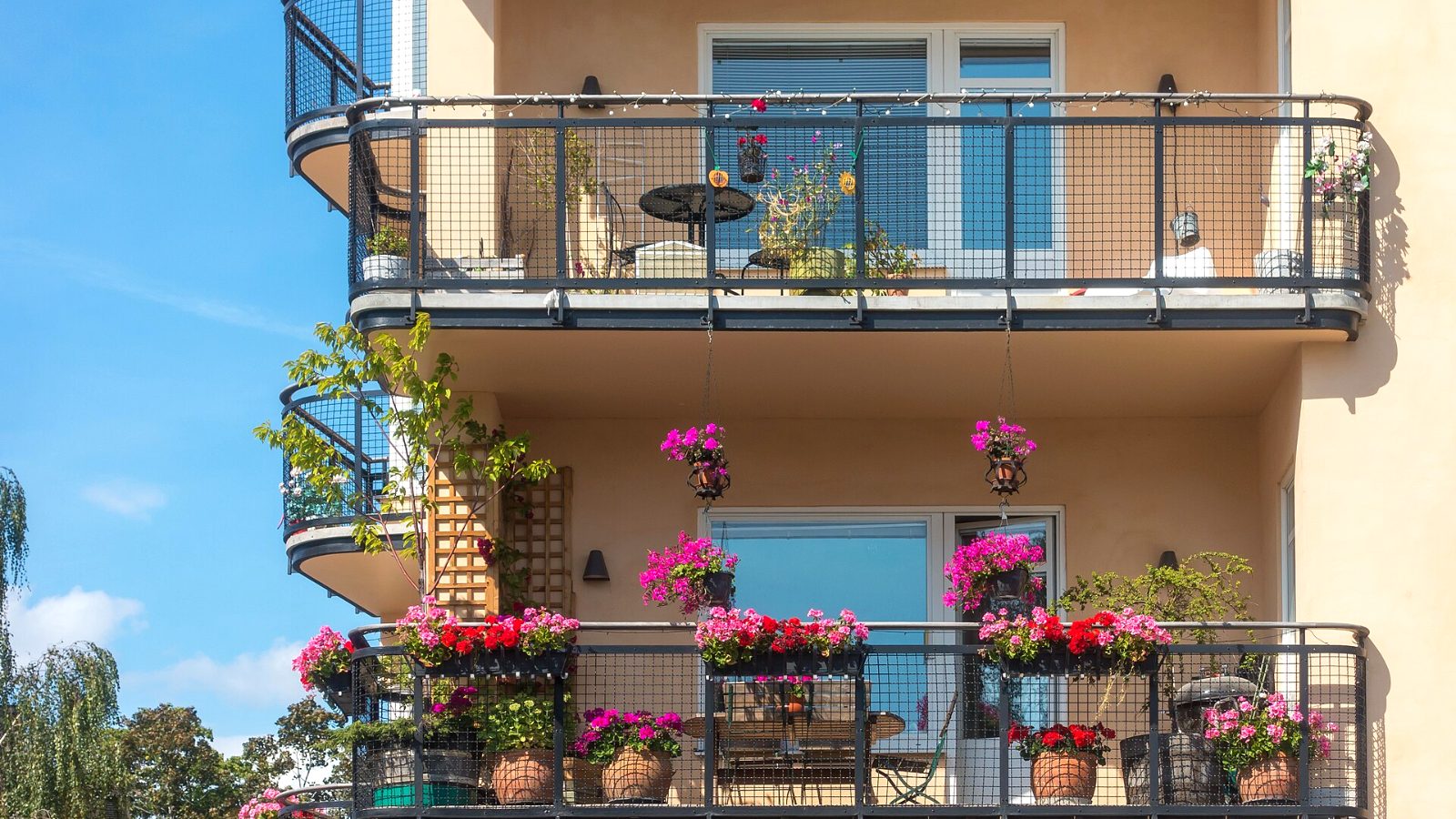
Featured image: Balcony in Stockholm. Photo: Frankie Fouganthin (CC BY-SA 4.0), via Wikimedia Commons.
When this advice does not apply
In a bed with under 4 hours of sun, drop the tomatoes, courgette and beans and double the leafy crops; see how much sun vegetables need. Very windy roofs and balconies need lower crops and heavier pots than this plan assumes.