Three kinds of free tool cover almost all garden planning: a scaled plan drawer for layout (graph paper at 1 square = 30 cm is still the fastest, with free online layout tools as the digital option), a frost-date and planting calendar tool for timing (your national meteorological service or extension service gives the dates, free apps turn them into a schedule), and a simple spreadsheet for the sowing diary. Paid apps add plant databases and reminders, but none of that changes what grows; the measurements and the dates do.
Free planning tools by job
| Job | Free option | What it gives you | Limit |
|---|---|---|---|
| Measure and draw the plot | Graph paper, or any free online layout tool with a square-metre grid | A plan to scale, bed sizes, path widths, sun direction | Online tools often cap the number of saved plans |
| Find frost dates | National met office or agricultural extension service frost-date lookup | Average last spring and first autumn frost for your postcode | Averages, not guarantees; add 2 weeks of margin |
| Build a sowing calendar | Extension-service planting calendars; free vegetable planner apps using your frost dates | Sow indoors, sow outside and plant-out dates per crop | Generic varieties; adjust for your microclimate |
| Track what you sowed | A spreadsheet with date, crop, variety, bed, result | The only record that improves next year | Needs filling in |
| Check sun hours | Free sun-path apps or simply noting times on one clear day in your growing season | Hours of direct sun per bed | Trees and buildings change it; recheck after leaf-out |
| Identify plants and pests | Free identification apps, university extension pest pages | A starting point | Apps misidentify often; confirm with a second source |
Spend the time saved on the two things tools cannot do: a soil test (see soil pH testing) and watching where the light actually falls. The numbers to feed into any planner are in the planting schedule by season and succession planting.
What a planner should do for you
Before comparing tools, be clear what problem you are solving. Most gardeners need, in order of value:
- A scale drawing so spacing is realistic rather than optimistic
- Local frost dates converted into sowing and planting windows
- A record of what grew where, for rotation
- Reminders at the right moment, because timing is the hard part
A tool that does the first three and nothing else is more useful than one with a hundred features you never open.
Layout drawing
Free drawing tools let you set bed dimensions, drop crops in and see how many plants actually fit at correct spacing. This single step prevents the most common planning error – fitting six tomato plants into a bed that holds three. Many seed companies offer a free planner tier; they are usually limited in saved plans but adequate for a small garden. General-purpose options such as a spreadsheet grid or simple vector drawing software work surprisingly well if you label each square.
Frost dates and sowing calendars
Enter a postcode or ZIP and a good tool returns average last and first frost dates, then builds a sowing calendar around them. This is where free tools add the most value, because the calculation is tedious to do by hand for twenty crops. Check the source of the frost data and treat it as an average, not a guarantee.
Rotation tracking
Rotation only works if you remember what was where. Any tool that stores last year plan and flags when you place the same crop family in the same bed is doing real work. A notebook does this too – the advantage of software is that it will not let you forget.
Sowing reminders
Email or app reminders at the start of each sowing window close the gap between a plan and a planted bed. Many planners include this free. A calendar app with repeating entries achieves the same thing in ten minutes of setup.
Spreadsheets still beat most apps
A simple spreadsheet with one row per crop and columns for variety, sow date, plant-out date, bed, spacing and first harvest is flexible, free, offline and yours forever. Add conditional formatting to highlight the current month and it becomes a working calendar. Most gardeners who try several apps end up back here.
Supporting tools worth bookmarking
- A soil test kit or local lab service – more useful than any app, since pH and nutrient levels drive everything
- A plant spacing chart – printed and pinned up near the shed
- A rainfall tracker or local weather history – tells you whether you actually need to water
- A photo folder on your phone – dated photos of each bed are the most honest garden record there is
Where free tools fall short
Free tiers usually limit the number of saved plans, restrict the crop library or push you toward one retailer catalogue. They also assume regional defaults that may not match your microclimate – a walled south-facing town garden can run three weeks ahead of the regional average. Use the tool for structure and your own records for accuracy.
A realistic planning workflow
Draw the beds to scale once. Record your frost dates. Build a sowing calendar from them. Keep a one-page record of what went in each bed, and photograph each bed monthly. That takes about two hours at the start of the season and perhaps five minutes a week after, and it will improve your results more than any single purchase.
The Paper System That Outlasts Every App
Apps come and go, but a garden journal compounds in value every season. The minimum viable version is one page per bed per year: what went in, when, from which seed source, and two lines at season’s end about what you would change. Add first and last frost actually observed, not the regional average, and within three seasons you own hyperlocal data no app can match. That record is what turns the generic advice in a planting schedule into dates tuned to your microclimate, and it is the honest input every rotation plan depends on, because rotation only works if you remember what grew where.
What should a beginner track first?
Just three things: sowing dates with variety names, first harvest dates, and failures with your best guess why. Resist tracking everything; the gardeners who log three numbers for five years beat the ones who build a spreadsheet empire in March and abandon it by June.
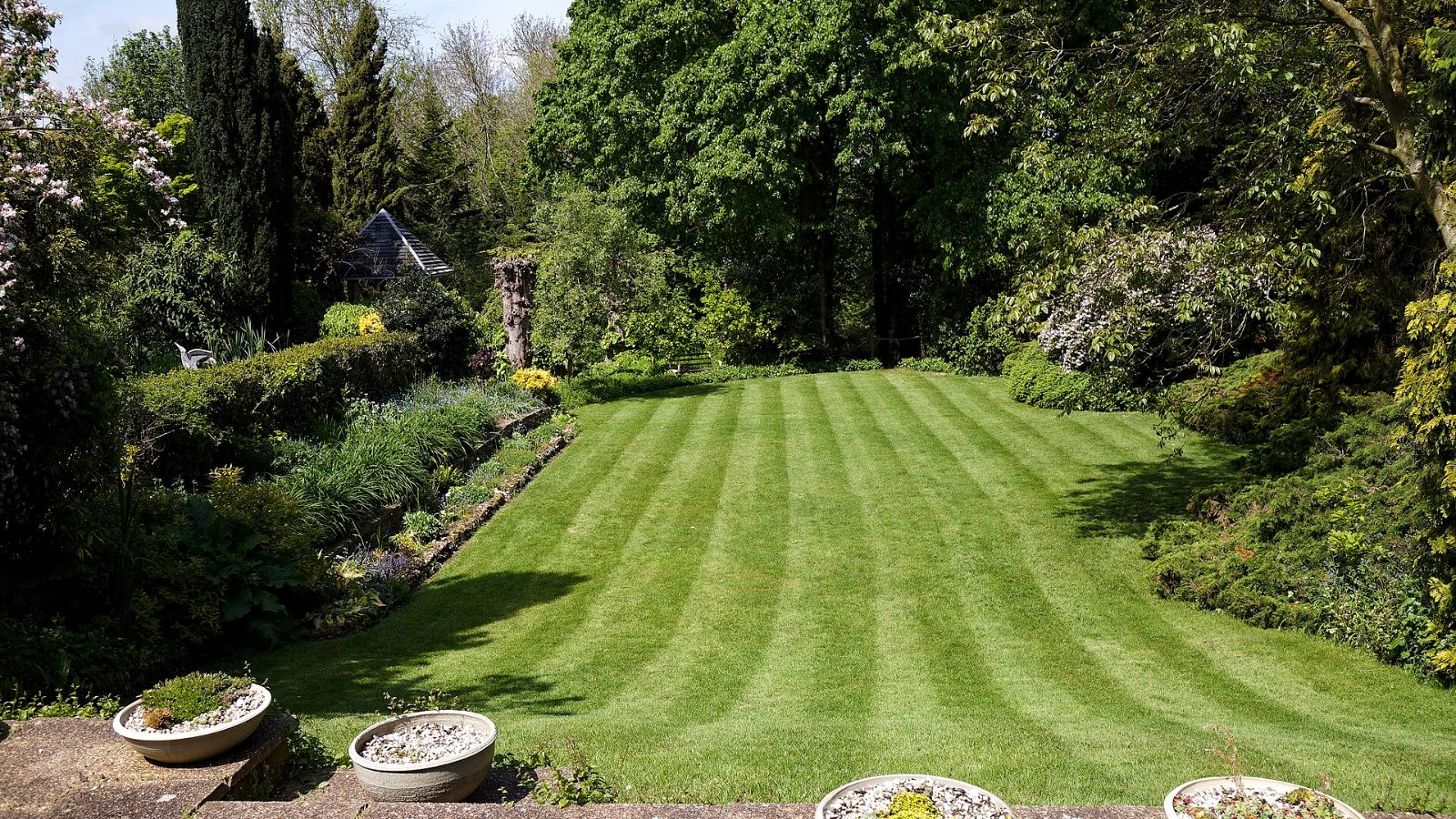
Featured image: Gibberd Garden lawn and garden beds Harlow Essex England 01. Photo: Acabashi (CC BY-SA 4.0), via Wikimedia Commons.
When this advice does not apply
If your climate has no frost, frost-date tools are useless; plan around your rainy season and summer heat instead. Large or sloped plots (over 500 m², or with more than 1 m of level change) are worth a one-off paid survey or a landscape designer’s hour before any planting.